

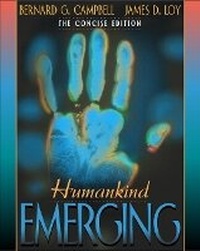
Humankind Emerging, The Concise Edition
Published on 8. June 2001
Book
Paperback/Softback
432 pages
978-0-205-32509-2 (ISBN)
Description
Inspired by Humankind Emerging, 8th Edition , this brand new Concise Edition takes a chronological approach. It features an emphasis on student learning through critical thinking and application and offers comprehensive coverage of human population genetics and human variation.
One reviewer comments, "This is probably the best [text] I have seen for introducing students to the facts and interpretations in human evolution. It does a commendable job in integrating the paleontological and archaeological evidence [and] engages students with well-written and exciting expositions on some of the most important debates in the field."
One reviewer comments, "This is probably the best [text] I have seen for introducing students to the facts and interpretations in human evolution. It does a commendable job in integrating the paleontological and archaeological evidence [and] engages students with well-written and exciting expositions on some of the most important debates in the field."
More details
Language
English
Place of publication
United States
Publishing group
Pearson Education (US)
Dimensions
Height: 251 mm
Width: 203 mm
Thickness: 25 mm
Weight
889 gr
ISBN-13
978-0-205-32509-2 (9780205325092)
Copyright in bibliographic data and cover images is held by Nielsen Book Services Limited or by the publishers or by their respective licensors: all rights reserved.
Schweitzer Classification
Content
Each chapter contains an Overview, Timelines, Summary, Review Questions, Suggested Further Reading and Internet Resources.
1. Paleoanthropology and Evolution.
What Are the Origins of Paleoanthropology?
DISCOVERIES AND MYSTERIES: Who Lived in Kent's Hole?
What Did Charles Darwin Discover?
How Does Natural Selection Work?
CRITICAL THINKING: Natural Selection and the Industrial Age.
The Science of Paleoanthropology Today.
ASKING QUESTIONS: What Skills Are Needed to Study Fossil Sites?
How Are Fossils Dated?
2. Genetics and Evolution.
The Mystery of Heredity.
Mutations and the Modern Synthesis.
How Does DNA Work?
How Do Populations Evolve?
ASKING QUESTIONS: How Did Giraffes Get Long Necks?
CRITICAL THINKING: Sources of Differences in Human Populations.
DISCOVERIES AND MYSTERIES: Sickle Cell Anemia.
3. Population Genetics, Adaptation, and Variation.
What Are Some Evolutionary Dynamics of Populations?
How Do Speciation and Extinction Occur?
What Do We Know about Human Variability?
DISCOVERIES AND MYSTERIES: The Hardy-Weinberg Calculus for Gene Frequencies.
Can Humans Be Classified into Races?
CRITICAL THINKING: What Can Multivariate Analysis Tell Us About Racial Groupings?
ASKING QUESTIONS: Why Are Humans So Prone to Xenophobia and Racism?
Does Evolution Represent Progress?
4. Primate and Human Characteristics.
How Is Humankind Classified?
CRITICAL THINKING: What Does It Matter How Primates Are Classified?
What Are the Characteristics of the Primates?
How Do Humans Differ from Apes?
ASKING QUESTIONS: What's So Special About Brain Size in Humans?
Are Language and Culture a Human Novelty?
DISCOVERIES AND MYSTERIES: What Are the Origins of Language?
5. Behavior of Living Primates.
Why Study Primates?
DISCOVERIES AND MYSTERIES: How Primates Behave in the Wild.
What Is the Basis of Primate Social Organization?
ASKING QUESTIONS: Why Does Primate Social Behavior Vary?
How Do Sexual Characteristics Shape Behavior?
How Does Environment Shape Behavior?
CRITICAL THINKING: How do Primate Social Characteristics Interrelate?
6. Primate Evolution: the Fossil and Living Apes.
MINI-TIMELINE: Evolutionary Events.
What Were the Earliest Primates?
Where Were the First Higher Primates?
How Did the Earliest Hominoids Evolve?
DISCOVERIES AND MYSTERIES: The Ultimate Suspensory Ape.
How Are Hominids Differentiated from Apes?
ASKING QUESTIONS: Can Fossils Yield Biolchemical Data? (new)
What Are Some Behavior Patterns of the Living Apes?
CRITICAL THINKING: What Was the Common Ancestor of Chimps and Humans Like?
7. Australopithecus .
African Fossil Hominids.
The East African Australopithecines.
DISCOVERIES AND MYSTERIES: Hominid Footsteps at Laetoli.
The South Africa Australipithecines and A. africanus.
The Robust Australopithecines: Paranthropus.
ASKING QUESTIONS: Why Is It Important to Study a Fossil Population?
CRITICAL THINKING: Tracing the Evolution of the Australopithecines.
8. The Coming of Homo.
Lifestyles of the Australopithecines.
Homo habilis.
ASKING QUESTIONS: What Is the Meaning of Brain Size?
Homo rudolfensis.
Phylogeny of the Hominidae.
Hominid Adaptations.
What Are the Characteristics of Early Technology?
DISCOVERIES AND MYSTERIES: How Were the Oldowan Choppers and Flakes Used?
What Triggered Brain Expansion in Homo?
CRITICAL THINKING: What Feedback Loop Could Account for Brain Expansion?
9. Homo erectus.
Discovery of Pithecanthropus.
DISCOVERIES AND MYSTERIES: The Beijing Fossils.
Zhoukoudian.
Homo erectus in Africa.
H. erectus in Europe.
H. erectus in Asia.
ASKING QUESTIONS: How Did H. erectus Manage to Disperse so Widely?
The Anatomy of Homo Erectus.
CRITICAL THINKING: How Can the Phylogeny of H. erectus Be Interpreted?
Evolutionary Relationships of Homo erectus.
Homo erectus's Environment and Culture.
The Significance of Culture.
10. Middle to Late Pleistocene Homo.
Homo Heidelbergensis.
Homo Neanderthalensis.
Evolutionary Relationships to Homo sapiens.
CRITICAL THINKING: The Neanderthal Question.
The Environment of late Pleistocene Homo.
ASKING QUESTIONS: How Was Fire Created?
Technological Adaptations of Late Pleistocene Homo.
DISCOVERIES AND MYSTERIES: Funerary Flowers at Shanidar.
11. Evolution of Modern Humans.
Discoveries of Early Homo sapiens.
Upper Paleolithic Industries.
Fossil Evidence for the Origin of Homo sapiens.
CRITICAL THINKING: Where, When, and Why Did the Archaic-to-Modern Transition Occur?
The Transformation of the Modern Human Skull.
The Dispersion of Homo sapiens.
DISCOVERIES AND MYSTERIES: The First Americans.
ASKING QUESTIONS: What Accounts for the Diasporas of Modern People?
12. The Longest Journey.
How Did Human Life Change after the Pleistocene?
How Did People Make Their Living?
What Are the Origins of Art and Magic?
ASKING QUESTIONS: What Was the Real Purpose of Cave Art?
What Are the Origins of Ritual and Religion?
DISCOVERIES AND MYSTERIES: The Buried Boys of Sungir.
What Other Human Social Institutions Emerged?
What Are Some Challenges to Human Futures?
CRITICAL THINKING: Are Humans a Third Kingdom?
1. Paleoanthropology and Evolution.
What Are the Origins of Paleoanthropology?
DISCOVERIES AND MYSTERIES: Who Lived in Kent's Hole?
What Did Charles Darwin Discover?
How Does Natural Selection Work?
CRITICAL THINKING: Natural Selection and the Industrial Age.
The Science of Paleoanthropology Today.
ASKING QUESTIONS: What Skills Are Needed to Study Fossil Sites?
How Are Fossils Dated?
2. Genetics and Evolution.
The Mystery of Heredity.
Mutations and the Modern Synthesis.
How Does DNA Work?
How Do Populations Evolve?
ASKING QUESTIONS: How Did Giraffes Get Long Necks?
CRITICAL THINKING: Sources of Differences in Human Populations.
DISCOVERIES AND MYSTERIES: Sickle Cell Anemia.
3. Population Genetics, Adaptation, and Variation.
What Are Some Evolutionary Dynamics of Populations?
How Do Speciation and Extinction Occur?
What Do We Know about Human Variability?
DISCOVERIES AND MYSTERIES: The Hardy-Weinberg Calculus for Gene Frequencies.
Can Humans Be Classified into Races?
CRITICAL THINKING: What Can Multivariate Analysis Tell Us About Racial Groupings?
ASKING QUESTIONS: Why Are Humans So Prone to Xenophobia and Racism?
Does Evolution Represent Progress?
4. Primate and Human Characteristics.
How Is Humankind Classified?
CRITICAL THINKING: What Does It Matter How Primates Are Classified?
What Are the Characteristics of the Primates?
How Do Humans Differ from Apes?
ASKING QUESTIONS: What's So Special About Brain Size in Humans?
Are Language and Culture a Human Novelty?
DISCOVERIES AND MYSTERIES: What Are the Origins of Language?
5. Behavior of Living Primates.
Why Study Primates?
DISCOVERIES AND MYSTERIES: How Primates Behave in the Wild.
What Is the Basis of Primate Social Organization?
ASKING QUESTIONS: Why Does Primate Social Behavior Vary?
How Do Sexual Characteristics Shape Behavior?
How Does Environment Shape Behavior?
CRITICAL THINKING: How do Primate Social Characteristics Interrelate?
6. Primate Evolution: the Fossil and Living Apes.
MINI-TIMELINE: Evolutionary Events.
What Were the Earliest Primates?
Where Were the First Higher Primates?
How Did the Earliest Hominoids Evolve?
DISCOVERIES AND MYSTERIES: The Ultimate Suspensory Ape.
How Are Hominids Differentiated from Apes?
ASKING QUESTIONS: Can Fossils Yield Biolchemical Data? (new)
What Are Some Behavior Patterns of the Living Apes?
CRITICAL THINKING: What Was the Common Ancestor of Chimps and Humans Like?
7. Australopithecus .
African Fossil Hominids.
The East African Australopithecines.
DISCOVERIES AND MYSTERIES: Hominid Footsteps at Laetoli.
The South Africa Australipithecines and A. africanus.
The Robust Australopithecines: Paranthropus.
ASKING QUESTIONS: Why Is It Important to Study a Fossil Population?
CRITICAL THINKING: Tracing the Evolution of the Australopithecines.
8. The Coming of Homo.
Lifestyles of the Australopithecines.
Homo habilis.
ASKING QUESTIONS: What Is the Meaning of Brain Size?
Homo rudolfensis.
Phylogeny of the Hominidae.
Hominid Adaptations.
What Are the Characteristics of Early Technology?
DISCOVERIES AND MYSTERIES: How Were the Oldowan Choppers and Flakes Used?
What Triggered Brain Expansion in Homo?
CRITICAL THINKING: What Feedback Loop Could Account for Brain Expansion?
9. Homo erectus.
Discovery of Pithecanthropus.
DISCOVERIES AND MYSTERIES: The Beijing Fossils.
Zhoukoudian.
Homo erectus in Africa.
H. erectus in Europe.
H. erectus in Asia.
ASKING QUESTIONS: How Did H. erectus Manage to Disperse so Widely?
The Anatomy of Homo Erectus.
CRITICAL THINKING: How Can the Phylogeny of H. erectus Be Interpreted?
Evolutionary Relationships of Homo erectus.
Homo erectus's Environment and Culture.
The Significance of Culture.
10. Middle to Late Pleistocene Homo.
Homo Heidelbergensis.
Homo Neanderthalensis.
Evolutionary Relationships to Homo sapiens.
CRITICAL THINKING: The Neanderthal Question.
The Environment of late Pleistocene Homo.
ASKING QUESTIONS: How Was Fire Created?
Technological Adaptations of Late Pleistocene Homo.
DISCOVERIES AND MYSTERIES: Funerary Flowers at Shanidar.
11. Evolution of Modern Humans.
Discoveries of Early Homo sapiens.
Upper Paleolithic Industries.
Fossil Evidence for the Origin of Homo sapiens.
CRITICAL THINKING: Where, When, and Why Did the Archaic-to-Modern Transition Occur?
The Transformation of the Modern Human Skull.
The Dispersion of Homo sapiens.
DISCOVERIES AND MYSTERIES: The First Americans.
ASKING QUESTIONS: What Accounts for the Diasporas of Modern People?
12. The Longest Journey.
How Did Human Life Change after the Pleistocene?
How Did People Make Their Living?
What Are the Origins of Art and Magic?
ASKING QUESTIONS: What Was the Real Purpose of Cave Art?
What Are the Origins of Ritual and Religion?
DISCOVERIES AND MYSTERIES: The Buried Boys of Sungir.
What Other Human Social Institutions Emerged?
What Are Some Challenges to Human Futures?
CRITICAL THINKING: Are Humans a Third Kingdom?