


Working Memory in Development
1st Edition
Published on 9. March 2018
Book
Paperback/Softback
216 pages
978-1-138-95906-4 (ISBN)
Description
Working memory is the system responsible for the temporary maintenance and processing of information involved in most cognitive activities, and its study is essential to the understanding of cognitive development. Working Memory in Development provides an integrative and thorough account of how working memory develops and how this development underpins childhood cognitive development.
Tracing back theories of cognitive development from Piaget's most influential theory to neo-Piagetian approaches and theories pertaining to the information-processing tradition, Camos and Barrouillet show in Part I how the conception of a working memory became critical to understanding cognitive development. Part II provides an overview of the main approaches to working memory and reviews how working memory itself develops across infancy and childhood. In the final Part III, the authors explain their own theory, the Time-Based Resource-Sharing (TBRS) model, and discuss how this accounts for the development of working memory as well providing an adequate frame to understanding the role of working memory in cognitive development.
Working Memory in Development effectively addresses central and debated questions related to working memory and is essential reading for students and researchers in developmental, cognitive, and educational psychology.
Tracing back theories of cognitive development from Piaget's most influential theory to neo-Piagetian approaches and theories pertaining to the information-processing tradition, Camos and Barrouillet show in Part I how the conception of a working memory became critical to understanding cognitive development. Part II provides an overview of the main approaches to working memory and reviews how working memory itself develops across infancy and childhood. In the final Part III, the authors explain their own theory, the Time-Based Resource-Sharing (TBRS) model, and discuss how this accounts for the development of working memory as well providing an adequate frame to understanding the role of working memory in cognitive development.
Working Memory in Development effectively addresses central and debated questions related to working memory and is essential reading for students and researchers in developmental, cognitive, and educational psychology.
Reviews / Votes
"Barrouillet and Camos' Time-Based Resource-Sharing Model provides a much needed integration of findings on behavioral characteristics of working memory, their neural bases, and individual and developmental differences among people in its operation. The book is a tour de force and merits a wide audience." --Robert Siegler"Camos and Barrouillet have produced a highly readable exposition of their insightful theoretical account of working memory and its childhood development. The presentation is thorough even while being even-handed and relating the time-based resource sharing approach to other views. Working memory is the temporary mental access to information in a form that supports comprehension and production of language, as well as various kinds of problem-solving. For anyone interested in understanding how those processes develop and how the balance of remembering and forgetting shifts to allow cognition to grow with age in childhood, this book provides a useful starting point to launch into a deeper knowledge and understanding. It also provides a fertile ground for further research, with a stimulating summary of prospects for the future." --Nelson Cowan, University of Missouri, USA
More details
Series
Language
English
Place of publication
London
United Kingdom
Publishing group
Taylor & Francis Ltd
Target group
College/higher education
Illustrations
13 s/w Abbildungen
13 Illustrations, black and white
Dimensions
Height: 234 mm
Width: 156 mm
Thickness: 13 mm
Weight
357 gr
ISBN-13
978-1-138-95906-4 (9781138959064)
Copyright in bibliographic data and cover images is held by Nielsen Book Services Limited or by the publishers or by their respective licensors: all rights reserved.
Schweitzer Classification
Other editions
Additional editions
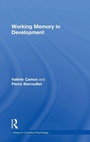
Valerie Camos | Pierre Barrouillet
Working Memory in Development
Book
03/2018
1st Edition
Routledge
€206.30
Shipment within 10-20 days

Valerie Camos | Pierre Barrouillet
Working Memory in Development
E-Book
03/2018
Routledge
€65.99
Available for download

Valerie Camos | Pierre Barrouillet
Working Memory in Development
E-Book
03/2018
1st Edition
Routledge
€65.99
Available for download
Persons
Valerie Camos is Professor of Developmental Psychology at the Universite of Fribourg, Switzerland.
Pierre Barrouillet is Professor of Developmental Psychology at the University of Geneva, Switzerland, and Director of the Archives Jean Piaget.
Pierre Barrouillet is Professor of Developmental Psychology at the University of Geneva, Switzerland, and Director of the Archives Jean Piaget.
Content
Preface i-v
Part 1: The role of working memory in development 1
1. The emergence of working memory in developmental psychology:
From constructivism to cognitivism 4
2. Working memory in neo-Piagetian theories 31
3. Working memory in domain-specific developmental theories 56
Part 2: The development of working memory 82
4. The evolving concept of working memory 85
5. Age-related increases in short-term maintenance 102
6. The development of the executive control 130
7. The sources of working memory development 159
Part 3: Development in the Time-Based Resource-Sharing model 178
8. Sources of development in the TBRS model 180
9. The impact of a developing TBRS working memory
on cognitive development 209
Epilogue: Searching for cognitive development 238
References 242
Part 1: The role of working memory in development 1
1. The emergence of working memory in developmental psychology:
From constructivism to cognitivism 4
2. Working memory in neo-Piagetian theories 31
3. Working memory in domain-specific developmental theories 56
Part 2: The development of working memory 82
4. The evolving concept of working memory 85
5. Age-related increases in short-term maintenance 102
6. The development of the executive control 130
7. The sources of working memory development 159
Part 3: Development in the Time-Based Resource-Sharing model 178
8. Sources of development in the TBRS model 180
9. The impact of a developing TBRS working memory
on cognitive development 209
Epilogue: Searching for cognitive development 238
References 242