

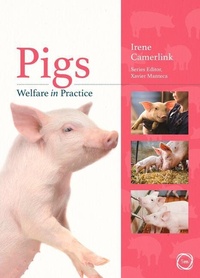
Pigs Welfare in Practice
Will be published approx. on 28. February 2020
Book
Paperback/Softback
120 pages
978-1-78918-105-0 (ISBN)
Description
A concise practical handbook on high welfare standards in pig farming for people who work directly with animals. The aim is to improve animal health and farm profitability through introducing good husbandry practices and finding low cost solutions to improve welfare for the animals.
Aimed at farmers, stockmen, food industry personnel and agricultural students, the book explains why welfare is important for the animal and the farm, what good welfare looks like, how to measure welfare in practice using assessment tools, and practical advice for improving welfare for pigs.
Aimed at farmers, stockmen, food industry personnel and agricultural students, the book explains why welfare is important for the animal and the farm, what good welfare looks like, how to measure welfare in practice using assessment tools, and practical advice for improving welfare for pigs.
More details
Series
Language
English
Place of publication
United Kingdom
Target group
Professional and scholarly
Dimensions
Height: 148 mm
Width: 206 mm
Thickness: 19 mm
Weight
270 gr
ISBN-13
978-1-78918-105-0 (9781789181050)
Copyright in bibliographic data and cover images is held by Nielsen Book Services Limited or by the publishers or by their respective licensors: all rights reserved.
Schweitzer Classification
Other editions
Additional editions
Person
Dr Irene Camerlink is ethologist at Scotland's Rural College. She has done research on pig behaviour and welfare for over 10 years, with an emphasis on both harmful and positive interactions between animals. She has published over 20 papers on this subject in scientific journals.
Content
Introduction
1. Understanding pig welfare
2. Making the business case for animal welfare
3. Assessing Animal Welfare
4. What you can do to improve animal welfare
1. Understanding pig welfare
2. Making the business case for animal welfare
3. Assessing Animal Welfare
4. What you can do to improve animal welfare