

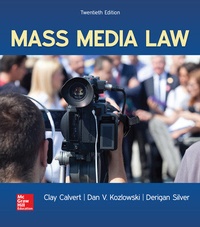
Mass Media Law
Description
Instructors and students can now access their course content through the Connect digital learning platform by purchasing either standalone Connect access or a bundle of print and Connect access. McGraw-Hill Connect (R) is a subscription-based learning service accessible online through your personal computer or tablet. Choose this option if your instructor will require Connect to be used in the course. Your subscription to Connect includes the following:
SmartBook (R) - an adaptive digital version of the course textbook that personalizes your reading experience based on how well you are learning the content.
Access to your instructor's homework assignments, quizzes, syllabus, notes, reminders, and other important files for the course.
Progress dashboards that quickly show how you are performing on your assignments and tips for improvement.
The option to purchase (for a small fee) a print version of the book. This binder-ready, loose-leaf version includes free shipping.
Complete system requirements to use Connect can be found here: http://www.mheducation.com/highered/platforms/connect/training-support-students.html
In its twentieth edition, Mass Media Law comprehensively examines the principles of media law, First Amendment freedoms of speech, and press and assembly. This timely revised edition is extremely pertinent in this era of both "fake news" and open hostility by some politicians toward the press. Students are offered an updated look at the ever-changing landscape of media law. Led by a team of preeminent scholars in the field of mass media law: Clay Calvert, Dan Kozlowski and Derigan Silver, this new edition is engaging, readable, and entertaining.
Instructors and students can now access their course content through the Connect digital learning platform by purchasing either standalone Connect access or a bundle of print and Connect access. McGraw-Hill Connect (R) is a subscription-based learning service accessible online through your personal computer or tablet. Choose this option if your instructor will require Connect to be used in the course. Your subscription to Connect includes the following:
<ul><li>SmartBook (R) - an adaptive digital version of the course textbook that personalizes your reading experience based on how well you are learning the content.</li><li>Access to your instructor's homework assignments, quizzes, syllabus, notes, reminders, and other important files for the course.</li><li>Progress dashboards that quickly show how you are performing on your assignments and tips for improvement.</li><li>The option to purchase (for a small fee) a print version of the book. This binder-ready, loose-leaf version includes free shipping.</li></ul>
Complete system requirements to use Connect can be found here: http://www.mheducation.com/highered/platforms/connect/training-support-students.html
More details
Persons
Clay Calvert is Professor and Brechner Eminent Scholar in Mass Communication in the College of Journalism and Communications at the University of Florida in Gainesville, where he also directs the Marion B. Brechner First Amendment Project. He has taught undergraduate media law classes for more than twenty years.
Content
<strong>Chapter 1 The American Legal System</strong>
<strong> </strong>
<strong>Sources of the Law </strong>
Common Law
<em>The Role of Precedent </em>
<em>Finding Common-Law Cases </em>
Equity Law
Statutory Law
Constitutional Law
Executive Orders and Administrative Rules
SUMMARY
<strong>The Judicial System </strong>
Facts versus the Law
The Federal Court System
<em>The Supreme Court </em>
<em>Other Federal Courts </em>
<em>Federal Judges </em>
The State Court System
Judicial Review
SUMMARY
Lawsuits
SUMMARY
<strong>Bibliography </strong>
<strong> </strong>
<strong> </strong>
<strong>Chapter 2 The First Amendment: The Meaning of Freedom </strong>
<strong> </strong>
<strong>Historical Development </strong>
Freedom of the Press in England
Freedom of the Press in Colonial America
<em>Community Censorship, Then and Now </em>
SUMMARY
<strong>The</strong> <strong>First Amendment </strong>
The New Constitution
Freedom of Expression in the 18th Century
Freedom of Expression Today
SUMMARY
<strong>The Meaning of Freedom </strong>
Seditious Libel and the Right to Criticize the Government
Alien and Sedition Acts
Sedition in World War I
The Smith Act
Defining the Limits of Freedom of Expression
<em>Real-Life Violence: Blaming Movies, Video Games and Books </em>
<em>The </em>Gitlow <em>Ruling and the Incorporation Doctrine </em>
SUMMARY
<strong>Prior Restraint </strong>
<em>Near </em>v. <em>Minnesota </em>
Pentagon Papers Case
Progressive Magazine Case
<em>United States </em>v. <em>Bell </em>
SUMMARY
<strong>Bibliography </strong>
<strong> </strong>
<strong> </strong>
<strong> </strong>
<strong> </strong>
<strong> </strong>
<strong> </strong>
<strong> </strong>
<strong>Chapter 3 The First Amendment: Contemporary Problems </strong>
<strong> </strong>
<strong>The First Amendment in Schools </strong>
Censorship of Expression in Public High Schools
<em>The </em>Hazelwood <em>Case </em>
<em>The </em>Bethel <em>Case </em>
<em>The </em>Morse <em>Case </em>
Censorship of College
Newspapers
<em>Problems for College Journalists </em>
<em>Alcohol Advertisements and the College Press </em>
Book Banning
SUMMARY
<strong>Time, Place and Manner Restrictions </strong>
Forum Analysis
SUMMARY
<strong>Other Prior Restraints </strong>
Son of Sam Laws
Prior Restraint and Protests
SUMMARY
<strong>Hate Speech/Fighting Words </strong>
SUMMARY
<strong>The First Amendment and Election Campaigns </strong>
SUMMARY
<strong>The First Amendment and the Information Superhighway </strong>
Net Neutrality
<strong>Bibliography </strong>
<strong> </strong>
<strong> </strong>
<strong>Chapter 4 Libel: Establishing a Case </strong>
<strong> </strong>
<strong>The Libel Landscape </strong>
<strong>Damage Claims </strong>
Time and Money
Time and the Law
The Lawsuit as a Weapon
Resolving the Problem
SUMMARY
<strong>Law of Defamation </strong>
<strong>Elements of Libel </strong>
Publication
<em>Publishers and Vendors </em>
<em>Libel on the Internet </em>
Identification
<em>Group Identification </em>
Defamation
<em>Crime </em>
<em>Sexual References </em>
<em>Personal Habits </em>
<em>Ridicule </em>
<em>Business Reputation </em>
<em>Criticism of a Product </em>
Falsity
SUMMARY
<strong>Bibliography </strong>
<strong> </strong>
<strong> </strong>
<strong> </strong>
<strong> </strong>
<strong> </strong>
<strong> </strong>
<strong> </strong>
<strong> </strong>
<strong>Chapter 5 Libel: Proof of Fault </strong>
<strong> </strong>
<strong><em>New York Times </em></strong><strong>v. <em>Sullivan </em></strong>
The Rationale for the Ruling
<strong>Public Persons versus Private Persons </strong>
Who Is a Public Official?
<em>Job Description </em>
<em>The Nature of the Story </em>
All-Purpose Public Figures
Limited-Purpose Public Figures
Lower-Court Rulings
<em>The Nature of the Controversy </em>
<em>The Plaintiff 's Role </em>
Businesses as Public Figures
Public Persons Over Time
Involuntary Public Figures
SUMMARY
<strong>The Meaning of Fault </strong>
Negligence
Actual Malice
<em>Knowledge of Falsity </em>
<em>Reckless Disregard for the Truth </em>
<em>Applying the Actual Malice Standard </em>
SUMMARY
<strong>Intentional Infliction of Emotional Distress </strong>
SUMMARY
<strong>Bibliography </strong>
<strong> </strong>
<strong> </strong>
<strong>Chapter 6 Libel: Defenses and Damages </strong>
<strong>Summary Judgment/Statute of Limitations </strong>
Statute of Limitations
<em>Jurisdiction </em>
<em>Jurisdiction and the Internet </em>
SUMMARY
<strong>Truth </strong>
Privileged Communications
Absolute Privilege
Qualified Privilege
Neutral Reportage
Abuse of Privilege
SUMMARY
<strong>Protection of Opinion </strong>
Rhetorical Hyperbole
The First Amendment
<em>The </em>Ollman <em>Test </em>
Fair Comment and Criticism
SUMMARY
<strong>Defenses and Damages </strong>
Consent
Right of Reply /Self-Defense
Damages
<em>Compensatory Damages</em>
<em>General or Actual Damages</em>
www.mhhe.com
<em> </em>
<em>Special Damages </em>
<em>Presumed Damages </em>
<em>Punitive Damages </em>
Retraction Statutes
SUMMARY
<strong>Criminal Libel </strong>
<strong>Bibliography </strong>
<strong> </strong>
<strong> </strong>
<strong>Chapter 7 Invasion of Privacy: Appropriation and Intrusion </strong>
<strong> </strong>
<strong>Conceptions and Sources of Privacy in the United States </strong>
Invasion of Privacy
The Growth of Privacy Laws
<strong>Appropriation </strong>
Right of Publicity
Use of Name or Likeness
Advertising and Trade Purposes
News and Public Interest Exception
Other Exceptions
Booth <em>Rule </em>
Consent as a Defense
<em>When Consent Might Not Work </em>
Life After Death: Post-Mortem Publicity Rights
SUMMARY
<strong>Intrusion </strong>
Intrusion and the Press
No Privacy in Public
The Use of Hidden Recording Devices
Intrusion by Drones
Intrusion and the Publication of Information Obtained Illegally
SUMMARY
<strong>Bibliography </strong>
<strong> </strong>
<strong> </strong>
<strong>Chapter 8 Invasion of Privacy: Publication of Private Information and False Light </strong>
<strong> </strong>
<strong>Public Disclosure of Private Facts </strong>
Publicity
Private Facts
<em>Naming Rape Victims </em>
Highly Offensive Publicity
Legitimate Public Concern and Newsworthiness
Ethics and Privacy
Recounting the Past
Private Facts on the Internet
SUMMARY
<strong>False-Light Invasion of Privacy </strong>
Fictionalization
Other Falsehoods
Highly Offensive Material
The Fault Requirement
SUMMARY
<strong>Bibliography </strong>
<strong> </strong>
<strong> </strong>
<strong>Chapter 9 Gathering Information: Records and Meetings </strong>
<strong> </strong>
<strong>News Gathering and the Law </strong>
The Constitution and News Gathering
<em>Access to Government Officials: A Right to Interview? </em>
<em>The First Amendment Protection of News Gathering </em>
SUMMARY
<strong>The Freedom of Information Act </strong>
Recent FOIA Reforms
Agency Records
<em>What Is an Agency? </em>
<em>What Is a Record? </em>
<em>What Is an Agency Record? </em>
FOIA Exemptions
<em>National Security </em>
<em>Housekeeping Practices </em>
<em>Statutory Exemption </em>
<em>Trade Secrets </em>
<em>Working Papers/Discovery </em>
<em>Personal Privacy </em>
<em>Law Enforcement </em>
<em>Financial Records </em>
<em>Geological Data </em>
Handling FOIA Requests
Federal Open-Meetings Law
SUMMARY
<strong>State Laws on Meetings and Records </strong>
State Open-Meetings Laws
State Open-Records Laws
The Privatization of Public Government
SUMMARY
<strong>Laws That Restrict Access to Information </strong>
School Records
Health and Medical Records
The Federal Privacy Law
Criminal History Privacy Laws
State Statutes That Limit Access to Information
SUMMARY
<strong>Bibliography </strong>
<strong> </strong>
<strong> </strong>
<strong>Chapter 10 Protection of News Sources/Contempt Power </strong>
<strong> </strong>
<strong>Journalists, Jail and Confidential Sources </strong>
<strong>News and News Sources </strong>
The Failure to Keep a Promise
<strong>Constitutional Protection of News Sources </strong>
Lower-Court Rulings
<em>Civil Cases </em>
<em>Criminal Cases </em>
<em>Grand Jury Proceedings </em>
Nonconfidential Information and Waiver of the Privilege
Who Is a Journalist?
Telephone Records
SUMMARY
<strong>Legislative and Executive Protection of News Sources </strong>
Shield Laws
Federal Guidelines
Newsroom Searches
How to Respond to a Subpoena
SUMMARY
<strong>The Contempt Power </strong>
Kinds of Contempt
<em>Contempt and the Press </em>
Collateral Bar Rule
SUMMARY
<strong>Bibliography </strong>
<strong> </strong>
<strong> </strong>
<strong>Chapter 11 Free Press-Fair Trial: Trial-Level Remedies and Restrictive Orders </strong>
<strong> </strong>
<strong>Prejudicial Crime Reporting </strong>
Impact on Jurors
The Law and Prejudicial News
SUMMARY
<strong>Traditional Judicial Remedies </strong>
Voir Dire
Change of Venue
Continuance
Admonition to the Jury
Sequestration of the Jury
SUMMARY
<strong>Restrictive Orders to Control Publicity </strong>
Restrictive Orders Aimed at the Press
Restrictive Orders Aimed at Trial Participants
<strong>Contact with Jurors </strong>
SUMMARY
<strong>Bibliography</strong>
<strong> </strong>
<strong> </strong>
<strong>Chapter 12 Free Press-Fair Trial: Closed Judicial Proceedings </strong>
<strong> </strong>
<strong>Closed Proceedings and Sealed Documents </strong>
Open Courts and the Constitution
Open and Closed Trials
<em>Suspected Terrorists, Enemy Combatants, Et Al. </em>
SUMMARY
<strong>Closure of Other Hearings </strong>
Accessible and Inaccessible Documents
Access and the Broadcast Journalist
<em>Access to Evidence </em>
Recording and Televising Judicial Proceedings
SUMMARY
<strong>Bench-Bar-Press Guidelines </strong>
SUMMARY
<strong>Bibliography</strong>
<strong> </strong>
<strong> </strong>
<strong>Chapter 13 Regulation of Obscene and Other Erotic Material </strong>
<strong> </strong>
<strong>The Law of Obscenity </strong>
Early Obscenity Law
Defining Obscenity
SUMMARY
<strong>Contemporary Obscenity Law </strong>
The <em>Miller </em>Test
<em>An Average Person </em>
<em>Community Standards </em>
<em>Patent Offensiveness </em>
<em>Serious Value </em>
Other Standards
<em>Variable Obscenity </em>
<em>Child Pornography </em>
<em>Children as Child Pornographers and Sexting </em>
<em>Obscenity and Women </em>
SUMMARY
<strong>Regulation of Nonobscene </strong><strong>Erotic Material </strong>
Sexually Oriented Businesses
Attacks on the Arts and Popular Culture
Erotic Materials in Cyberspace
<em>The Communications Decency Act </em>
<em>The Child Online Protection Act </em>
<em>The Children's Internet Protection Act </em>
<em>Current Issues Online: The New "Dot XXX" Domain </em>
SUMMARY
<strong>Bibliography </strong>
<strong> </strong>
<strong> </strong>
<strong> </strong>
<strong> </strong>
<strong> </strong>
<strong>Chapter 14 Copyright and Trademark </strong>
<strong> </strong>
<strong>Intellectual Property Law </strong>
Patents
Trademarks
<strong>Roots Copyright </strong>
What May Be Copyrighted
Copyright and Facts
<em>Telephone Books and Databases </em>
<em>News Events </em>
<em>Research Findings and History </em>
Misappropriation
Duration of Copyright Protection
SUMMARY
<strong>Fair Use </strong>
Purpose and Character of Use
Nature of the Copyrighted Work
The Portion or Percentage of a Work Used
Effect of Use on Market
Application of the Criteria
SUMMARY
<strong>Copyright Protection and Infringement </strong>
Copyright Notice
Registration
Infringement
<em>Originality of the Plaintiff 's Work </em>
<em>Access </em>
<em>Copying and Substantial Similarity </em>
Copyright Infringement and the Internet
<em>Digital Millennium Copyright Act </em>
<em>File Sharing </em>
Film and Television
SUMMARY
<strong>Freelancing and Copyright </strong>
<strong>Damages </strong>
<strong>Bibliography</strong>
<strong> </strong>
<strong> </strong>
<strong>Chapter 15 15 Regulation of Advertising </strong>
<strong> </strong>
<strong>Advertising and the First Amendment </strong>
Commercial Speech Doctrine
Compelled Advertising Subsidies and Government Speech
SUMMARY
<strong>The Regulation of Advertising </strong>
Self-Regulation
Lawsuits by Competitors and Consumers
State and Local Laws
Federal Regulation
<em>Telemarketing </em>
Regulating Junk E-Mail and Spam
SUMMARY
<strong>Federal Trade Commission </strong>
False Advertising Defined
Means to Police Deceptive Advertising
<em>Guides and the Children's Online Privacy Protection Act Voluntary Compliance </em>
<em>Consent Agreement </em>
<em>Litigated Order </em>
<em>Substantiation </em>
<em>Corrective Advertising </em>
<em>Injunctions </em>
<em>Trade Regulation Rules </em>
SUMMARY
<strong>The Regulatory Process </strong>
Procedures
<strong>Special Cases of Deceptive Advertising </strong>
Testimonials
Bait-and-Switch Advertising
Defenses
Advertising Agency/Publisher Liability
SUMMARY
<strong>Bibliography </strong>
<strong> </strong>
<strong> </strong>
<strong>Chapter 16 Telecommunications Regulation </strong>
<strong>A Prologue to the Present </strong>
History of Regulation
<strong>The Changing Philosophy of Broadcast Regulation </strong>
The <em>Prometheus </em>Decision and Continuing Fallout
SUMMARY
<strong>Basic Broadcast Regulation </strong>
Federal Communications Commission
<em>Powers </em>
<em>Censorship Powers </em>
Licensing
<em>Multiple Ownership Rules </em>
<em>License Renewal </em>
<em>The Public's Role and Online Public Inspection Files </em>
SUMMARY
<strong>Regulation of Program Content </strong>
Sanctions
Regulation of Children's Programming
Obscene, Indecent and Profane Material
Violence on Television
SUMMARY
<strong>Regulation of Political Programming </strong>
Candidate Access Rule
Equal Opportunity/Equal Time Rule
<em>Use of the Airwaves </em>
<em>Legally Qualifi ed Candidates </em>
SUMMARY
<strong>News and Public Affairs </strong>
Video News Releases, Sponsorship Identification and the FCC
The First Amendment
SUMMARY
<strong>Regulation of New Technology </strong>
Satellite Radio
Internet and Broadband
Cable Television 679
Federal Legislation Regulating
Cable Television
<em>Purpose of the Law </em>
<em>Jurisdiction and Franchises </em>
<em>Must-Carry Rules </em>
<em>Programming and Freedom of Expression </em>
SUMMARY
<strong>Bibliography </strong>