

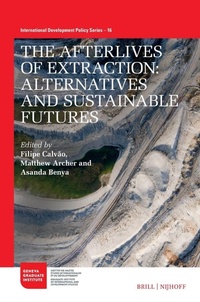
The Afterlives of Extraction
Alternatives and Sustainable Futures
Published on 2. November 2023
Book
Paperback/Softback
374 pages
978-90-04-53885-6 (ISBN)
Description
The frontiers of extraction are expanding rapidly, driven by a growing demand for minerals and metals that is often motivated by sustainability considerations. Two volumes of International Development Policy are dedicated to the paradoxes and futures of green extractivism, with analyses of experiences from five continents. In this, the second of the two volumes, the 22 authors, using different conceptual approaches and in different empirical contexts, demonstrate the alarming obduracy of the logic of extractivism, even - and perhaps especially - in the growing support for the so-called green transition. The authors highlight the complex and enduring legacies of resource extraction and the urgent need to move beyond extractive models of development towards alternative pathways that prioritise social justice, environmental sustainability, democratic governance and the well-being of both humans and non-humans. They also caution us against the assumption that anti-extraction is anti-extractivist, that post-extraction is post-extractivism, and they critically attune us to the systemic nature of extractivism in ways that both connect and transcend any particular site or scale.
This volume accompanies IDP 15, The Lives of Extraction: Identities, Communities, and the Politics of Place.
This volume accompanies IDP 15, The Lives of Extraction: Identities, Communities, and the Politics of Place.
More details
Series
Language
English
Place of publication
Netherlands
Publishing group
Brill
Target group
Professional and scholarly
Product notice
Paperback (trade)
Unsewn / adhesive bound
Dimensions
Height: 234 mm
Width: 155 mm
Thickness: 20 mm
Weight
517 gr
ISBN-13
978-90-04-53885-6 (9789004538856)
Copyright in bibliographic data and cover images is held by Nielsen Book Services Limited or by the publishers or by their respective licensors: all rights reserved.
Schweitzer Classification
Persons
Filipe Calvao is an economic and environmental anthropologist. He is an associate professor at the Geneva Graduate Institute. His research examines the politics, ecologies and economies of mineral extraction, with a current focus on the nexus between digitalization, work and extractivism.
Matthew Archer studies corporate sustainability, sustainable finance and sustainable development through the lens of political ecology and environmental anthropology. He is currently a lecturer in sustainability in the Department of Environment and Geography at the University of York.
Asanda Benya is a labour sociologist based at the University of Cape Town. She works at the intersection of gender, class and race. She researches the extractives industries, gendered workplace subjectivities, and labour and feminist movements.
Matthew Archer studies corporate sustainability, sustainable finance and sustainable development through the lens of political ecology and environmental anthropology. He is currently a lecturer in sustainability in the Department of Environment and Geography at the University of York.
Asanda Benya is a labour sociologist based at the University of Cape Town. She works at the intersection of gender, class and race. She researches the extractives industries, gendered workplace subjectivities, and labour and feminist movements.
Content
Preface
List of Figures and Tables
Abbreviations
Notes on Contributors
1?Introduction: Global Afterlives of Extraction
??Filipe? ?Calv?a?o??, ??Asanda? ?Benya?? and ??Matthew? ?Archer?????
Part 1?
Post-extractivism: Debates and Practices?
2?Expanding Extractivisms: Extractivisms as Modes of Extraction Sustaining Imperial Modes of Living
??Erik? ?Post?????
3?The Structures of Conquest: Debating Extractivism(s), Infrastructures and Environmental Justice for Advancing Post-development Pathways
??Alexander? ?Dunlap?????
4?Logics of Extraction and of the Valorisation of Culture: the Role of Post-extraction Investment in the Creation of Inequality in China
??Ryan? ?Parsons?????
5?Regulating Mine Rehabilitation and Closure on Indigenous Held Lands: Insights from the Regulated Resource States of Australia and Canada
??Emille? ?Boulot?? and ??Ben? ?Collins??????
Part 2?
Resilience, Contestation and Resistance?
6?Aluminium in Suriname (1898-2020): an Industry Came and Went, But Its Impacts on the Maroon Communities Remain
??Simon? ?Lobach?????
7?Contesting Extraction: Challenges for Coalition Building between Agrarian and Anti-mining Movements
??Louisa? ?Prause?????
8?'We Are Nature Defending Itself': the Forest of Dannenrod Occupation as an Example of Contested Extractivism in the Global North
??Dorothea? ?Hamilton?? and ??Sina? ?Tr?oe?lenberg?????
9?National Resources, Resistance, and the Afterlives of the New International Economic Order in Bangladesh
??Paul Robert? ?Gilbert??????
Part 3?
'Green' Extractivism and Its Discontents?
10?The 'Alterlives' of Green Extractivism: Lithium Mining and Exhausted Ecologies in the Atacama Desert
??James J. A.? ?Blair??, ??Ram?o?n M.? ?Balc?a?zar??, ??Javiera? ?Barandiar?a?n?? and ??Amanda? ?Maxwell?????
11?Green Masquerade: Neo-liberalism, Extractive Renewable Energy Transitions, and the 'Good' Anthropocene in South Africa
??Michelle? ?Pressend?????
12?Electric Vehicle Paradise? Exploring the Value Chains of Green Extractivism
??Devyn? ?Remme??, ??Siddharth? ?Sareen??, ??H?a?vard? ?Haarstad?? and ??Kjetil? ?Rommetveit??????
Index
List of Figures and Tables
Abbreviations
Notes on Contributors
1?Introduction: Global Afterlives of Extraction
??Filipe? ?Calv?a?o??, ??Asanda? ?Benya?? and ??Matthew? ?Archer?????
Part 1?
Post-extractivism: Debates and Practices?
2?Expanding Extractivisms: Extractivisms as Modes of Extraction Sustaining Imperial Modes of Living
??Erik? ?Post?????
3?The Structures of Conquest: Debating Extractivism(s), Infrastructures and Environmental Justice for Advancing Post-development Pathways
??Alexander? ?Dunlap?????
4?Logics of Extraction and of the Valorisation of Culture: the Role of Post-extraction Investment in the Creation of Inequality in China
??Ryan? ?Parsons?????
5?Regulating Mine Rehabilitation and Closure on Indigenous Held Lands: Insights from the Regulated Resource States of Australia and Canada
??Emille? ?Boulot?? and ??Ben? ?Collins??????
Part 2?
Resilience, Contestation and Resistance?
6?Aluminium in Suriname (1898-2020): an Industry Came and Went, But Its Impacts on the Maroon Communities Remain
??Simon? ?Lobach?????
7?Contesting Extraction: Challenges for Coalition Building between Agrarian and Anti-mining Movements
??Louisa? ?Prause?????
8?'We Are Nature Defending Itself': the Forest of Dannenrod Occupation as an Example of Contested Extractivism in the Global North
??Dorothea? ?Hamilton?? and ??Sina? ?Tr?oe?lenberg?????
9?National Resources, Resistance, and the Afterlives of the New International Economic Order in Bangladesh
??Paul Robert? ?Gilbert??????
Part 3?
'Green' Extractivism and Its Discontents?
10?The 'Alterlives' of Green Extractivism: Lithium Mining and Exhausted Ecologies in the Atacama Desert
??James J. A.? ?Blair??, ??Ram?o?n M.? ?Balc?a?zar??, ??Javiera? ?Barandiar?a?n?? and ??Amanda? ?Maxwell?????
11?Green Masquerade: Neo-liberalism, Extractive Renewable Energy Transitions, and the 'Good' Anthropocene in South Africa
??Michelle? ?Pressend?????
12?Electric Vehicle Paradise? Exploring the Value Chains of Green Extractivism
??Devyn? ?Remme??, ??Siddharth? ?Sareen??, ??H?a?vard? ?Haarstad?? and ??Kjetil? ?Rommetveit??????
Index