

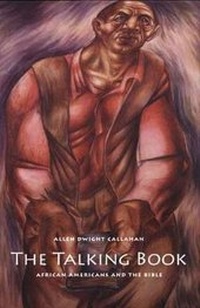
The Talking Book
African Americans and the Bible
Published on 25. April 2008
Book
Paperback/Softback
304 pages
978-0-300-13616-6 (ISBN)
Description
"A marvelous exploration of how the Bible has shaped African-American religion and culture" (Daniel J. Harrington, America), from the early days of slavery to the present
"This is a landmark book. I am not aware of any book in print that draws so many telling conclusions about African Americans and the Bible."-Mark A. Noll, University of Notre Dame
The Talking Book casts the Bible as the central character in a vivid portrait of Black America, tracing the origins of African-American culture from slavery's secluded forest prayer meetings to the bright lights and bold style of today's hip-hop artists.
The Bible has profoundly influenced African Americans throughout history. From a variety of perspectives this wide-ranging book is the first to explore the Bible's role in the triumph of the black experience. Using the Bible as a foundation, African Americans shared religious beliefs, created their own music, and shaped the ultimate key to their freedom-literacy. Allen Callahan highlights the intersection of biblical images with African-American music, politics, religion, art, and literature.
The author tells a moving story of a biblically informed African-American culture, identifying four major biblical images-Exile, Exodus, Ethiopia, and Emmanuel. He brings these themes to life in a unique African-American history that grows from the harsh experience of slavery into a rich culture that endures as one of the most important forces of twenty-first-century America.
"This is a landmark book. I am not aware of any book in print that draws so many telling conclusions about African Americans and the Bible."-Mark A. Noll, University of Notre Dame
The Talking Book casts the Bible as the central character in a vivid portrait of Black America, tracing the origins of African-American culture from slavery's secluded forest prayer meetings to the bright lights and bold style of today's hip-hop artists.
The Bible has profoundly influenced African Americans throughout history. From a variety of perspectives this wide-ranging book is the first to explore the Bible's role in the triumph of the black experience. Using the Bible as a foundation, African Americans shared religious beliefs, created their own music, and shaped the ultimate key to their freedom-literacy. Allen Callahan highlights the intersection of biblical images with African-American music, politics, religion, art, and literature.
The author tells a moving story of a biblically informed African-American culture, identifying four major biblical images-Exile, Exodus, Ethiopia, and Emmanuel. He brings these themes to life in a unique African-American history that grows from the harsh experience of slavery into a rich culture that endures as one of the most important forces of twenty-first-century America.
Reviews / Votes
"'The Talking Book... is a passionate and beautiful meditation from a black New Testament scholar on the African American reception of (nearly) all-Jewish narrative about losers ending up as winners.' David Martin, Times Literary Supplement 'In this informative academic volume, Callahan examines how the music and literature of black Americans are shot through with biblical images... From W.E.B. Du Bois to Toni Morrison, black writers have invoked Jesus to signify 'the suffering of black people'. Callahan's investigations will doubtless interest students of African-American religion.' Publishers Weekly"More details
Language
English
Place of publication
United States
Target group
College/higher education
Product notice
Paperback (trade)
Dimensions
Height: 235 mm
Width: 156 mm
Weight
386 gr
ISBN-13
978-0-300-13616-6 (9780300136166)
Copyright in bibliographic data and cover images is held by Nielsen Book Services Limited or by the publishers or by their respective licensors: all rights reserved.
Schweitzer Classification
Person
Allen Dwight Callahan is director of the Instituto Martin Luther King, Jr. in Salvador, Brazil.