

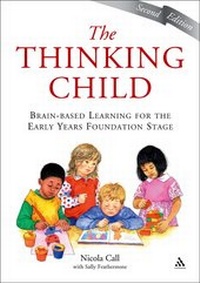
The Thinking Child
Brain-Based Learning for the Early Years Foundation Stage
2nd Edition
Published on 8. April 2010
Book
Paperback/Softback
160 pages
978-1-85539-472-8 (ISBN)
Description
This updated edition of "The Thinking Child" looks at how children learn before applying the findings, and statutory frameworks, to best practice in the classroom. From the bestselling author of "The ALPS Approach", comes this new and updated edition of "The Thinking Child". The book relates the most current literature, research and guidance on how children learn best, and offers practical advice on how to reflect these findings in the classroom. This edition includes new material on: inclusion and personalisation - celebrating diversity and difference in schools with reference to SEAL, collaborative working - in the context of children's centres, extended schools and neighbourhood nurseries, and foreign languages - with reference to English as an additional language (EAL) and foreign language learning. It creates a greater emphasis on: outdoor learning, fostering partnerships with parents and carers, and multiple intelligences. This edition is fully-updated with reference to the latest government initiatives, such as the new Early Years Foundation Stage (EYFS) statutory framework and the Primary Strategy for Literacy and Numeracy.
The authors offer practical advice on implementing statutory requirements, maintaining a balance between child-initiated and adult-led activities and making the most of your school's resources.
The authors offer practical advice on implementing statutory requirements, maintaining a balance between child-initiated and adult-led activities and making the most of your school's resources.
More details
Edition
2nd Revised edition
Language
English
Place of publication
London
United Kingdom
Publishing group
Bloomsbury Publishing PLC
Target group
Professional and scholarly
Edition type
Revised edition
Illustrations
90 bw illustrations
Dimensions
Height: 297 mm
Width: 210 mm
ISBN-13
978-1-85539-472-8 (9781855394728)
Copyright in bibliographic data and cover images is held by Nielsen Book Services Limited or by the publishers or by their respective licensors: all rights reserved.
Schweitzer Classification
Other editions
Additional editions
E-Book
04/2010
2nd Edition
Continuum Publishing Corporation
€27.49
Available for download
Previous edition

Book
02/2003
Network Educational Press Ltd
€49.70
Article exhausted; check for reprint
Persons
Nicola Call started her teaching career in Inner London, rising rapidly to become Deputy Head of three primary schools. Nicola now lives in California where she combines writing with research into Accelerated Learning work in schools. Sally Featherstone is co-founder of a publishing company, Featherstone Education, with her husband. Sally won 'Education Publisher of the Year' at the Independent Publishing Awards 2007.
Content
Introduction: Understanding the child's brain; Step 1: Answering some frequently asked questions; Step 2: Let's meet a brain; Step 3: Meeting the children in their settings; Part One: Preparing the climate and context for learning; Step 1: Addressing the children's physical needs; Step 2: Developing emotional intelligence; Step 3: Providing children with the tools for learning; Step 4: Managing behaviour positively; Step 5: Fostering partnerships with parents and carers; Step 6: Inclusion in the Classroom; Part Two: Supporting independent learning; Step 1: Making maximum use of the environment; Step 2: Helping children to develop good attention skills; Step 3: Helping children to stay on task; Step 4: Talking the language of learning; Part Three: Developing brain-based techniques; Step 1: Teaching children to mind map; Step 2: Adventures in play; Step 3: Maximizing learning through music; Step 4: Teaching and learning through movement; Step 5: The place for technology; Part Four: Teaching for intelligence; Step 1: Creative teaching for better learning; Step 2: Fostering the beginnings of group work; Step 3: Teaching through VAK; Step 4: Engaging the multiple intelligences; Step 5: The importance of play Website information Bibliography; References; Index.