

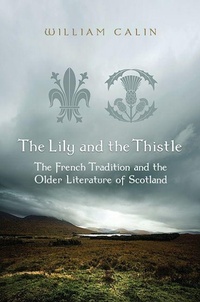
The Lily and the Thistle
The French Tradition and the Older Literature of Scotland
Published on 20. December 2013
Book
Hardback
432 pages
978-1-4426-4665-0 (ISBN)
Description
In The Lily and the Thistle, William Calin argues for a reconsideration of the French impact on medieval and renaissance Scottish literature. Calin proposes that much of traditional, medieval, and early modern Scottish culture, thought to be native to Scotland or primarily from England, is in fact strikingly international and European. By situating Scottish works in a broad intertextual context, Calin reveals which French genres and modes were most popular in Scotland and why.
The Lily and the Thistle provides appraisals of medieval narrative texts in the high courtly mode (equivalent to the French "dits amoureux"); comic, didactic, and satirical texts; and Scots romance. Special attention is accorded to texts composed originally in French such as the Arthurian "Roman de Fergus," as well as to the lyrics of Mary Queen of Scots and little known writers from the French and Scottish canons. By considering both medieval and renaissance works, Calin is able to observe shifts in taste and French influence over the centuries.
The Lily and the Thistle provides appraisals of medieval narrative texts in the high courtly mode (equivalent to the French "dits amoureux"); comic, didactic, and satirical texts; and Scots romance. Special attention is accorded to texts composed originally in French such as the Arthurian "Roman de Fergus," as well as to the lyrics of Mary Queen of Scots and little known writers from the French and Scottish canons. By considering both medieval and renaissance works, Calin is able to observe shifts in taste and French influence over the centuries.
Reviews / Votes
'Calin's lively book works productively against restrictive views of nationalist literary traditions and invites further comparative study of the Middle Ages and Renaissance.'- Lee Manion (Speculum, April 2015) 'An invaluable inspiration to future research in the field of Scottish literary study... The Lily and the Thistle is an important contribution to the understanding of Older Scots literature in its international and cultural context.'
- Elizabeth Elliott (Scottish Literary Review vol 7:02:2015)
More details
Language
English
Place of publication
Toronto
Canada
Target group
College/higher education
Product notice
sewn/stitched
Cloth over boards
With dust jacket
Dimensions
Height: 231 mm
Width: 160 mm
Thickness: 33 mm
Weight
771 gr
ISBN-13
978-1-4426-4665-0 (9781442646650)
Copyright in bibliographic data and cover images is held by Nielsen Book Services Limited or by the publishers or by their respective licensors: all rights reserved.
Schweitzer Classification
Person
William Calin is a graduate research professor in the Department of Languages, Literatures, and Cultures at the University of Florida.
Content
Introduction
I. High Courtly Narrative: The Tale of Love
1. The Kingis Quair
2. Robert Henryson
3. Gavin Douglas
4. William Dunbar
5. John Rolland
II. The Comic, Didactic, and Satiric: A Mode of Clerical Provenance
1. Robert Henryson
2. William Dunbar
3. David Lyndsay
4. The Freiris of Berwik
5. King Hart
III.Romance
1. Fergus
2. Lancelot of the Laik
3. Golagros and Gawane
4. The Taill of Rauf Coilyear
5. Eger and Grime
IV. Scots Renaissance: Soundings
1. Mary Queen of Scots
2. King James VI
3. William Alexander
4. William Drummond of Hawthornden
Conclusion
Notes
Bibliography
I. High Courtly Narrative: The Tale of Love
1. The Kingis Quair
2. Robert Henryson
3. Gavin Douglas
4. William Dunbar
5. John Rolland
II. The Comic, Didactic, and Satiric: A Mode of Clerical Provenance
1. Robert Henryson
2. William Dunbar
3. David Lyndsay
4. The Freiris of Berwik
5. King Hart
III.Romance
1. Fergus
2. Lancelot of the Laik
3. Golagros and Gawane
4. The Taill of Rauf Coilyear
5. Eger and Grime
IV. Scots Renaissance: Soundings
1. Mary Queen of Scots
2. King James VI
3. William Alexander
4. William Drummond of Hawthornden
Conclusion
Notes
Bibliography