

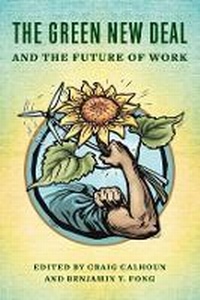
The Green New Deal and the Future of Work
Published on 30. August 2022
Book
Hardback
384 pages
978-0-231-20556-6 (ISBN)
Description
Catastrophic climate change overshadows the present and the future. Wrenching economic transformations have devastated workers and hollowed out communities. However, those fighting for jobs and those fighting for the planet have often been at odds. Does the world face two separate crises, environmental and economic? The promise of the Green New Deal is to tackle the threat of climate change through the empowerment of working people and the strengthening of democracy. In this view, the crisis of nature and the crisis of work must be addressed together-or they will not be addressed at all.
This book brings together leading experts to explore the possibilities of the Green New Deal, emphasizing the future of work. Together, they examine transformations that are already underway and put forth bold new proposals that can provide jobs while reducing carbon consumption-building a world that is sustainable both economically and ecologically. Contributors also debate urgent questions: What is the value of a federal jobs program, or even a jobs guarantee? How do we alleviate the miseries and precarity of work? In key economic sectors, including energy, transportation, housing, agriculture, and care work, what kind of work is needed today? How does the New Deal provide guidance in addressing these questions, and how can a Green New Deal revive democracy? Above all, this book shows, the Green New Deal offers hope for a better tomorrow-but only if it accounts for work's past transformations and shapes its future.
This book brings together leading experts to explore the possibilities of the Green New Deal, emphasizing the future of work. Together, they examine transformations that are already underway and put forth bold new proposals that can provide jobs while reducing carbon consumption-building a world that is sustainable both economically and ecologically. Contributors also debate urgent questions: What is the value of a federal jobs program, or even a jobs guarantee? How do we alleviate the miseries and precarity of work? In key economic sectors, including energy, transportation, housing, agriculture, and care work, what kind of work is needed today? How does the New Deal provide guidance in addressing these questions, and how can a Green New Deal revive democracy? Above all, this book shows, the Green New Deal offers hope for a better tomorrow-but only if it accounts for work's past transformations and shapes its future.
Reviews / Votes
A bold and penetrating collection of essays about the most important problems of our time. -- Frances Fox Piven, author of <i>Challenging Authority: How Ordinary People Change America</i> Calhoun and Fong have crafted an erudite, timely, and often inspiring collection of essays about work and the Green New Deal. No other book I know looks at infrastructure and environment through the prism of labor, culture, and political economy. This will be an excellent resource for teaching, advocacy, and policy making. -- Eric Klinenberg, author of <i>Palaces for the People: How Social Infrastructure Can Help Fight Inequality, Polarization, and the Decline of Civic Life</i> As a slogan, the Green New Deal can at times be extended to include almost anything on the current U.S. left's agenda. But what might it really mean? And how would it work? This book is a welcome intervention because it explores from numerous vantage points-often in real detail and with bracing honesty-the possibilities and limits invoked by the idea of a Green New Deal. Headlines will change, new emergencies will arise and fade, but the climate crisis is not going away. That is why this sort of discussion about realistic solutions is so necessary. -- Christian Parenti, author of <i>Tropic of Chaos: Climate Change and the New Geography of Violence</i> This book is an incredible (and rare) collection from both organizers and scholars on the key challenge of the twenty-first century: how to transform the world of work toward rapid decarbonization. It contains impressive historical depth on the model of the New Deal and explores how to make the Green version a reality. -- Matthew T. Huber, author of <i>Climate Change as Class War: Building Socialism on a Warming Planet</i> Students, organizers, and academics alike will benefit from this book. * H-Environment *More details
Language
English
Place of publication
New York
United States
Target group
Professional and scholarly
Product notice
Trade binding
Illustrations
12 b&w illustrations
Dimensions
Height: 235 mm
Width: 156 mm
ISBN-13
978-0-231-20556-6 (9780231205566)
Copyright in bibliographic data and cover images is held by Nielsen Book Services Limited or by the publishers or by their respective licensors: all rights reserved.
Schweitzer Classification
Other editions
Additional editions

Craig Calhoun | Benjamin Fong
The Green New Deal and the Future of Work
E-Book
08/2022
1st Edition
Columbia University Press
€36.99
Available for download
Persons
Craig Calhoun is University Professor of Social Sciences at Arizona State University. He was previously director of the London School of Economics and Political Science and president of the Social Science Research Council. His most recent book is Degenerations of Democracy (2022), with Dilip Parameshwar Gaonkar and Charles Taylor.
Benjamin Y. Fong is associate director at the Center for Work and Democracy and Honors Faculty Fellow at Barrett, the Honors College at Arizona State University. He is the author of Death and Mastery: Psychoanalytic Drive Theory and the Subject of Late Capitalism (Columbia, 2016). His writing has also appeared in Jacobin, Catalyst, the New York Times, and Damage Magazine.
Benjamin Y. Fong is associate director at the Center for Work and Democracy and Honors Faculty Fellow at Barrett, the Honors College at Arizona State University. He is the author of Death and Mastery: Psychoanalytic Drive Theory and the Subject of Late Capitalism (Columbia, 2016). His writing has also appeared in Jacobin, Catalyst, the New York Times, and Damage Magazine.
Content
Introduction, by Craig Calhoun and Benjamin Y. Fong
Part I: The New Deal and the Green New Deal
1. From the New Deal to the Green New Deal, by Richard A. Walker
2. From Romance to Utilitarianism: Lessons on Work and Nature from the New Deal, by Hillary Angelo
3. A Green New Deal for Agriculture, by Raj Patel and Jim Goodman
Part II: What Is the Crisis of Work?
4. A Green New Deal for Care: Revaluing the Work of Social and Ecological Reproduction, by Alyssa Battistoni
5. Another World (of Work) Is Possible, by Stephanie Luce
6. Time for Rabble-Rousing: Lessons from the Historic Fight for Reduced Working Hours, by Wilson Sherwin
Part III: Delivering Jobs and Empowering Workers
7. Jobs for All: A Job Guarantee Puts Workers in the Driver's Seat, by Dustin Guastella
8. Unions and the Green New Deal, by Mindy Isser
9. "Fancy Funeral" or Radical Rebirth? Just Transition and the Future of Work(ers) in the United States, by Todd E. Vachon
10. Overcoming the Tragedy of Growth Machines, by Harvey Molotch
Part IV: Transforming Infrastructure
11. A Green New Deal for Housing, by Daniel Aldana Cohen
12. Low-Carbon, High-Speed: How a Green New Deal Can Transform the Transportation Sector, by J. Mijin Cha and Lara Skinner
13. Redesigning Political Economy: The Promise and Peril of a Green New Deal for Energy, by Clark A. Miller
Part V: The Work of Building a Better Society
14. Community Control and the Climate Crisis: Power, Governance, and Racial Capitalism, by Oluf??mi O. Taiwo
15. Rethinking the Green New Deal: From War to Work, by Harry C. Boyte and Trygve Throntveit
16. How to Create Good Jobs, a Sustainable Environment, and a Durable and Successful Left Political Alliance Through a Green New Deal, by Richard Lachmann
Acknowledgments
Index
Part I: The New Deal and the Green New Deal
1. From the New Deal to the Green New Deal, by Richard A. Walker
2. From Romance to Utilitarianism: Lessons on Work and Nature from the New Deal, by Hillary Angelo
3. A Green New Deal for Agriculture, by Raj Patel and Jim Goodman
Part II: What Is the Crisis of Work?
4. A Green New Deal for Care: Revaluing the Work of Social and Ecological Reproduction, by Alyssa Battistoni
5. Another World (of Work) Is Possible, by Stephanie Luce
6. Time for Rabble-Rousing: Lessons from the Historic Fight for Reduced Working Hours, by Wilson Sherwin
Part III: Delivering Jobs and Empowering Workers
7. Jobs for All: A Job Guarantee Puts Workers in the Driver's Seat, by Dustin Guastella
8. Unions and the Green New Deal, by Mindy Isser
9. "Fancy Funeral" or Radical Rebirth? Just Transition and the Future of Work(ers) in the United States, by Todd E. Vachon
10. Overcoming the Tragedy of Growth Machines, by Harvey Molotch
Part IV: Transforming Infrastructure
11. A Green New Deal for Housing, by Daniel Aldana Cohen
12. Low-Carbon, High-Speed: How a Green New Deal Can Transform the Transportation Sector, by J. Mijin Cha and Lara Skinner
13. Redesigning Political Economy: The Promise and Peril of a Green New Deal for Energy, by Clark A. Miller
Part V: The Work of Building a Better Society
14. Community Control and the Climate Crisis: Power, Governance, and Racial Capitalism, by Oluf??mi O. Taiwo
15. Rethinking the Green New Deal: From War to Work, by Harry C. Boyte and Trygve Throntveit
16. How to Create Good Jobs, a Sustainable Environment, and a Durable and Successful Left Political Alliance Through a Green New Deal, by Richard Lachmann
Acknowledgments
Index