

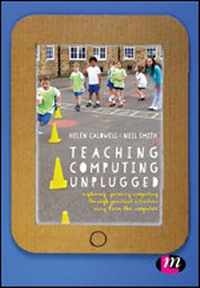
Teaching Computing Unplugged in Primary Schools
Exploring primary computing through practical activities away from the computer
1st Edition
Published on 1. November 2016
Book
Hardback
216 pages
978-1-4739-6169-2 (ISBN)
Description
Teaching primary computing without computers?
The Computing curriculum is a challenge for primary school teachers. The realities of primary school resources mean limited access to computer hardware. But computing is about more than computers. Important aspects of the fundamental principles and concepts of computer science can be taught without any hardware. Children can learn to analyse problems and computational terms and apply computational thinking to solve problems without turning on a computer.
This book shows you how you can teach computing through 'unplugged' activities. It provides lesson examples and everyday activities to help teachers and pupils explore computing concepts in a concrete way, accelerating their understanding and grasp of key ideas such as abstraction, logic, algorithms and data representation. The unplugged approach is physical and collaborative, using kinaesthetic learning to help make computing concepts more meaningful and memorable.
This book will help you to elevate your teaching, and your children's learning of computing beyond the available hardware. It focuses on the building blocks of understanding required for computation thinking.
The Computing curriculum is a challenge for primary school teachers. The realities of primary school resources mean limited access to computer hardware. But computing is about more than computers. Important aspects of the fundamental principles and concepts of computer science can be taught without any hardware. Children can learn to analyse problems and computational terms and apply computational thinking to solve problems without turning on a computer.
This book shows you how you can teach computing through 'unplugged' activities. It provides lesson examples and everyday activities to help teachers and pupils explore computing concepts in a concrete way, accelerating their understanding and grasp of key ideas such as abstraction, logic, algorithms and data representation. The unplugged approach is physical and collaborative, using kinaesthetic learning to help make computing concepts more meaningful and memorable.
This book will help you to elevate your teaching, and your children's learning of computing beyond the available hardware. It focuses on the building blocks of understanding required for computation thinking.
More details
Edition
First Edition
Language
English
Place of publication
Exeter
United Kingdom
Publishing group
Sage Publications Ltd
Target group
Professional and scholarly
Dimensions
Height: 246 mm
Width: 171 mm
Weight
539 gr
ISBN-13
978-1-4739-6169-2 (9781473961692)
Copyright in bibliographic data and cover images is held by Nielsen Book Services Limited or by the publishers or by their respective licensors: all rights reserved.
Schweitzer Classification
Other editions
Additional editions
Helen Caldwell | Neil Smith
Teaching Computing Unplugged in Primary Schools
Exploring primary computing through practical activities away from the computer
Book
11/2016
1st Edition
Learning Matters Ltd
€60.50
Shipment within 15-20 days
Helen Caldwell | Neil Smith
Teaching Computing Unplugged in Primary Schools
Exploring primary computing through practical activities away from the computer
E-Book
10/2016
1st Edition
Learning Matters Ltd
€52.99
Available for download
Persons
Helen Caldwell is the curriculum lead for Primary Computing in Teacher Education at the University of Northampton. Her teaching covers the use of technology across primary subjects, implementing the computing curriculum and assistive technologies for SEN.
Content
Robots by Helen Caldwell and Neil Smith
Musicians by Sway Grantham
Artists by Scott Turner and Katharine Childs
Explorers by Sway Grantham and Kim Calvert
Code breakers: Dpef Csfblfst by Mark Dorling
Magicians by Paul Curzon and Peter McOwan
Gamers by Yasemin Allsop
Cooks by Jane Waite
Scientists by Jon Chippindall
Musicians by Sway Grantham
Artists by Scott Turner and Katharine Childs
Explorers by Sway Grantham and Kim Calvert
Code breakers: Dpef Csfblfst by Mark Dorling
Magicians by Paul Curzon and Peter McOwan
Gamers by Yasemin Allsop
Cooks by Jane Waite
Scientists by Jon Chippindall