

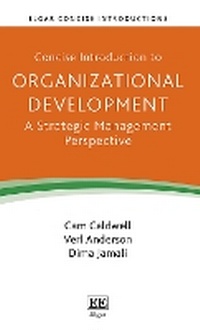
Concise Introduction to Organizational Development
A Strategic Management Perspective
Published on 22. July 2025
Book
Hardback
240 pages
978-1-0353-5737-6 (ISBN)
Description
Our Elgar Concise Introductions are inspiring and considered introductions to the key principles in business, expertly written by some of the world's leading scholars. The aims of the series are two-fold: to pinpoint essential principles of business and management, and to offer insights that stimulate critical thinking.
This Concise Introduction provides an overview of organizational development, addressing the contemporary problems facing organizations. In a world where the body of knowledge doubles annually, but business leaders rely on yesterday's assumptions, this book demonstrates the importance of creating high performance and high trust cultures.
Cam Caldwell, Verl Anderson and Dima Jamali examine the key lessons for leaders and organizations in the 21st century, supplying guidance on deepening intrapersonal relationships within organizations. They discuss the importance of motivation and collaboration, acknowledging timely issues such as mental health, employee wellbeing and engagement, and teamwork. The book evaluates ethical leadership skills and different organizational cultures, developing strategies for driving progression and pioneering change.
Key Features:
Identifies root causes of toxic workplace cultures that plague modern companies
Delivers practical solutions to address the strategic needs of tomorrow's organizations
Highlights common failures of leaders and businesses that impact employee trust and commitment
Concise Introduction to Organizational Development is a discerning resource for students and academics in economics and business. Its useful insights on inclusive leadership and conflict resolution are greatly beneficial to industry leaders and those in management positions.
This Concise Introduction provides an overview of organizational development, addressing the contemporary problems facing organizations. In a world where the body of knowledge doubles annually, but business leaders rely on yesterday's assumptions, this book demonstrates the importance of creating high performance and high trust cultures.
Cam Caldwell, Verl Anderson and Dima Jamali examine the key lessons for leaders and organizations in the 21st century, supplying guidance on deepening intrapersonal relationships within organizations. They discuss the importance of motivation and collaboration, acknowledging timely issues such as mental health, employee wellbeing and engagement, and teamwork. The book evaluates ethical leadership skills and different organizational cultures, developing strategies for driving progression and pioneering change.
Key Features:
Identifies root causes of toxic workplace cultures that plague modern companies
Delivers practical solutions to address the strategic needs of tomorrow's organizations
Highlights common failures of leaders and businesses that impact employee trust and commitment
Concise Introduction to Organizational Development is a discerning resource for students and academics in economics and business. Its useful insights on inclusive leadership and conflict resolution are greatly beneficial to industry leaders and those in management positions.
Reviews / Votes
'A must-read for leaders, academics, and policymakers; this book links leadership, motivation, and strategy to global challenges like cultural diversity, remote work, and economic change. It provides insights into ethical decision-making and sustainable business practices, making it an essential resource for building resilient, future-ready organizations aligned with the UN SDGs.' -- Qian Long Kweh, Canadian University Dubai, UAEMore details
Series
Language
English
Place of publication
Cheltenham
United Kingdom
Target group
Professional and scholarly
Dimensions
Height: 216 mm
Width: 138 mm
ISBN-13
978-1-0353-5737-6 (9781035357376)
Copyright in bibliographic data and cover images is held by Nielsen Book Services Limited or by the publishers or by their respective licensors: all rights reserved.
Schweitzer Classification
Persons
Cam Caldwell, Professor of Business, St George, Utah, Verl Anderson, Professor of Business, College of Business, Utah Tech University, St George, Utah, USA and Dima Jamali, Dean, School of Business, Lebanese American University, Lebanon
Content
Contents
1 Understanding Organizational Development:
Introduction and Overview 1
2 The Intrapersonal Foundation to Relationships 12
3 Purpose, Beliefs, and Values: The Keys to SelfLeadership 21
4 Ethical Leadership and Moral Responsibilities 31
5 Communication in Organizations: Relationships and
Results 47
6 Differences in Values: Generational Realities 57
7 Motivation Theories and Their Application 70
8 Power With Others: The Essence of Collaboration 87
9 Diversity, Equity, and Inclusion: The Struggle for
Progress 100
10 Employee Well-Being and Mental Health 113
11 Decision-Making, Conflict Resolution, and Negotiation 125
12 Strategy, Structure, and Culture in Organizational
Design 138
13 The Role of Teams 149
14 Organizational Development and the Human
Resource Management Role 158
15 Leading Change and Inspiring Others 170
16 Organizational Development: Addressing
International Challenges 182
REFERENCES 197
1 Understanding Organizational Development:
Introduction and Overview 1
2 The Intrapersonal Foundation to Relationships 12
3 Purpose, Beliefs, and Values: The Keys to SelfLeadership 21
4 Ethical Leadership and Moral Responsibilities 31
5 Communication in Organizations: Relationships and
Results 47
6 Differences in Values: Generational Realities 57
7 Motivation Theories and Their Application 70
8 Power With Others: The Essence of Collaboration 87
9 Diversity, Equity, and Inclusion: The Struggle for
Progress 100
10 Employee Well-Being and Mental Health 113
11 Decision-Making, Conflict Resolution, and Negotiation 125
12 Strategy, Structure, and Culture in Organizational
Design 138
13 The Role of Teams 149
14 Organizational Development and the Human
Resource Management Role 158
15 Leading Change and Inspiring Others 170
16 Organizational Development: Addressing
International Challenges 182
REFERENCES 197