

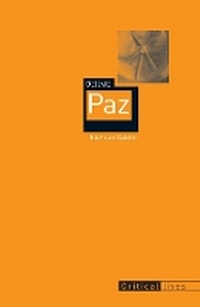
Octavio Paz
Published on 1. November 2006
Book
Paperback/Softback
144 pages
978-1-86189-303-1 (ISBN)
Description
When Octavio Paz won the Nobel Prize for Literature in 1990, it was in recognition of the fact that for many years he had been the pre-eminent poet in the Spanish speaking world. His work takes the traditions of Mexican poetry as well as French and Spanish influences, and adds what he himself read of his contemporaries in Mexico, Britain and France, in particular, the Surrealists. But Paz was also a great polemicist and essayist, described by V. S. Naipaul as 'a kind of Mexican George Orwell'. He made a huge contribution to intellectual debates on Mexican art and identity, its connections with the USA, and the European heritage of Latin America.
Nick Caistor examines how Paz, born during the Mexican Revolution, participated in the attempts to bring a utopian revolution to his country, which was emerging into the modern world after decades of repressive rule. At the same time, he was wary of ideology imposing itself on art and always sought an independent position. Later, Paz lived in the USA, Europe and, as a member of the Mexican diplomatic service, in India, returning to his home country in 1968 where he became an influential critic of the regime in power.
As well as examining Paz's intellectual adventures, Caistor relates his fascinating private life - his marriages and friendships with leading figures of Mexican and Latin American cultural life, as well as with important literary figures in France, Britain, the United States and Italy. Caistor reveals how Paz's poetry and other writing were always intimately related to the circumstances of his life, and shows how his ideas and poetic expression were inspired by the events in which he was involved.
Nick Caistor examines how Paz, born during the Mexican Revolution, participated in the attempts to bring a utopian revolution to his country, which was emerging into the modern world after decades of repressive rule. At the same time, he was wary of ideology imposing itself on art and always sought an independent position. Later, Paz lived in the USA, Europe and, as a member of the Mexican diplomatic service, in India, returning to his home country in 1968 where he became an influential critic of the regime in power.
As well as examining Paz's intellectual adventures, Caistor relates his fascinating private life - his marriages and friendships with leading figures of Mexican and Latin American cultural life, as well as with important literary figures in France, Britain, the United States and Italy. Caistor reveals how Paz's poetry and other writing were always intimately related to the circumstances of his life, and shows how his ideas and poetic expression were inspired by the events in which he was involved.
Reviews / Votes
For Octavio Paz, there could be no poetry without history, but poetry should transform historys course. Nick Caistor charts the evolution of this belief by way of extensive research and insightful readings of a representative range of Paz's works . . . He does an excellent job of situating these discussions within the context of the historic upheavals of the twentieth century and the artistic and intellectual debates that these upheavals spawned. A must for both students and scholars alike. * <i>Modern Language Studies</i> * Caistor's specific contribution is his analysis of Pazs poetry, essays, editorships, and life as a public artist and intellectual who refused to espouse doctrinaire political positions. Most interesting is Caistors discussion of Pazs role as a internationalist never fully acceptable to the Mexican Right or Left . . . Recommended. ChoiceThere can be no society without poetry, wrote Octavio Paz, himself one of the greatest of twentieth century poets. Nick Caistor, an international journalist and one of our leading translators, offers an invaluable introduction to Paz in the context of the Mexican, American and European history that informs his work. * George Szirtes *More details
Series
Language
English
Place of publication
London
United Kingdom
Target group
College/higher education
Illustrations
24 illustrations
Dimensions
Height: 130 mm
Width: 200 mm
ISBN-13
978-1-86189-303-1 (9781861893031)
Copyright in bibliographic data and cover images is held by Nielsen Book Services Limited or by the publishers or by their respective licensors: all rights reserved.
Schweitzer Classification
Other editions
Additional editions
Person
Nick Caistor is a former BBC Latin American analyst, and Latin American editor of Index on Censorship magazine. He broadcasts regularly on Latin American literature and art. He is the author of Mexico City: A Cultural and Literary Companion (1999) and Octavio Paz (Reaktion, 2007). He is editor of two anthologies and has translated many novels by Latin American and Spanish authors.