

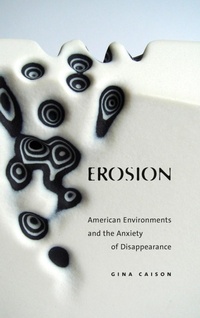
Erosion
American Environments and the Anxiety of Disappearance
Published on 8. November 2024
Book
Hardback
312 pages
978-1-4780-2691-4 (ISBN)
Description
In Erosion, Gina Caison traces how American authors and photographers have grappled with soil erosion as a material reality that shapes narratives of identity, belonging, and environment. Examining canonical American texts and photography, including John Steinbeck's The Grapes of Wrath, Octavia Butler's Parable series, John Audubon's Louisiana writings, and Dorothea Lange's Migrant Mother, Caison shows how concerns over erosion reveal anxieties of disappearance that are based in the legacies of settler colonialism. Soil loss not only occupies a complex metaphorical place in the narrative of American identity; it becomes central to preserving the white settler colonial state through Indigenous dispossession and erasure. At the same time, Caison examines how Indigenous texts and art such as Lynn Riggs's play Green Grow the Lilacs, Karenne Wood's poetry, and Monique Verdin's photography challenge colonial narratives of the continent by outlining the material stakes of soil loss for their own communities. From California to Oklahoma to North Carolina's Outer Banks, Caison ultimately demonstrates that concerns over erosion reverberate into issues of climate change, land ownership, Indigenous sovereignty, race, and cultural and national identity.
Reviews / Votes
"Gina Caison's Erosion is a superb example of environmental humanities scholarship and will serve as a model for the field's methodologies and their affordances. Caison shows that the movement of soil across regions of the United States may appear naturalized but in fact reflects the ecological, social, and cultural depredations of settler colonialism and racial capital. Bringing Indigenous and regional studies perspectives to a powerful narrative of the material and metaphorical effects of the shifting ground of US settler land management, Erosion will generate keen, widespread interest." - Hester Blum, author of (The News at the Ends of the Earth: The Print Culture of Polar Exploration) "Gina Caison's important and careful analysis of the environmental impacts of settler colonialism reminds us that addressing and building climate justice will not come just from science-based inquiries but will be elevated by the work of the humanities to challenge and grow our perspectives on erosion and climate change. Caison's work is extremely effective at demonstrating how settler colonial anxiety informs conservation and environmentalism and why critical and cultural conversations like this book are key to the future of building climate resiliency." - Cutcha Risling Baldy, author of (We Are Dancing for You: Native Feminisms and the Revitalization of Women's Coming-of-Age Ceremonies)More details
Language
English
Place of publication
North Carolina
United States
Target group
Professional and scholarly
Product notice
Cloth over boards
Illustrations
12 illustrations
Dimensions
Height: 235 mm
Width: 157 mm
Thickness: 23 mm
Weight
656 gr
ISBN-13
978-1-4780-2691-4 (9781478026914)
Copyright in bibliographic data and cover images is held by Nielsen Book Services Limited or by the publishers or by their respective licensors: all rights reserved.
Schweitzer Classification
Person
Gina Caison is Kenneth M. England Associate Professor of Southern Literature at Georgia State University, author of Red States: Indigeneity, Settler Colonialism, and Southern Studies, and coeditor of Remediating Region: New Media and the U.S. South.
Content
Acknowledgments ix
Introduction: Erosion 1
1. Landslides and Horizons of the West 29
2. Surfaces and Allotments of the Heartland 68
3. Disappearing Grounds and Backgrounds of the Gulf 107
4. Gullies and Removals of the Plantation South 141
5. Littoral Cells and Literal Sells of the Atlantic 177
Conclusion: What We Talk About When We Talk About Erosion 209
Notes 221
Bibliography 251
Index 271
Introduction: Erosion 1
1. Landslides and Horizons of the West 29
2. Surfaces and Allotments of the Heartland 68
3. Disappearing Grounds and Backgrounds of the Gulf 107
4. Gullies and Removals of the Plantation South 141
5. Littoral Cells and Literal Sells of the Atlantic 177
Conclusion: What We Talk About When We Talk About Erosion 209
Notes 221
Bibliography 251
Index 271