

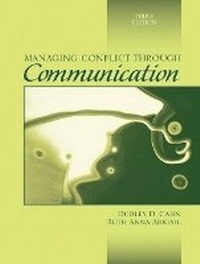
Managing Conflict through Communication
3rd Edition
Published on 23. March 2006
Book
Paperback/Softback
336 pages
978-0-205-45880-6 (ISBN)
Description
With a strong theoretical and research base, Managing Conflict Through Communication provides the most complete coverage of the study of conflict available on the market. Each chapter builds on the previous to help the reader better understand and deal effectively with conflict. The extensive use of narratives and case studies make the material accessible and interesting. Practical applications of concepts through discussion questions and exercises throughout the book provide a basis for group discussion.
More details
Edition
3rd edition
Language
English
Place of publication
United States
Publishing group
Pearson Education (US)
Target group
Professional and scholarly
Dimensions
Height: 234 mm
Width: 10 mm
Thickness: 10 mm
Weight
526 gr
ISBN-13
978-0-205-45880-6 (9780205458806)
Copyright in bibliographic data and cover images is held by Nielsen Book Services Limited or by the publishers or by their respective licensors: all rights reserved.
Schweitzer Classification
Other editions
New editions
Dudley D. Cahn
Managing Conflict Through Communication
Book
04/2010
4th Edition
Pearson
€115.31
Article exhausted; check for reprint
Previous edition
Book
08/1999
2nd Edition
Pearson
€57.13
Article exhausted; check for reprint
Content
I. UNDERSTANDING AND RESPONDING TO CONFLICT.
1. Introduction to the Study of Conflict.
Defining Interpersonal Conflict.
We Generally View Conflicts Negatively.
The Inevitability of Conflict.
Defining Conflict Management.
Conflict Communication as Productive or Destructive.
2. Types of Conflict.
Types of Conflict.
Issues in Conflicts.
3. Responding to Conflict: The S-TLC System.
The S-TLC System.
Step 1 - Stopping: Taking Time Out!
Step 2 - Thinking about the Conflict: Analyzing Conflict Situations.
Step 3 - Listening in Conflict Situations.
Step 4 - Communicating in Conflict Situations.
4. Communication Options in Conflict Situations.
Conflict Communication Options.
Communication Considerations: Which Conflict Communication Option Is Best?
5. Conflict Styles, Strategies, and Tactics.
Conflict Styles v. Strategies.
Conflict Strategies and Tactics.
Collaboration: The Preferred Style.
6. Effectively Confronting Others.
Confrontation as a Conflict Communication Skill.
The Confrontation Ritual: Six Steps to Successful Interpersonal Conflict Resolution.
Doing Conflict Messages.
7. Cooperative Negotiation in Win-Lose Conflicts.
Negotiation Basics.
Some Research On Tactics and Strategies in Negotiation.
Principled Negotiation.
Converting Competitive Negotiation into Cooperation.
II. THEORETICAL PERSPECTIVES ON MANAGING CONFLICTS
8. Theories of Conflict.
Intrapersonal Theories of Conflict.
Relationship Theories of Conflict.
9. A Process View of Conflict: Phases, Stages, and Cycles.
Phase Theories of Conflict.
Patterns and Cycles in Constructive Conflict Processes.
Patterns and Cycles in Destructive Conflict Processes.
10. Conflict Climate: Power, Distrust, and Defensiveness.
Power Imbalance vs. Equality.
Distrust vs. Trust.
Supportive Behavior vs. Defensive Behavior.
11. The Escalation of Conflict: Stress and Anger.
Stress and the Escalation of Conflict.
The Process of Anger.
12. Impression Management in Conflict Situations.
Understanding the Demands of Face.
Preventive Facework.
Supportive Facework.
Corrective Facework.
13. After the Conflict: Forgiveness and Reconciliation.
Relational Transgressions.
The Role of Forgiveness and Reconciliation in Conflicts.
Dimensions of Forgiveness.
Past Forgiveness: Reconciliation.
14. Mediation as Third Party Intervention in Everyday Conflicts.
Alternatives to Dispute Resolution.
Formal vs. Informal Mediation.
The Role of Mediator.
Mediators as Communication Rules Enforcers.
The Mediation Process: Step-by-Step
Afterward: The Ideal Conflict Manager.
1. Introduction to the Study of Conflict.
Defining Interpersonal Conflict.
We Generally View Conflicts Negatively.
The Inevitability of Conflict.
Defining Conflict Management.
Conflict Communication as Productive or Destructive.
2. Types of Conflict.
Types of Conflict.
Issues in Conflicts.
3. Responding to Conflict: The S-TLC System.
The S-TLC System.
Step 1 - Stopping: Taking Time Out!
Step 2 - Thinking about the Conflict: Analyzing Conflict Situations.
Step 3 - Listening in Conflict Situations.
Step 4 - Communicating in Conflict Situations.
4. Communication Options in Conflict Situations.
Conflict Communication Options.
Communication Considerations: Which Conflict Communication Option Is Best?
5. Conflict Styles, Strategies, and Tactics.
Conflict Styles v. Strategies.
Conflict Strategies and Tactics.
Collaboration: The Preferred Style.
6. Effectively Confronting Others.
Confrontation as a Conflict Communication Skill.
The Confrontation Ritual: Six Steps to Successful Interpersonal Conflict Resolution.
Doing Conflict Messages.
7. Cooperative Negotiation in Win-Lose Conflicts.
Negotiation Basics.
Some Research On Tactics and Strategies in Negotiation.
Principled Negotiation.
Converting Competitive Negotiation into Cooperation.
II. THEORETICAL PERSPECTIVES ON MANAGING CONFLICTS
8. Theories of Conflict.
Intrapersonal Theories of Conflict.
Relationship Theories of Conflict.
9. A Process View of Conflict: Phases, Stages, and Cycles.
Phase Theories of Conflict.
Patterns and Cycles in Constructive Conflict Processes.
Patterns and Cycles in Destructive Conflict Processes.
10. Conflict Climate: Power, Distrust, and Defensiveness.
Power Imbalance vs. Equality.
Distrust vs. Trust.
Supportive Behavior vs. Defensive Behavior.
11. The Escalation of Conflict: Stress and Anger.
Stress and the Escalation of Conflict.
The Process of Anger.
12. Impression Management in Conflict Situations.
Understanding the Demands of Face.
Preventive Facework.
Supportive Facework.
Corrective Facework.
13. After the Conflict: Forgiveness and Reconciliation.
Relational Transgressions.
The Role of Forgiveness and Reconciliation in Conflicts.
Dimensions of Forgiveness.
Past Forgiveness: Reconciliation.
14. Mediation as Third Party Intervention in Everyday Conflicts.
Alternatives to Dispute Resolution.
Formal vs. Informal Mediation.
The Role of Mediator.
Mediators as Communication Rules Enforcers.
The Mediation Process: Step-by-Step
Afterward: The Ideal Conflict Manager.