

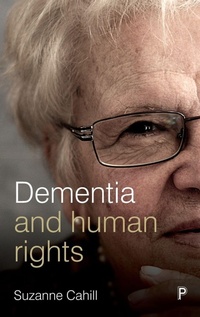
Dementia and Human Rights
1st Edition
Published on 28. March 2018
Book
Hardback
252 pages
978-1-4473-3137-7 (ISBN)
Description
The time has come to further challenge biomedical and clinical thinking about dementia, which has for so long underpinned policy and practice. Framing dementia as a disability, this book takes a rights-based approach to expand the debate.
Applying a social constructionist lens, it builds on earlier critical perspectives by bringing together concepts including disability, social inclusion, personhood, equality, participation, dignity, empowerment, autonomy and solidarity. Launching the debate into new and exciting territory, the book argues that people living with dementia come within the UN Convention on the Rights of Persons with Disabilities and therefore have full entitlement to all the rights the Convention enshrines.
A human rights-based approach has not to date been fully applied to interrogate the lived experience and policy response to dementia. With the fresh analytical tools provided in this book, policy makers and practitioners will will gain new insights into how this broader perspective can be used to further promote the quality of life and quality of care for all those affected by dementia.
Applying a social constructionist lens, it builds on earlier critical perspectives by bringing together concepts including disability, social inclusion, personhood, equality, participation, dignity, empowerment, autonomy and solidarity. Launching the debate into new and exciting territory, the book argues that people living with dementia come within the UN Convention on the Rights of Persons with Disabilities and therefore have full entitlement to all the rights the Convention enshrines.
A human rights-based approach has not to date been fully applied to interrogate the lived experience and policy response to dementia. With the fresh analytical tools provided in this book, policy makers and practitioners will will gain new insights into how this broader perspective can be used to further promote the quality of life and quality of care for all those affected by dementia.
Reviews / Votes
"This book is a down to earth, accessible translation of complex legal, sociological and ethical subjects and as such will appeal to undergraduate and postgraduate students of dementia, practitioners and policy makers alike." Professor Kate Irving, Dublin City UniversityMore details
Edition
First Edition
Language
English
Place of publication
Bristol
United Kingdom
Publishing group
Bristol University Press
Target group
Professional and scholarly
Illustrations
3 s/w Abbildungen, 4 s/w Tabellen
4 Tables, black and white; 3 Illustrations, black and white
Dimensions
Height: 240 mm
Width: 161 mm
Thickness: 18 mm
Weight
549 gr
ISBN-13
978-1-4473-3137-7 (9781447331377)
Copyright in bibliographic data and cover images is held by Nielsen Book Services Limited or by the publishers or by their respective licensors: all rights reserved.
Schweitzer Classification
Other editions
Additional editions
Suzanne Cahill
Dementia and Human Rights
Book
03/2018
1st Edition
Policy Press
€45.60
Shipment within 15-20 days
Suzanne Cahill
Dementia and Human Rights
E-Book
03/2018
1st Edition
Policy Press
€51.99
Available for download
Suzanne Cahill
Dementia and Human Rights
E-Book
03/2018
1st Edition
Policy Press
€248.99
Available for download
Person
Suzanne Cahill has been employed as National Director of the Dementia Services Information and Development Centre based at St James's Hospital in Ireland between 1999 and 2017. She is also an Adjunct Professor in the School of Social Work and Social Policy at Trinity College Dublin, Ireland. She has 30 years experience working in the field of ageing and dementia.
Content
An introduction to human rights and dementia
Dementia as a disability
Setting the context: The UN Convention on the Rights of Persons with Disabilities
The right to a good quality of life at home and in the community
The right to a good quality of life in care homes or in nursing homes
Emerging public policy on dementia: the implications of a human rights-based approach for policy and practice
Legal capacity for people with dementia
Conclusions: grounds for hope
Dementia as a disability
Setting the context: The UN Convention on the Rights of Persons with Disabilities
The right to a good quality of life at home and in the community
The right to a good quality of life in care homes or in nursing homes
Emerging public policy on dementia: the implications of a human rights-based approach for policy and practice
Legal capacity for people with dementia
Conclusions: grounds for hope