

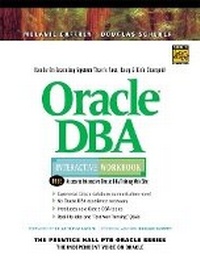
Oracle DBA Interactive Workbook
Published on 20. December 2000
Book
Paperback/Softback
496 pages
978-0-13-015742-3 (ISBN)
Description
Oracle DBA Interactive Workbook is the perfect, hands-on course in Oracle database administration for DBAs at all levels of experience -- whether or not they have access to a live Oracle database. It covers the latest version, Oracle 8i -- making it perfect for DBAs upgrading from older versions, Web developers working with database-enabled Internet applications, and many others. This hands-on, book-and-web package introduces every aspect of day-to-day Oracle 8i database administration, including supporting and organizing the database engine, managing its physical layout, ensuring security and data integrity, providing for backups, and much more. A free Web-based training module includes a Virtual Study Lounge where readers can interact with the author; "Test Your Thinking" project solutions and detailed explanations, interactive Q&As and self-review exercises, new projects, book updates, and more. For database administrators at all levels moving to Oracle for the first time.
More details
Language
English
Place of publication
Upper Saddle River
United States
Publishing group
Pearson Education (US)
Target group
College/higher education
Dimensions
Height: 178 mm
Width: 235 mm
Thickness: 29 mm
Weight
943 gr
ISBN-13
978-0-13-015742-3 (9780130157423)
Copyright in bibliographic data and cover images is held by Nielsen Book Services Limited or by the publishers or by their respective licensors: all rights reserved.
Schweitzer Classification
Persons
Melanie Caffrey: Before entering the world of Oracle and database technology in general, Melanie Caffrey was a researcher, first for the academic world in Colorado, then for the corporate world in New York. The desire to explore a new career path led her to Columbia University's Computer Technology and Applications (CTA) Program, which ultimately changed her life. Shortly before finishing at Columbia, she began developing applications using SAP technology with an Oracle database. Additionally, she enjoys spending a semester or two, here and there, teaching the class that is the foundation for this book and, occasionally, introductory courses in SQL and the Oracle Server, to the students at Columbia University's CTA program.
Douglas Scherer: Douglas Scherer (Chauncey and OCP certified) is president of Core Paradigm (www.coreparadigm.com); providing consulting, guidance, and formal training solutions primarily to Oracle users. He is a frequent speaker at conferences and user group meetings internationally and has appeared in Visions of the New Millennium, a series seen on PBS and its affiliates. Mr. Scherer's 12 years of IT and database experience has spanned analysis, design, implementation, database management, and project management. He is lead author of Oracle 8i Tops and Techniques, contributing editor to the Oracle Designer Handbook, 2nd edition, and has articles in Oracle Magazine. Mr. Scherer is an instructor in Columbia University's CTA program and for three years held the position of Chair of the Database Track.
Douglas Scherer: Douglas Scherer (Chauncey and OCP certified) is president of Core Paradigm (www.coreparadigm.com); providing consulting, guidance, and formal training solutions primarily to Oracle users. He is a frequent speaker at conferences and user group meetings internationally and has appeared in Visions of the New Millennium, a series seen on PBS and its affiliates. Mr. Scherer's 12 years of IT and database experience has spanned analysis, design, implementation, database management, and project management. He is lead author of Oracle 8i Tops and Techniques, contributing editor to the Oracle Designer Handbook, 2nd edition, and has articles in Oracle Magazine. Mr. Scherer is an instructor in Columbia University's CTA program and for three years held the position of Chair of the Database Track.
Content
(NOTE: All chapters conclude with Test Your Thinking.)
About the Authors.
Forward.
Acknowledgements.
Introduction.
1. The Database Administrator's Job.
The Role of the Oracle DBA. Sources for Oracle DBA Help.
2. Creating Your Database.
OFA Basics. Creating and Configuring an Oracle Database.
3. Oracle Networking: Configuring Basic Net8/SQL*Net Components.
Setting up Network Configuration Files. Managing the Oracle Listener. Configuring the Multi-Threaded Server.
4. Tablespaces.
Tablespaces: Logical Areas of Storage. How Tablespaces Relate to the Oracle Database and How to Manipulate Them.
5. Segments and Extents.
Segments. Extents.
6. Data Blocks.
Units of Storage Called Data Blocks. Block-Level Storage Parameters.
7. Redo Logs.
Redo Logs. Recovering Data with Redo Logs.
8. Datafiles.
Datafiles. Manipulating Your Datafiles.
9. User Creation.
Creating and Manipulating Users.
10. Privilege and Resource Groups.
Creating and Manipulating Privileges. Creating and Manipulating Roles. Creating and Manipulating Profiles.
11. Auditing.
Auditing Sessions, Auditing Database Actions, and Auditing Objects.
12. Rollback Segments.
Rollback Segment Management.
13. Locking.
Locking and Data Consistency and Concurrency.
14. Logical Backup and Recovery.
Backup and Recovery Using the Import and Export Utilities.
15. Physical Backup and Recovery.
Backup and Recovery Using Archivelog Mode.
16. Application and SQL Optimization.
Lab 16.1 Using the AUTOTRACE Command and TKPROF Utility.
17. Database Tuning and Optimization.
Optimizing the Use of Memory and Disk Resources.
Appendix A: Answers to Self-review Questions.
Appendix B: Recommended Reading List.
Appendix C: Raid Synopsis.
Appendix D: Environment Settings to Remember.
Index.
About the Authors.
Forward.
Acknowledgements.
Introduction.
1. The Database Administrator's Job.
The Role of the Oracle DBA. Sources for Oracle DBA Help.
2. Creating Your Database.
OFA Basics. Creating and Configuring an Oracle Database.
3. Oracle Networking: Configuring Basic Net8/SQL*Net Components.
Setting up Network Configuration Files. Managing the Oracle Listener. Configuring the Multi-Threaded Server.
4. Tablespaces.
Tablespaces: Logical Areas of Storage. How Tablespaces Relate to the Oracle Database and How to Manipulate Them.
5. Segments and Extents.
Segments. Extents.
6. Data Blocks.
Units of Storage Called Data Blocks. Block-Level Storage Parameters.
7. Redo Logs.
Redo Logs. Recovering Data with Redo Logs.
8. Datafiles.
Datafiles. Manipulating Your Datafiles.
9. User Creation.
Creating and Manipulating Users.
10. Privilege and Resource Groups.
Creating and Manipulating Privileges. Creating and Manipulating Roles. Creating and Manipulating Profiles.
11. Auditing.
Auditing Sessions, Auditing Database Actions, and Auditing Objects.
12. Rollback Segments.
Rollback Segment Management.
13. Locking.
Locking and Data Consistency and Concurrency.
14. Logical Backup and Recovery.
Backup and Recovery Using the Import and Export Utilities.
15. Physical Backup and Recovery.
Backup and Recovery Using Archivelog Mode.
16. Application and SQL Optimization.
Lab 16.1 Using the AUTOTRACE Command and TKPROF Utility.
17. Database Tuning and Optimization.
Optimizing the Use of Memory and Disk Resources.
Appendix A: Answers to Self-review Questions.
Appendix B: Recommended Reading List.
Appendix C: Raid Synopsis.
Appendix D: Environment Settings to Remember.
Index.