

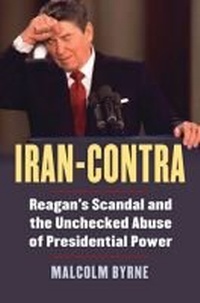
Iran-Contra
Reagan's Scandal and the Unchecked Abuse of Presidential Power
Will be published approx. on 30. August 2017
Book
Paperback/Softback
464 pages
978-0-7006-2590-1 (ISBN)
Description
Choice Outstanding Academic Title
Everything began to unravel on October 5, 1986, when a Nicaraguan soldier downed an American plane carrying arms to "Contra" guerrillas, exposing a tightly held U.S. clandestine program. A month later, reports surfaced that Washington had been covertly selling arms to Iran (our sworn enemy and a state sponsor of terrorism), in exchange for help freeing hostages in Beirut. The profits, it turned out, were going to support the Contras, despite an explicit ban by Congress.
In the firestorm that erupted, shocking details emerged, raising the prospect of impeachment, and the American public confronted a scandal as momentous as it was confusing. At its center was President Ronald Reagan amid a swirl of questions about illegal wars, consorting with terrorists, and the abuse of presidential power.
Yet, despite the enormity of the issues, the affair dropped from the public radar due to media overkill, years of legal wrangling, and a vigorous campaign to forestall another Watergate. As a result, many Americans failed to grasp the scandal's full import.
Through exhaustive use of declassified documents, previously unavailable investigative materials, and wide-ranging interviews, Malcolm Byrne revisits this largely forgotten and misrepresented episode. Placing the events in their historical and political context (notably the Cold War and a sharp partisan domestic divide), he explores what made the affair possible and meticulously relates how it unfolded-including clarifying minor myths about cakes, keys, bibles, diversion memos, and shredding parties.
Iran-Contra demonstrates that, far from being a "junta" against the president, the affair could not have occurred without awareness and approval at the very top of the U.S. government. Byrne reveals an unmistakable pattern of dubious behavior-including potentially illegal conduct by the president, vice president, the secretaries of state and defense, the CIA director and others-that formed the true core of the scandal.
Given the lack of meaningful consequences for those involved, the volume raises critical questions about the ability of our current system of checks and balances to address presidential abuses of power, and about the possibility of similar outbreaks in the future.
Everything began to unravel on October 5, 1986, when a Nicaraguan soldier downed an American plane carrying arms to "Contra" guerrillas, exposing a tightly held U.S. clandestine program. A month later, reports surfaced that Washington had been covertly selling arms to Iran (our sworn enemy and a state sponsor of terrorism), in exchange for help freeing hostages in Beirut. The profits, it turned out, were going to support the Contras, despite an explicit ban by Congress.
In the firestorm that erupted, shocking details emerged, raising the prospect of impeachment, and the American public confronted a scandal as momentous as it was confusing. At its center was President Ronald Reagan amid a swirl of questions about illegal wars, consorting with terrorists, and the abuse of presidential power.
Yet, despite the enormity of the issues, the affair dropped from the public radar due to media overkill, years of legal wrangling, and a vigorous campaign to forestall another Watergate. As a result, many Americans failed to grasp the scandal's full import.
Through exhaustive use of declassified documents, previously unavailable investigative materials, and wide-ranging interviews, Malcolm Byrne revisits this largely forgotten and misrepresented episode. Placing the events in their historical and political context (notably the Cold War and a sharp partisan domestic divide), he explores what made the affair possible and meticulously relates how it unfolded-including clarifying minor myths about cakes, keys, bibles, diversion memos, and shredding parties.
Iran-Contra demonstrates that, far from being a "junta" against the president, the affair could not have occurred without awareness and approval at the very top of the U.S. government. Byrne reveals an unmistakable pattern of dubious behavior-including potentially illegal conduct by the president, vice president, the secretaries of state and defense, the CIA director and others-that formed the true core of the scandal.
Given the lack of meaningful consequences for those involved, the volume raises critical questions about the ability of our current system of checks and balances to address presidential abuses of power, and about the possibility of similar outbreaks in the future.
Reviews / Votes
At last, the Iran-Contra affair has a comprehensive history worthy of the scandal which, if the system had worked, should have landed many senior White House officials in the slammer. Malcolm Byrne has told this complex story in brilliant fashion."" - Seymour M. Hersh, author of Chain of Command: The Road from 9/11 to Abu Ghraib""A riveting book about a remarkable scandal and a warning about the excesses of secrecy and partisanship in American foreign policy."" - Bruce Riedel, author of Al Qaeda: Its Leadership, Ideology, and Future
""An impressive, compelling and revelatory work."" - David Farber, author of Taken Hostage: The Iran Hostage Crisis and America's First Encounter with Radical Islam
More details
Language
English
Place of publication
Kansas
United States
Target group
College/higher education
Professional and scholarly
Dimensions
Height: 229 mm
Width: 152 mm
Thickness: 20 mm
Weight
620 gr
ISBN-13
978-0-7006-2590-1 (9780700625901)
Copyright in bibliographic data and cover images is held by Nielsen Book Services Limited or by the publishers or by their respective licensors: all rights reserved.
Schweitzer Classification
Other editions
Additional editions
E-Book
10/2014
1st Edition
University Press of Kansas
from
€53.19
Available for download
Person
Malcolm Byrne is Deputy Director and Research Director at the National Security Archive. He is the coauthor of Becoming Enemies: U.S.-Iran Relations in the Iran-Iraq War, 1979-1988.
Content
Foreword by Bruce Riedel
Preface: Settings for the Scandal
Acknowledgments
Introduction
1. Raising the Contras
2. Coping with Iran
3. Taking Over the Covert War
4. TOW Missiles to Tehran
5. Quid pro Quos
6. HAWKS
7. Tightening the Reins on the Contras
8. A Neat Idea
9. Air Contra
10. Road to Tehran
11. Meltdown
12. Blowback
13. The Early Cover-Up
14. Congress Steps In
15. The Independent Counsel
Notes
Selected Bibliography
Index
Preface: Settings for the Scandal
Acknowledgments
Introduction
1. Raising the Contras
2. Coping with Iran
3. Taking Over the Covert War
4. TOW Missiles to Tehran
5. Quid pro Quos
6. HAWKS
7. Tightening the Reins on the Contras
8. A Neat Idea
9. Air Contra
10. Road to Tehran
11. Meltdown
12. Blowback
13. The Early Cover-Up
14. Congress Steps In
15. The Independent Counsel
Notes
Selected Bibliography
Index