

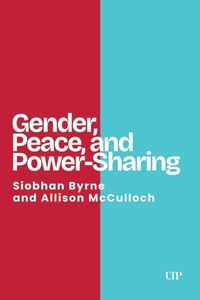
Gender, Peace, and Power-Sharing
Will be published approx. on 16. June 2026
Book
Hardback
216 pages
978-1-0498-0433-0 (ISBN)
Description
Gender, Peace, and Power-Sharing examines the rise of two powerful norms in international conflict resolution and post-conflict governance: power-sharing as a model of ethnic inclusion, and the women, peace, and security (WPS) agenda, which calls for greater representation of women and gender perspectives.
This book raises questions about the theoretical, discursive, and institutional space for gendering power-sharing: Given that power-sharing approaches overlook or otherwise exclude gender considerations, does it mean power-sharing is necessarily 'bad for women'? After 25 years of implementation, has the WPS agenda made a difference for women's inclusion in peace processes and post-conflict political institutions? To what extent can power-sharing practices and the WPS agenda work constructively together to produce more inclusive, equitable, and robust modes of conflict resolution and democratic governance in divided and/or war-torn societies?
Through a feminist "alternative telling," this book captures both the tensions and transformative potential of these frameworks in shaping contemporary conflict resolution and post-conflict peacebuilding practices.
This book raises questions about the theoretical, discursive, and institutional space for gendering power-sharing: Given that power-sharing approaches overlook or otherwise exclude gender considerations, does it mean power-sharing is necessarily 'bad for women'? After 25 years of implementation, has the WPS agenda made a difference for women's inclusion in peace processes and post-conflict political institutions? To what extent can power-sharing practices and the WPS agenda work constructively together to produce more inclusive, equitable, and robust modes of conflict resolution and democratic governance in divided and/or war-torn societies?
Through a feminist "alternative telling," this book captures both the tensions and transformative potential of these frameworks in shaping contemporary conflict resolution and post-conflict peacebuilding practices.
More details
Language
English
Place of publication
Toronto
Canada
Target group
College/higher education
Professional and scholarly
Dimensions
Height: 158 mm
Width: 239 mm
Thickness: 18 mm
Weight
430 gr
ISBN-13
978-1-0498-0433-0 (9781049804330)
Copyright in bibliographic data and cover images is held by Nielsen Book Services Limited or by the publishers or by their respective licensors: all rights reserved.
Schweitzer Classification
Persons
Siobhan Byrne is a professor of political science at the University of Alberta.
Allison McCulloch is a professor of political science at Brandon University.
Allison McCulloch is a professor of political science at Brandon University.
Content
List of Abbreviations
Chapter 1: Gender, Peace and Power-Sharing in the Era of the Peace Process
Chapter 2: The Rise of Inclusive Conflict Resolution Norms
Chapter 3: Silos and Intersections: Early Attempts at Norm Convergence
Chapter 4: Women, Power-Sharing and the Long Negotiation
Chapter 5: Diminishing Returns? The Future of Inclusive Conflict Resolution
Chapter 6: Towards a Feminist Reading of Power-Sharing
Chapter 7: Power-Sharing and a Feminist Agenda for Peace
Bibliography
Websites Consulted
Chapter 1: Gender, Peace and Power-Sharing in the Era of the Peace Process
Chapter 2: The Rise of Inclusive Conflict Resolution Norms
Chapter 3: Silos and Intersections: Early Attempts at Norm Convergence
Chapter 4: Women, Power-Sharing and the Long Negotiation
Chapter 5: Diminishing Returns? The Future of Inclusive Conflict Resolution
Chapter 6: Towards a Feminist Reading of Power-Sharing
Chapter 7: Power-Sharing and a Feminist Agenda for Peace
Bibliography
Websites Consulted