

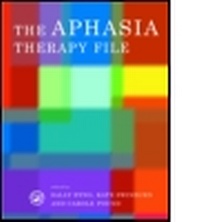
The Aphasia Therapy File
Volume 1
Published on 2. September 1999
Book
Hardback
176 pages
978-0-86377-566-6 (ISBN)
Description
Different from a textbook or academic journal, the File represents a collection of explicit descriptions about therapy interventions written by practitioners themselves. The description of the rationale for the therapy, the intervention itself and evaluation of outcomes are of paramount importance. Each contributor guides the reader through the thinking that they engaged in as they decided what to do, often with considerable frankness about the difficulties involved. The File will be of equal value to experienced practitioners and students alike.
Reviews / Votes
'A commendable project.' - Pediatric Rehabilitation'The Aphasia Therapy File is an innovative and interesting addition to the literature on the rehabilitation of aphasia ... an invaluable resource for therapy ideas, therapy planning and decision making.' - Neuropsychological Rehabilitation
More details
Language
English
Place of publication
Hove
United Kingdom
Publishing group
Taylor & Francis Ltd
Target group
Professional and scholarly
Dimensions
Height: 248 mm
Width: 171 mm
Weight
454 gr
ISBN-13
978-0-86377-566-6 (9780863775666)
Copyright in bibliographic data and cover images is held by Nielsen Book Services Limited or by the publishers or by their respective licensors: all rights reserved.
Schweitzer Classification
Other editions
Additional editions
E-Book
09/2002
Psychology Press Ltd
€61.99
Available for download
E-Book
09/2002
Psychology Press Ltd
€61.99
Available for download
Book
08/2001
Psychology Press Ltd
€58.50
Shipment within 3-4 weeks
Content
Introduction. Section 1. Alternative Forms of Output. Introduction: When There's No Spoken Output. D. Harding, C.Pound, Needs, Function and Measurement: Juggling with Multiple Language Impairment. J. Hunt, Drawing on the Semantic System: The Use of Drawing as a Therapy Medium with a Woman with Severe Expressive Aphasia. R. Lawson, M. Fawcus, Increasing Effective Communication Using a Total Communication Approach. Section 2. Word Retrieval Therapies. Introduction: Therapies for Word Finding Utilising Orthographic Relay Strategies. J. Mortley, Evaluating the Efficacy of an Intensive Strategy Based Therapy Programme for Spelling Impairment. M. White-Thompson, Naming Therapy for an Aphasiac with Fluent Empty Speech. J. Sheriden, A Treatment Programme for an Impairment in Reading Function Words. Section 3. Beyond the Single Word Therapies. Introduction: Therapies Addressing the Impairments in Processing Verbs and Sentences. J. Marshall , Doing Something About Verbs and Sentences: Two Therapy Approaches. A. Greenwood, Early Stages in Treating a Person with Non-fluent Aphasia. J. Marshall, `Who Ends Up With the Fiver?' A Sentence Production Therapy. K. Swinburn, An Informal Example of a Successful Therapy or a Sentence Processing Deficit.