

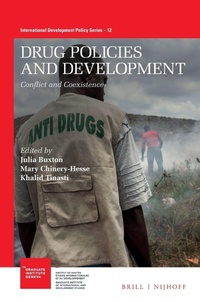
Drug Policies and Development
Conflict and Coexistence
Published on 3. September 2020
Book
Paperback/Softback
336 pages
978-90-04-44048-7 (ISBN)
Description
The 12th volume of International Development Policy explores the relationship between international drug policy and development goals, both current and within a historical perspective. Contributions address the drugs and development nexus from a range of critical viewpoints, highlighting gaps and contradictions, as well as exploring strategies and opportunities for enhanced linkages between drug control and development programming. Criminalisation and coercive law enforcement-based responses in international and national level drug control are shown to undermine peace, security and development objectives.
Contributors include: Kenza Afsahi, Damon Barrett, David Bewley-Taylor, Daniel Brombacher, Julia Buxton, Mary Chinery-Hesse, John Collins, Joanne Csete, Sarah David, Ann Fordham, Corina Giacomello, Martin Jelsma, Sylvia Kay, Diederik Lohman, David Mansfield, Jose Ramos-Horta, Tuesday Reitano, Andrew Scheibe, Shaun Shelly, Khalid Tinasti, and Anna Versfeld.
Contributors include: Kenza Afsahi, Damon Barrett, David Bewley-Taylor, Daniel Brombacher, Julia Buxton, Mary Chinery-Hesse, John Collins, Joanne Csete, Sarah David, Ann Fordham, Corina Giacomello, Martin Jelsma, Sylvia Kay, Diederik Lohman, David Mansfield, Jose Ramos-Horta, Tuesday Reitano, Andrew Scheibe, Shaun Shelly, Khalid Tinasti, and Anna Versfeld.
Reviews / Votes
"In the era of sustainable development, cross-cutting issues such as drug control-with real-life impacts on public health, public security and the enjoyment of human rights-need to be aligned with the priorities of achieving the 2030 Agenda. This volume by International Development Policy and the Global Commission on Drug Policy provides an insight into the political, economic and social barriers to needed drug policy reforms."- Helen Clark, former Administrator of UNDP; member of the Global Commission on Drug Policy
"With a complex architecture, multi-stakeholder involvement, and multi-sector intervention, drug policy remains a neglected area in public policy analysis, while it engages massive resources and directly impacts development indicators. This volume of International Development Policy provides the reader with a structured path via which to capture the challenges that drug policy poses, and how they translate as barriers to development on the ground."
- Mohammad-Mahmoud Ould Mohamedou, Professor of International History, the Graduate Institute
More details
Series
Language
English
Place of publication
Netherlands
Publishing group
Brill
Target group
Professional and scholarly
Product notice
Paperback (trade)
Unsewn / adhesive bound
Illustrations
9 farbige Zeichnungen, 4 s/w Tabellen, 5 farbige Abbildungen
4 Tables, black and white; 9 Line drawings, color; 5 Illustrations, color
Dimensions
Height: 234 mm
Width: 155 mm
Thickness: 18 mm
Weight
467 gr
ISBN-13
978-90-04-44048-7 (9789004440487)
Copyright in bibliographic data and cover images is held by Nielsen Book Services Limited or by the publishers or by their respective licensors: all rights reserved.
Schweitzer Classification
Persons
Julia Buxton is the British Academy Global Professor in Criminology at the University of Manchester, UK and a Senior Research Associate at the Global Drug Policy Observatory, Swansea University, UK.
Mary Chinery-Hesse is the first woman Chancellor of the University of Ghana and a member of the West Africa Commission on Drugs. She was UNDP Resident Representative, Deputy Director-General of the ILO, and Chief Advisor to the President of the Republic of Ghana.
Khalid Tinasti is the Executive Secretary of the Global Commission on Drug Policy and a Research and Teaching Fellow at the Global Studies Institute at the University of Geneva. He focuses on public policies, democracy, elections, and international drug control.
Mary Chinery-Hesse is the first woman Chancellor of the University of Ghana and a member of the West Africa Commission on Drugs. She was UNDP Resident Representative, Deputy Director-General of the ILO, and Chief Advisor to the President of the Republic of Ghana.
Khalid Tinasti is the Executive Secretary of the Global Commission on Drug Policy and a Research and Teaching Fellow at the Global Studies Institute at the University of Geneva. He focuses on public policies, democracy, elections, and international drug control.
Content
Foreword
Preface
List of Illustrations
List of Acronyms and Abbreviations
Notes on Contributors
Introduction
1 Are Barriers to Sustainable Development Endogenous to Drug Control Policies?
?Khalid Tinasti, Julia Buxton and Mary Chinery-Hesse
PART 1
Milestones of Drug Policies and Development
2 Drug Control and Development: a Blind Spot
?Julia Buxton
3 Imperial Drug Economies, Development, and the Search for Alternatives in Asia, from Colonialism to Decolonisation
?John Collins
4 From Alternative Development to Development-oriented Drug Policies
?Daniel Brombacher and Sarah David
5 Trying to Be All Things to All People: Alternative Development in Afghanistan
?David Mansfield
6 Cannabis Regulation and Development: Fair(er) Trade Options for Emerging Legal Markets
?David Bewley-Taylor, Martin Jelsma and Sylvia Kay
PART 2
Human Development and Drug Policies
7 Making War: Conflict Zones and Their Implications for Drug Policy
?Tuesday Reitano
8 The Neo-patrimonial 'Use' of Drug Policy in Electoral Processes
?Khalid Tinasti
9 The Meaningful Participation of 'Stakeholders' in Global Drug Policy Debates-A Policy Comment
?Ann Fordham
10 The World Drug Policy Problem: Interview with Jose Ramos-Horta
?Jose Ramos-Horta and Khalid Tinasti
PART 3
Drugs, Development and Cross-cutting Issues
11 The Rif and California: Environmental Violence in the Era of New Cannabis Markets
?Kenza Afsahi
12 The Gendered Impacts of Drug Policy on Women: Case Studies from Mexico
?Corina Giacomello
13 Incorporating Child Rights into Scheduling Decisions at the UN Commission on Narcotic Drugs
?Damon Barrett and Diederik Lohman
14 More Harm than Public Health in Drug Policy? A Comment
?Joanne Csete
15 Prohibitionist Drug Policy in South Africa-Reasons and Effects
?Andrew Scheibe, Shaun Shelly and Anna Versfeld
Index
Preface
List of Illustrations
List of Acronyms and Abbreviations
Notes on Contributors
Introduction
1 Are Barriers to Sustainable Development Endogenous to Drug Control Policies?
?Khalid Tinasti, Julia Buxton and Mary Chinery-Hesse
PART 1
Milestones of Drug Policies and Development
2 Drug Control and Development: a Blind Spot
?Julia Buxton
3 Imperial Drug Economies, Development, and the Search for Alternatives in Asia, from Colonialism to Decolonisation
?John Collins
4 From Alternative Development to Development-oriented Drug Policies
?Daniel Brombacher and Sarah David
5 Trying to Be All Things to All People: Alternative Development in Afghanistan
?David Mansfield
6 Cannabis Regulation and Development: Fair(er) Trade Options for Emerging Legal Markets
?David Bewley-Taylor, Martin Jelsma and Sylvia Kay
PART 2
Human Development and Drug Policies
7 Making War: Conflict Zones and Their Implications for Drug Policy
?Tuesday Reitano
8 The Neo-patrimonial 'Use' of Drug Policy in Electoral Processes
?Khalid Tinasti
9 The Meaningful Participation of 'Stakeholders' in Global Drug Policy Debates-A Policy Comment
?Ann Fordham
10 The World Drug Policy Problem: Interview with Jose Ramos-Horta
?Jose Ramos-Horta and Khalid Tinasti
PART 3
Drugs, Development and Cross-cutting Issues
11 The Rif and California: Environmental Violence in the Era of New Cannabis Markets
?Kenza Afsahi
12 The Gendered Impacts of Drug Policy on Women: Case Studies from Mexico
?Corina Giacomello
13 Incorporating Child Rights into Scheduling Decisions at the UN Commission on Narcotic Drugs
?Damon Barrett and Diederik Lohman
14 More Harm than Public Health in Drug Policy? A Comment
?Joanne Csete
15 Prohibitionist Drug Policy in South Africa-Reasons and Effects
?Andrew Scheibe, Shaun Shelly and Anna Versfeld
Index