

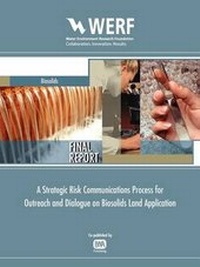
Strategic Risk Communications Process for Biosolids Land Application Programs
Published on 15. December 2011
Book
Paperback/Softback
249 pages
978-1-84339-258-3 (ISBN)
Description
The long-term viability and sustainability of biosolids land application is dependent on continuously earning stakeholder confidence, trust and support. This requires ongoing and effective engagement and communication with key stakeholders about the beneficial use of biosolids in their communities. The goal of the risk communications research was to develop processes, tools and materials to help biosolids managers conduct effective outreach and dialogue with key stakeholders in the communities where they operate, first on biosolids land application and its beneficial use, then on specific challenges such as communicating about potential health risks due to pathogens in biosolids.
The researchers developed a state-of-the-science Strategic Risk Communications Process, tools and materials that can be adapted and used by biosolids program managers. The Process was applied and validated through two case studies, which involved in-depth research with landowners who receive biosolids and neighbors to biosolids land application sites and, in one case, community health officials.
The research demonstrated that the key influence on these stakeholders' judgments on the acceptability of biosolids land application is the trust they have in the people who are producing the product, the people who are using the product and the people are overseeing and ensuring the safe appropriate use of biosolids. These stakeholders recognized the benefits and risks associated with biosolids land application and support its beneficial use. However, their support was not unconditional - they had questions about the long-term health and environmental impacts of such application. The process, tools and materials developed through this project will serve to address these and other key questions, while enabling biosolids managers to continually build stakeholder support for biosolids land application.
The researchers developed a state-of-the-science Strategic Risk Communications Process, tools and materials that can be adapted and used by biosolids program managers. The Process was applied and validated through two case studies, which involved in-depth research with landowners who receive biosolids and neighbors to biosolids land application sites and, in one case, community health officials.
The research demonstrated that the key influence on these stakeholders' judgments on the acceptability of biosolids land application is the trust they have in the people who are producing the product, the people who are using the product and the people are overseeing and ensuring the safe appropriate use of biosolids. These stakeholders recognized the benefits and risks associated with biosolids land application and support its beneficial use. However, their support was not unconditional - they had questions about the long-term health and environmental impacts of such application. The process, tools and materials developed through this project will serve to address these and other key questions, while enabling biosolids managers to continually build stakeholder support for biosolids land application.
More details
Series
Language
English
Place of publication
London
United Kingdom
Target group
College/higher education
Professional and scholarly
Dimensions
Height: 234 mm
Width: 156 mm
Thickness: 18 mm
ISBN-13
978-1-84339-258-3 (9781843392583)
Copyright in bibliographic data and cover images is held by Nielsen Book Services Limited or by the publishers or by their respective licensors: all rights reserved.
Schweitzer Classification
Other editions
Additional editions
Gordon Butte | Sara Eggers | Sergey Sivaev
Strategic Risk Communications Process for Biosolids Land Application Programs
WERF Report SRSK2R08
E-Book
12/2011
IWA Publishing
€37.99
Available for download