

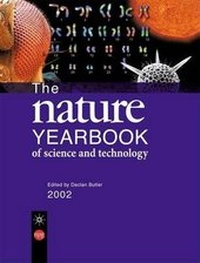
The Nature Yearbook of Science and Technology 2002
Published on 20. March 2002
Book
Hardback
1352 pages
978-0-333-97147-5 (ISBN)
Description
Now in its second edition, "The Nature Yearbook of Science and Technology" provides comprehensive information on the status of the major players and trends in the fast-moving world of science. With more individual entries than ever before and the addition of a new exhaustive index, the new 2002 edition is a larger-format hardback book. The main backbone of this single-volume reference is the expanded Country Guide which provides an exhaustive and quality guide to science in countries around the globe. Each country entry includes key information and contact details on government regulatory bodies, R&D spending, and advisory committees, major research institutes, universities and medical centres, learned societies, philanthropic bodies and high technology centres. Additional chapters include a concise week-by-week summary of the year's major science news, dozens of essays focusing on topical issues and countries from scientific figures and writers, a large guide to international organizations, listings of large scientific facilities, and obituaries. In a constantly and rapidly changing arena such as science and technology.
It should save hours of research and cross-referencing between different sources, including online resources and company websites, bringing all the information you need to your fingertips in one single resource.
It should save hours of research and cross-referencing between different sources, including online resources and company websites, bringing all the information you need to your fingertips in one single resource.
More details
Edition
2002 ed.
Language
English
Place of publication
London
United Kingdom
Target group
College/higher education
Professional and scholarly
Illustrations
illustrations, index
Dimensions
Height: 371 mm
Width: 240 mm
Weight
3315 gr
ISBN-13
978-0-333-97147-5 (9780333971475)
Copyright in bibliographic data and cover images is held by Nielsen Book Services Limited or by the publishers or by their respective licensors: all rights reserved.
Schweitzer Classification
Persons
DECLAN BUTLER graduated from Leeds University in the United Kingdom with a PhD in biology. Beginning his career as a scientist, he turned to journalism, reporting for national newspapers and radio. He joined Nature in 1992, and has since won wide acclaim for his solid and thorough reporting and analysis, in particular of controversial issues at the crossroads between science and society. His reporting, on a wide range of issues - from a series of investigative articles on BSE, to major features on the human genome project, malaria, nuclear proliferation and the impact of Internet on science - has often sparked international attention and awareness.
Content
Foreword by Philip Campbell, Editor of Nature Chronology - a concise week by week summary of the year's major science news Part 1. Millenium Insights - Essays focusing on topical issues in science, written by leading figures in science, politics and economics. Part 2. International organizations - A complete guide to international organizations involved in science, from the United Nations, and the blackbox of the European Union, to radio astronomy and the Antarctic. Key facts and figures, historical data, strategy and events. Part 3. Large scientific facilities - From synchrotrons and neutrons sources, to deep ocean drilling and genome sequencing, the world's major big science facilities and programmes are comprehensively described. Accompanying articles cover the challenges of the increasing need to create infrastructure and programmes to serve the world's scientific community. Part 4. Country guide - Constitution and government - Key political and economic data - Ministries involved in science - Regulatory bodies, and main scientific advisory committees to government - National research agencies - Major research institutes - Main research universities - Medical research centres - Learned societies - Science and Natural History museums - Philanthropic bodies - High technology companies - Main international collaborations - Diplomatic representatives Part 5. Obituaries - Science stands on the shoulders of those who have gone before us. The yearbook offers reflection on the lives and works of the leading lights who passed away this year. Part 8. Appendices and Index