

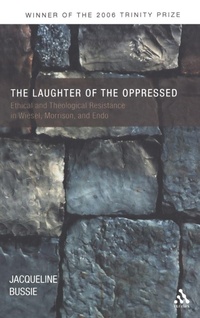
The Laughter of the Oppressed
Ethical and Theological Resistance in Wiesel, Morrison, and Endo
Published on 15. December 2007
Book
Hardback
224 pages
978-0-567-02677-4 (ISBN)
Description
Jacqueline Bussie's book tackles the following unanswered questions: What is the theological and ethical significance of the laughter of the oppressed? And what does it mean to laugh at the horrible--to laugh while one suffers? The majority of ethical philosophical theory and western theology (e.g. Augustine, St. John Chrysostom, Oecolampadius, Reinhold Niebuhr) maintains that laughter is nihilistic and irresponsible, especially if occurring within tragic circumstance. However, she argues that the dominant social location of these theologians and theorists has led to a gap in inquiry, to a failure to consider laughter "from below."
For Judeo-Christian theology, The Laughter of the Oppressed explores uncharted terrain. This book broadens the theological lens to examine the multicultural, modern historical fiction of Elie Wiesel, Toni Morrison, and Shusaku Endo as case studies. In these authors' well-respected texts, Gates of the Forest, Beloved, and Silence, we discover the laughter of the Jews during the Holocaust, the laughter of African Americans both slave and free, and the laughter of the persecuted religious minority of Japanese Christians. These texts, in dialogue with voices from within and beyond their traditions, help us construct a theology of laughter. Bussie's book concludes that laughter functions as invaluable ethical and theological mode of resistance in the face of radically negating oppression that has ruptured both language and traditional belief.
The Laughter of the Oppressed not only interrupts the banality of evil and the dualism of faith and doubt, but also deconstructs the dominant consciousness. Such laughter challenges theology to rearticulate the relationships between God and evil, theology and theodicy, theology and language, paradox and faith, tragedy and hope, and oppression and resistance.
For Judeo-Christian theology, The Laughter of the Oppressed explores uncharted terrain. This book broadens the theological lens to examine the multicultural, modern historical fiction of Elie Wiesel, Toni Morrison, and Shusaku Endo as case studies. In these authors' well-respected texts, Gates of the Forest, Beloved, and Silence, we discover the laughter of the Jews during the Holocaust, the laughter of African Americans both slave and free, and the laughter of the persecuted religious minority of Japanese Christians. These texts, in dialogue with voices from within and beyond their traditions, help us construct a theology of laughter. Bussie's book concludes that laughter functions as invaluable ethical and theological mode of resistance in the face of radically negating oppression that has ruptured both language and traditional belief.
The Laughter of the Oppressed not only interrupts the banality of evil and the dualism of faith and doubt, but also deconstructs the dominant consciousness. Such laughter challenges theology to rearticulate the relationships between God and evil, theology and theodicy, theology and language, paradox and faith, tragedy and hope, and oppression and resistance.
Reviews / Votes
"Political jokes arise in dictatorships and their laughter is liberating oppressed and silenced people. They are nothing less than a resonance of the laughing God in heaven. "The Lord shall have them in derision." (Ps 2,4). The arrogance of power is ridiculous because God is God. I read this fascinating study with growing admiration. It is a masterpiece and a great contribution to every liberating theology." -- Jurgen Moltmann "Jacqueline Bussie reads familiar texts with a keen theological eye and provides fresh and innovative insights into these literary classics. With exquisite literary sensibility and bold theological imagination she helps her readers to understand how genuine laughter emerges from the depths of suffering. This is theological writing of the highest order - intelligent, faithful, and deeply moving." -Ronald F. Thiemann, Bussey Professor of Theology, Harvard Divinity School -- Ronald F. Thiemann "This text is an important theological interpretation of the meaning of laughter for the oppressed. I strongly recommend it." --James H. Cone, Charles Augustus Briggs Distinguished Professor of Systematic Theology Union Theological Seminary New York, N.Y. "Bussie listens deeply to the voices of people traditionally marginalized to discover how they have given expression to the paradox of 'colliding narratives' and responded creatively to tragic suffering...The Laughter of the Oppressed...is indispensable for those concerned with theodicy and the problem of suffering, the theology of the cross, liberation theologies, and the use of fiction as a theological resource." -Karen Teel, Catholic Books ReviewMore details
Language
English
Place of publication
Edinburgh
United Kingdom
Publishing group
Bloomsbury Publishing PLC
Target group
College/higher education
Professional and scholarly
Product notice
Laminated cover
Dimensions
Height: 229 mm
Width: 152 mm
Thickness: 14 mm
Weight
469 gr
ISBN-13
978-0-567-02677-4 (9780567026774)
DOI
CBID131494
Copyright in bibliographic data and cover images is held by Nielsen Book Services Limited or by the publishers or by their respective licensors: all rights reserved.
Schweitzer Classification
Person
Dr. Jacqueline Bussie is the Director of the Forum on Faith and Life and Associate Professor of Religion at Concordia College-Moorhead.
Content
Chapter 1: Laughter 'from below'
A. Contemporary case study
B. Project Origins, Questions, and Objectives
C. Methodological Questions and Answers
Chapter 2: Authoritative Voices Speak: Philosophers and Theologians Weigh-In on Laughter
A. Laughter and Philosophical Inquiry
B. Laughter: A Theological Tableau
C. Laughter and Modern Fiction: The 'Hidden Transcript'
Chapter 3: 'God's Mistake:' Laughter in Elie Wiesel's Gates of the Forest
A. Linguistic Rupture and Laughter as Ethical Resistance
B. Resources for Resistance within Hasidism
C. Laughter and the Paradox of Faith
D. Scriptural and Midrashic Laughter
Chapter 4: Believing Apostates: Laughter in Shusaku Endo's Silence
A. Narratives in Conflict
B. Laughter as Kenosis
C. Laughter's Relationship to a Theology of the Cross
Chapter 5: Flowers in the Dark: African American Consciousness, Laughter, and Resistance in
Toni Morrison's Beloved
A. Baby Suggs: The 'Unchurched Preacher'
B. Sixo: Laughing to Death
C. Paul D: The Last of the Sweet Home Men
Chapter 6: Toward a Theology of Laughter
A. Faith and Hope as Paradoxical and Propleptic
B. The Inadequacy of Either/Or
C. Theological Honesty and the Problem of Finitude
D. The Problematic of a Theology of Suffering
E. The Limits of Theodicy
A. Contemporary case study
B. Project Origins, Questions, and Objectives
C. Methodological Questions and Answers
Chapter 2: Authoritative Voices Speak: Philosophers and Theologians Weigh-In on Laughter
A. Laughter and Philosophical Inquiry
B. Laughter: A Theological Tableau
C. Laughter and Modern Fiction: The 'Hidden Transcript'
Chapter 3: 'God's Mistake:' Laughter in Elie Wiesel's Gates of the Forest
A. Linguistic Rupture and Laughter as Ethical Resistance
B. Resources for Resistance within Hasidism
C. Laughter and the Paradox of Faith
D. Scriptural and Midrashic Laughter
Chapter 4: Believing Apostates: Laughter in Shusaku Endo's Silence
A. Narratives in Conflict
B. Laughter as Kenosis
C. Laughter's Relationship to a Theology of the Cross
Chapter 5: Flowers in the Dark: African American Consciousness, Laughter, and Resistance in
Toni Morrison's Beloved
A. Baby Suggs: The 'Unchurched Preacher'
B. Sixo: Laughing to Death
C. Paul D: The Last of the Sweet Home Men
Chapter 6: Toward a Theology of Laughter
A. Faith and Hope as Paradoxical and Propleptic
B. The Inadequacy of Either/Or
C. Theological Honesty and the Problem of Finitude
D. The Problematic of a Theology of Suffering
E. The Limits of Theodicy