

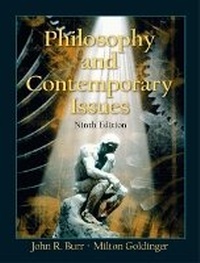
Philosophy and Contemporary Issues
9th Edition
Published on 3. February 2004
Book
Paperback/Softback
544 pages
978-0-13-111256-8 (ISBN)
Description
For courses in Introduction to Philosophy or Contemporary Philosophy.
One of the most successful texts in its field over the last 30 years, Philosophy and Contemporary Issues introduces today's students to philosophy with timely, approachable readings of philosophical significance. The authors demonstrate how philosophy illuminates and helps solve important contemporary problems, and they encourage students to engage in philosophizing themselves. This book successfully makes the subject interesting and intelligible for students encountering philosophy for the first time.
One of the most successful texts in its field over the last 30 years, Philosophy and Contemporary Issues introduces today's students to philosophy with timely, approachable readings of philosophical significance. The authors demonstrate how philosophy illuminates and helps solve important contemporary problems, and they encourage students to engage in philosophizing themselves. This book successfully makes the subject interesting and intelligible for students encountering philosophy for the first time.
More details
Other editions
New editions

John R. Burr | Milton Goldinger
Philosophy and Contemporary Issues
Book
10th Edition
Pearson
€60.94
The article will not be published
Previous edition
John R. Burr | Milton Goldinger
Philosophy and Contemporary Issues
Book
11/1999
8th Edition
Pearson
€51.96
Article exhausted; check for reprint
Persons
One of the most successful texts in its field over the last 30 years, Philosophy and Contemporary Issues introduces today's students to philosophy with timely, approachable readings of philosophical significance. The authors strive to demonstrate how philosophy illuminates and helps solve some of the important problems facing contemporary man, and they encourage students to engage in philosophizing themselves. This book successfully makes the subject interesting and intelligible for students encountering philosophy for the first time.
Features of the Ninth Edition:
Seventeen new readings-Incorporated throughout in sections devoted to philosophical issues, contemporary issues, and puzzles and problems. Includes selections from Richard Dawkins, Richard Swinburne, A.C. Grayling, Peter Singer and others.
One major philosophical problem covered in each section-Followed by contemporary issues stemming from that problem.
Articles selected for their readability.
Interesting pro and con articles on various contemporary issues.
Problems and Puzzles section.
The relation of traditional philosophical issues to key contemporary problems-An explanation of each issue is followed by a related reading and a Puzzles and Problems reading.
Challenges conventional thinking and presents opposing viewpoints-Covers topics such as the limitation of immigration, the existence of God, science and pseudo-science and the relation of mind and body.
End-of-section bibliographies-Lists books and articles that are accessible to undergraduates.
Features of the Ninth Edition:
Seventeen new readings-Incorporated throughout in sections devoted to philosophical issues, contemporary issues, and puzzles and problems. Includes selections from Richard Dawkins, Richard Swinburne, A.C. Grayling, Peter Singer and others.
One major philosophical problem covered in each section-Followed by contemporary issues stemming from that problem.
Articles selected for their readability.
Interesting pro and con articles on various contemporary issues.
Problems and Puzzles section.
The relation of traditional philosophical issues to key contemporary problems-An explanation of each issue is followed by a related reading and a Puzzles and Problems reading.
Challenges conventional thinking and presents opposing viewpoints-Covers topics such as the limitation of immigration, the existence of God, science and pseudo-science and the relation of mind and body.
End-of-section bibliographies-Lists books and articles that are accessible to undergraduates.
Content
(NOTE: Each part begins with an Introduction and concludes with Suggestions for Further Reading.)GENERAL INTRODUCTION.
1. The Apology, Plato.
I. FREEDOM AND DETERMINISM.
2. The Delusion of Free Will, Robert Blatchford.
3. A Brief Defense of Free Will, Tibor Machen.
4. The Problem of Free Will, W. T. Stace.
5. What Means This Freedom?, John Hospers.
6. An Address Delivered to the Prisoners in the Chicago County Jail, Clarence Darrow.
7. The Humanitarian Theory of Punishment, C. S. Lewis.
8. Luck Swallows Everything, Galen Strawson.
9. Fate, Richard Taylor.
II. GOD AND RELIGION.
10. Seven Reasons Why a Scientist Believes in God, A. Cressy Morrison.
11. The Improbability of God, Richard Dawkins.
12. The Justification of Theism, Richard Swinburne.
13. Does God Exist? Reflections on Disbelief, Kai Neilsen.
14. God and the Problem of Evil, B. C. Johnson.
15. The Problem of Evil, John Hick.
16. The Ethics of Belief, W. K. Clifford.
17. The Will to Believe, William James.
18. My Confession, Leo Tolstoy.
19. Three Arguments for Nonbelief, Michael Martin.
III. MORALITY AND SOCIETY.
20. Ethical Relativism, W.T. Stace.
21. The Morality Trap, Harry Browne.
22. Utilitarianism, Jeremy Bentham.
23. The Deep Beauty of the Golden Rule, R. M. MacIver.
24. People or Penguins: The Case for Optimal Pollution, William F. Baxter.
25. Environmental Values, Peter Singer.
26. An Almost Absolute Value in History, John T. Noonan, Jr.
27. A Defense of Abortion, Judith Jarvis Thompson.
28. The Case for Torture, Michael Levin.
29. The Survival Lottery, John Harris.
IV. STATE AND SOCIETY.
30. The Philosophical Presuppositions of Democracy, Sidney Hook.
31. Democratic Tyranny, Alexis de Tocqueville.
32. Man's Rights, Ayn Rand.
33. A Moral Case for Socialism, Kai Nielson.
34. The State, Murray W. Rothbard.
35. Pornography, Oppression, and Freedom: A Closer Look, Helen E. Longino.
36. Pornography, Jan Narveson.
37. Lifeboat Ethics: The Case Against Helping, Garrett Hardin.
38. Insiders and Outsiders, Peter Singer.
39. The Prisoner's Dilemma, Morton D. Davis.
40. Is It Rational to Be an Informed Voter? Anthony Downs.
41. Why a High Society is a Free Society, A.C. Graying.
V. MIND AND BODY.
42. Materialism, Hugh Elliot.
43. The Mind as Distinct from the Body, C. E. M. Joad.
44. The Problem of Other Minds, John Hospers.
45. Brain Transplants and Personal Identity: A Dialogue, Derek Parfit and Godfrey Vesey.
46. Can a Machine Think? Christopher Evans.
47. Minds or Machines, John Beloff.
48. The Myth of the Soul, Clarence Darrow.
49. Parable of the Chinese Room, John Searle.
VI. KNOWLEDGE AND SCIENCE.
50. Meditations I and II, Rene Descartes.
51. Empiricism, Friedrich Paulsen.
52. Scepticism, A.C. Grayling.
53. The Detective as Scientist, Irving M. Copi.
54. The Limits and the Value of Scientific Method, Morris R. Cohen and Ernest Nagel.
55. Can Science Prove That God Does Not Exist? Theodore Schick, Jr.
56. Science Cannot Prove That God Does Not Exist, Bobby Treat.
57. A Consumer's Guide to Pseudoscience, James S. Trefil.
58. Baloney Detection, Michael Schermer.
59. Time Travel: Possible or Impossible?, John Hospers.
60. The Problem of the Criterion, Sextus Empiricus.
Epilogue.
Glossary.
1. The Apology, Plato.
I. FREEDOM AND DETERMINISM.
2. The Delusion of Free Will, Robert Blatchford.
3. A Brief Defense of Free Will, Tibor Machen.
4. The Problem of Free Will, W. T. Stace.
5. What Means This Freedom?, John Hospers.
6. An Address Delivered to the Prisoners in the Chicago County Jail, Clarence Darrow.
7. The Humanitarian Theory of Punishment, C. S. Lewis.
8. Luck Swallows Everything, Galen Strawson.
9. Fate, Richard Taylor.
II. GOD AND RELIGION.
10. Seven Reasons Why a Scientist Believes in God, A. Cressy Morrison.
11. The Improbability of God, Richard Dawkins.
12. The Justification of Theism, Richard Swinburne.
13. Does God Exist? Reflections on Disbelief, Kai Neilsen.
14. God and the Problem of Evil, B. C. Johnson.
15. The Problem of Evil, John Hick.
16. The Ethics of Belief, W. K. Clifford.
17. The Will to Believe, William James.
18. My Confession, Leo Tolstoy.
19. Three Arguments for Nonbelief, Michael Martin.
III. MORALITY AND SOCIETY.
20. Ethical Relativism, W.T. Stace.
21. The Morality Trap, Harry Browne.
22. Utilitarianism, Jeremy Bentham.
23. The Deep Beauty of the Golden Rule, R. M. MacIver.
24. People or Penguins: The Case for Optimal Pollution, William F. Baxter.
25. Environmental Values, Peter Singer.
26. An Almost Absolute Value in History, John T. Noonan, Jr.
27. A Defense of Abortion, Judith Jarvis Thompson.
28. The Case for Torture, Michael Levin.
29. The Survival Lottery, John Harris.
IV. STATE AND SOCIETY.
30. The Philosophical Presuppositions of Democracy, Sidney Hook.
31. Democratic Tyranny, Alexis de Tocqueville.
32. Man's Rights, Ayn Rand.
33. A Moral Case for Socialism, Kai Nielson.
34. The State, Murray W. Rothbard.
35. Pornography, Oppression, and Freedom: A Closer Look, Helen E. Longino.
36. Pornography, Jan Narveson.
37. Lifeboat Ethics: The Case Against Helping, Garrett Hardin.
38. Insiders and Outsiders, Peter Singer.
39. The Prisoner's Dilemma, Morton D. Davis.
40. Is It Rational to Be an Informed Voter? Anthony Downs.
41. Why a High Society is a Free Society, A.C. Graying.
V. MIND AND BODY.
42. Materialism, Hugh Elliot.
43. The Mind as Distinct from the Body, C. E. M. Joad.
44. The Problem of Other Minds, John Hospers.
45. Brain Transplants and Personal Identity: A Dialogue, Derek Parfit and Godfrey Vesey.
46. Can a Machine Think? Christopher Evans.
47. Minds or Machines, John Beloff.
48. The Myth of the Soul, Clarence Darrow.
49. Parable of the Chinese Room, John Searle.
VI. KNOWLEDGE AND SCIENCE.
50. Meditations I and II, Rene Descartes.
51. Empiricism, Friedrich Paulsen.
52. Scepticism, A.C. Grayling.
53. The Detective as Scientist, Irving M. Copi.
54. The Limits and the Value of Scientific Method, Morris R. Cohen and Ernest Nagel.
55. Can Science Prove That God Does Not Exist? Theodore Schick, Jr.
56. Science Cannot Prove That God Does Not Exist, Bobby Treat.
57. A Consumer's Guide to Pseudoscience, James S. Trefil.
58. Baloney Detection, Michael Schermer.
59. Time Travel: Possible or Impossible?, John Hospers.
60. The Problem of the Criterion, Sextus Empiricus.
Epilogue.
Glossary.