

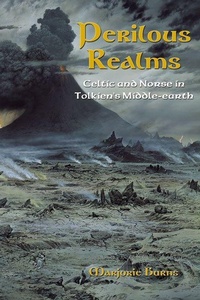
Perilous Realms
Celtic and Norse in Tolkien's Middle-earth
Published on 5. August 2005
Book
Paperback/Softback
240 pages
978-0-8020-3806-7 (ISBN)
Description
J.R.R. Tolkien (1892-1973) is increasingly recognized as the most influential writer of the twentieth century. Sales of his books remain exceptionally high, and Middle-earth fan clubs flourish around the world. The massive success of the film versions made of The Lord of the Rings, and released between 2001 and 2003, have only added to his popularity.
Throughout his life, Tolkien was acutely aware of the power of myth in shaping society; so much so, that one of his earliest ambitions as a writer was to create a mythology for England. The Middle-earth of The Lord of the Rings and The Hobbit was to serve as a stand-in for Britain and North-western Europe and is strongly based on a variety of influential literatures and beliefs, particularly the Celtic and Norse. Perilous Realms is the first book to focus consistently on the ways in which Tolkien balances these two ancient cultures and unites them in a single literature. Renowned Tolkien scholar Marjorie Burns also investigates the ways Tolkien reconciled other oppositions, including paganism and Christianity, good and evil, home and wayside, war and peace, embellishment and simplicity, hierarchy and the common man.
Even those who do not know Beowulf or the Arthurian tales or northern European mythology come away from The Lord of the Rings with a feeling for Britain's historical and literary past. Those who recognize the sources behind Tolkien - and the skill with which he combines these sources - gain far more. Perilous Realms gives this advantage to all readers and provides new discoveries, including material from obscure, little-known Celtic texts and a likely new source for the name 'hobbit.' It is truly essential reading for Tolkien fans.
Throughout his life, Tolkien was acutely aware of the power of myth in shaping society; so much so, that one of his earliest ambitions as a writer was to create a mythology for England. The Middle-earth of The Lord of the Rings and The Hobbit was to serve as a stand-in for Britain and North-western Europe and is strongly based on a variety of influential literatures and beliefs, particularly the Celtic and Norse. Perilous Realms is the first book to focus consistently on the ways in which Tolkien balances these two ancient cultures and unites them in a single literature. Renowned Tolkien scholar Marjorie Burns also investigates the ways Tolkien reconciled other oppositions, including paganism and Christianity, good and evil, home and wayside, war and peace, embellishment and simplicity, hierarchy and the common man.
Even those who do not know Beowulf or the Arthurian tales or northern European mythology come away from The Lord of the Rings with a feeling for Britain's historical and literary past. Those who recognize the sources behind Tolkien - and the skill with which he combines these sources - gain far more. Perilous Realms gives this advantage to all readers and provides new discoveries, including material from obscure, little-known Celtic texts and a likely new source for the name 'hobbit.' It is truly essential reading for Tolkien fans.
Reviews / Votes
Perilous Realms is a pleasure to read. Marjorie Burns writes in a style that is literate and graceful, avoiding the stiff and stuffy prose of much of today's critical writing. With this valuable piece of work, Burns displays a thorough knowledge of both Norse and Celtic literature of the medieval period, and by focusing on the hitherto-undervalued Celtic aspect of Tolkien's fiction, fills a gap in the spectrum of Tolkien scholarship.' Verlyn Flieger, Department of English, University of MarylandMore details
Series
Language
English
Place of publication
Toronto
Canada
Target group
Professional and scholarly
Product notice
Paperback (trade)
Dimensions
Height: 232 mm
Width: 154 mm
Thickness: 18 mm
Weight
358 gr
ISBN-13
978-0-8020-3806-7 (9780802038067)
Copyright in bibliographic data and cover images is held by Nielsen Book Services Limited or by the publishers or by their respective licensors: all rights reserved.
Schweitzer Classification
Person
Marjorie Burns is a professor in the Department of English at Portland State University.
Content
Acknowledgments
A Note on Spelling
Abbreviations
Introduction
1. Two Norths and Their English Blend
2. Skin-Changing in More than One Sense: The Complexity of Beorn
3. Bridges, Gates, and Doors
4. Iceland and Middle-earth: Two Who Loved the North
5. Spiders and Evil Red Eyes: The Shadow Sides of Gandalf and Galadriel
6. Wisewomen, Shieldmaidens, Nymphs, and Goddesses
7. Eating, Devouring, Sacrifice, and Ultimate Just Deserts (Why Elves Are Vegetarian and the Unrefined Are Not)
8. Three Questions by Way of Conclusion
A Note on Spelling
Abbreviations
Introduction
1. Two Norths and Their English Blend
2. Skin-Changing in More than One Sense: The Complexity of Beorn
3. Bridges, Gates, and Doors
4. Iceland and Middle-earth: Two Who Loved the North
5. Spiders and Evil Red Eyes: The Shadow Sides of Gandalf and Galadriel
6. Wisewomen, Shieldmaidens, Nymphs, and Goddesses
7. Eating, Devouring, Sacrifice, and Ultimate Just Deserts (Why Elves Are Vegetarian and the Unrefined Are Not)
8. Three Questions by Way of Conclusion