

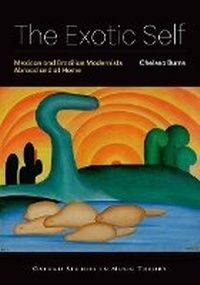
The Exotic Self
Mexican and Brazilian Modernists Abroad and at Home
Will be published approx. on 12. December 2025
Book
Hardback
324 pages
978-0-19-779286-5 (ISBN)
Description
When Europeans and North Americans listen to music by Latin American composers, what do they hear? What, for that matter, do these composers' compatriots hear? The answer, historically, has been the sound of the nation. Scholars, critics, patrons, and audiences have often suggested that Latin American music either does or ought to reflect an aesthetic supposedly inherent in Latin American cultures and even bodies.
Marshaling historically informed close readings of musical text, The Exotic Self reveals the voluminous meanings of works historically pigeonholed by identity-driven assumptions. Chelsea Burns focuses on Brazilian and Mexican modernists from 1920 to 1940, arguing that the national sound of Heitor Villa-Lobos, Carlos Chavez, Silvestre Revueltas, and others is as readily traceable to market pressures as it is to artistic commitments. These composers embraced, knowingly and sometimes reluctantly, exoticist stereotypes of Indigeneity and Blackness as the price of access to metropolitan audiences. At home, intellectuals and politicians also demanded sonic fantasies of "folk" life, here understood as the authentic voice of a national culture rivaling those of the global north.
Recognizing that the authentic and the exotic are two sides of the same tarnished coin, Burns analyzes the works of Mexican and Brazilian modernists anew. What emerges are singular artists with much to say beyond the framework of identity.
Marshaling historically informed close readings of musical text, The Exotic Self reveals the voluminous meanings of works historically pigeonholed by identity-driven assumptions. Chelsea Burns focuses on Brazilian and Mexican modernists from 1920 to 1940, arguing that the national sound of Heitor Villa-Lobos, Carlos Chavez, Silvestre Revueltas, and others is as readily traceable to market pressures as it is to artistic commitments. These composers embraced, knowingly and sometimes reluctantly, exoticist stereotypes of Indigeneity and Blackness as the price of access to metropolitan audiences. At home, intellectuals and politicians also demanded sonic fantasies of "folk" life, here understood as the authentic voice of a national culture rivaling those of the global north.
Recognizing that the authentic and the exotic are two sides of the same tarnished coin, Burns analyzes the works of Mexican and Brazilian modernists anew. What emerges are singular artists with much to say beyond the framework of identity.
More details
Series
Language
English
Place of publication
New York
United States
Target group
Professional and scholarly
Product notice
sewn/stitched
Cloth over boards
Illustrations
94 music examples, 15 figures
Dimensions
Height: 244 mm
Width: 178 mm
Thickness: 30 mm
Weight
748 gr
ISBN-13
978-0-19-779286-5 (9780197792865)
Copyright in bibliographic data and cover images is held by Nielsen Book Services Limited or by the publishers or by their respective licensors: all rights reserved.
Schweitzer Classification
Other editions
Additional editions

E-Book
09/2025
OUP eBook
€85.99
Available for download

E-Book
09/2025
OUP eBook
€85.99
Available for download
Person
Chelsea Burns is Assistant Professor of Music Theory and Affiliate Faculty of the Lozano Long Institute of Latin American Studies at the University of Texas at Austin. Her work has appeared in Music Theory Spectrum, the Journal of Popular Music Studies, Sumula, Music Theory Online, and Twentieth-Century Music. In 2023 she was honored with the Outstanding Publication Award from the Society for Music Theory.
Content
Introduction
1: Negotiating Identities: Carlos Chavez and the Trouble with Musical Nationalism
2: False Choices: The Elusive Promise of Musica Universal
3: Subversion and Polysemy
4: Popular Music as National Music
5: Cancion as Case Study: The Domestic Politics of Vernacular Music in Mexico
6: Indigeneity and Fantastical Distance
Epilogue: On Incompleteness
1: Negotiating Identities: Carlos Chavez and the Trouble with Musical Nationalism
2: False Choices: The Elusive Promise of Musica Universal
3: Subversion and Polysemy
4: Popular Music as National Music
5: Cancion as Case Study: The Domestic Politics of Vernacular Music in Mexico
6: Indigeneity and Fantastical Distance
Epilogue: On Incompleteness