

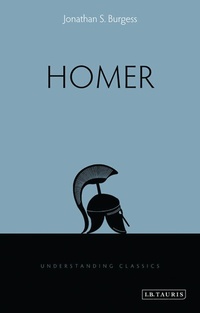
Homer
Published on 13. November 2014
Book
Paperback/Softback
224 pages
978-1-84885-863-3 (ISBN)
Description
What reader could fail to be enthralled by the Iliad and the Odyssey, those greatest heroic epics of antiquity? Yet the author of those immortal text remains, in the end, an enigma. The central paradox of 'Homer' is that- while recognized as producing poetry of incomparable genius- even in the ancien world nobody knew who he was. As a result, the myth-maker became the subject of myth. For the satirist Lucian (c.125-180 CE) he ws a captive Babylonian. Other traditions have Homer born in Smyrna, or on the island of Chios, or portray him as a blind and wandering minstrel. In his new and authoritative introduction, Jonathan S. Burgess addresses fundamental questions of provenance and authorship. Besides conveying why these epics have been cherished down the ages, he discusses their historical sources and the possible impact on the Iliad and Odyssey of Indo-European, Near Eastern and folktale influences. Tracing their transmission through the ancient, medieval and modern periods, the author further examines questions of theory and reception.
Reviews / Votes
Jonathan Burgess has written an admirable introduction, covering with lucid concision all the main issues from the Indo-European origins of Homeric epic to its reception in our own time.' Richard Seaford, Professor of Ancient Greek, University of Exeter 'Jonathan S Burgess is one of the most important scholars working on Homer today. In this elegant new book he starts with the big picture, introducing readers to the world of ancient epic. He then narrows his purview to focus on the Iliad and the Odyssey, discussing plot, characters and transmission. Finally, he homes in on one central mystery: the identity of Homer. The learning is vast; the approach nuanced; the writing crystal-clear. Readers will delight in this book, and learn a great deal from it.' Barbara Graziosi, Professor of Classics, Durham University 'Two and a half millennia of criticism and reception of the indescribably rich Homeric texts make the task of introducing them quite Herculean, but Burgess has managed it superbly. This eminently readable survey covers an enormous amount of ground with tact and insight. Deeply informed both theoretically and philologically, this is an outstanding introduction to possibly the greatest poems in the Western canon.' Robert Fowler, Henry Overton Wills Professor of Greek, University of Bristol 'Jonathan Burgess is a leading figure in the ongoing study of Homeric poetry. He views this dynamic art form within the historical context of its reception in the overall song culture of the ancient Greeks - as also in the literary world of the Classical and the post-Classical eras. Such a perspective, which takes all epic traditions into account, gives the reader an illuminating view of Homer as a grand unifying idea of Hellenic civilization.' Gregory Nagy, Francis Jones Professor of Classical Greek Literature and Professor of Comparative Literature, Director of the Center for Hellenic Studies, Harvard UniversityMore details
Series
Language
English
Place of publication
United Kingdom
Publishing group
Bloomsbury Publishing PLC
Target group
College/higher education
Product notice
Paperback (trade)
Unsewn / adhesive bound
Illustrations
3 maps
Dimensions
Height: 216 mm
Width: 136 mm
Thickness: 20 mm
Weight
295 gr
ISBN-13
978-1-84885-863-3 (9781848858633)
Copyright in bibliographic data and cover images is held by Nielsen Book Services Limited or by the publishers or by their respective licensors: all rights reserved.
Schweitzer Classification
Other editions
Additional editions
Person
Jonathan S Burgess is Professor of Classics at the University of Toronto. He is the author of The Tradition of the Trojan War in Homer (2001, paperback 2004) and the Epic Cycle and The Death and Afterlife of Achilles (2009).
Content
Acknowledgements
Myths
Plots
Poetics
Texts and Pre-Texts
The Homeric Question
Theory
Reception
Notes
Bibliography
Index
Myths
Plots
Poetics
Texts and Pre-Texts
The Homeric Question
Theory
Reception
Notes
Bibliography
Index