

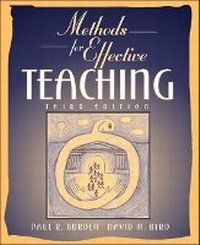
Methods for Effective Teaching
3rd Edition
Published on 30. October 2002
Book
Paperback/Softback
432 pages
978-0-205-36774-0 (ISBN)
Description
Methods for Effective Teaching discusses research-based general teaching methods while emphasizing contemporary issues, including creating a learning community, differentiating your instruction, and making instruction modifications based on student differences.
This edition offers new content on motivating students for a learning community, working with colleagues and parents, differentiating your instruction, and managing lesson delivery. Thorough coverage of classroom management and discipline includes discussion of dynamic ways to create a positive learning environment.
Several pedagogical features about technology, learning communities, and instructional modifications for diverse classrooms engage the reader in decision making about chapter concepts, and "Teachers in Action" testimonials provide perspectives from real teachers.
Each pedagogical feature provokes rich classroom discussions about teacher decision making and application of concepts. The numerous features, tables, and lists of recommendations ensure that the text is reader-friendly and practically oriented.
This edition offers new content on motivating students for a learning community, working with colleagues and parents, differentiating your instruction, and managing lesson delivery. Thorough coverage of classroom management and discipline includes discussion of dynamic ways to create a positive learning environment.
Several pedagogical features about technology, learning communities, and instructional modifications for diverse classrooms engage the reader in decision making about chapter concepts, and "Teachers in Action" testimonials provide perspectives from real teachers.
Each pedagogical feature provokes rich classroom discussions about teacher decision making and application of concepts. The numerous features, tables, and lists of recommendations ensure that the text is reader-friendly and practically oriented.
More details
Edition
3rd edition
Language
English
Place of publication
United States
Publishing group
Pearson Education (US)
Target group
Professional and scholarly
Weight
649 gr
ISBN-13
978-0-205-36774-0 (9780205367740)
Copyright in bibliographic data and cover images is held by Nielsen Book Services Limited or by the publishers or by their respective licensors: all rights reserved.
Schweitzer Classification
Other editions
New editions
Book
10/2006
4th Edition
Pearson
€86.84
Article exhausted; check for reprint
Previous edition
Paul R. Burden | David M. Byrd
Methods for Effective Teaching
Book
05/1999
2nd Edition
Pearson
€63.32
Article exhausted; check for reprint
Content
Each chapter concludes with "Spotlight on Technology," "Creating a Learning Community," "Major Concepts," "Discussion Questions," "Supplemental Activities," "Key Terms," "Recommended Readings," and "References."
Preface.
About the Authors.
PART I. FOUNDATIONS OF TEACHING METHODS.
1. Introduction to Teacher Decision Making.
How Is This Book Organized?
What is Decision Making?
What Decisions Do Teachers Make?
How Might Teachers Improve Their Decision Making?
Summary.
PART II. PLANNING INSTRUCTION.
2. The Fundamentals of Planning.
What Is Planning?
Approaches to Planning.
Additional Planning Considerations.
How Do Teachers Really Plan?
3. Types of Teacher Planning.
Types of Teacher Plans.
Components of a Daily Lesson Plan.
Alternative Lesson Plan Formats.
4. The Inclusive and Multicultural Classroom.
Student Characteristics that Demonstrate Differences.
Creating an Inclusive, Multicultural Classroom.
5. Motivating Students for a Learning Community.
Planning for Motivation.
Motivational Strategies Concerning Instruction.
Motivational Strategies Concerning Evaluation and Feedback.
PART III. SELECTING INSTRUCTIONAL STRATEGIES.
6. Differentiating Your Instruction.
Why Differentiate Your Instruction.
Ways to Differentiate Your Instruction.
A Range of Instructional Strategies.
Grouping for Instruction.
7. Direct Instructional Strategies.
Direct Expository Strategies and Mastery Learning.
Lectures, Questions, and Practice.
8. Indirect Instructional Strategies.
Group and Discussion Methods.
Inquiry and Discovery Approaches.
PART IV. MANAGING INSTRUCTION AND THE CLASSROOM.
9. Managing Lesson Delivery.
Issues Affecting Lesson Delivery.
Managing Lesson Delivery.
10. Classroom Management.
Dimensions of Classroom Management.
Preparing for the School Year.
Organizing Your Classroom and Materials.
Selecting and Teaching Rules and Procedures.
Establishing a Cooperative, Responsible Classroom.
11. Classroom Discipline.
Misbehavior.
Interventions.
A 3-Step Response Plan.
PART V. ASSESSING STUDENT PERFORMANCE.
12. Assessing Student Performance.
What is Evaluation?
Establishing a Framework for Evaluation.
Characteristics of Good Assessment Instruments.
Gathering Evaluation Information.
Preparing and Administering Teacher-Made Tests.
13. Grading Systems, Marking, and Reporting.
Purposes of Grading.
Grading Systems.
Assigning Letter Grades.
Nonachievement Outcomes.
Designing a Gradebook.
Reporting Grades and Communicating to Parents.
General Principles in Grading and Reporting.
PART VI. WORKING WITH OTHERS.
14. Working with Colleagues and Parents.
Reasons for Working with Parents.
Understanding Parents.
Contacting and Communicating with Parents.
Preface.
About the Authors.
PART I. FOUNDATIONS OF TEACHING METHODS.
1. Introduction to Teacher Decision Making.
How Is This Book Organized?
What is Decision Making?
What Decisions Do Teachers Make?
How Might Teachers Improve Their Decision Making?
Summary.
PART II. PLANNING INSTRUCTION.
2. The Fundamentals of Planning.
What Is Planning?
Approaches to Planning.
Additional Planning Considerations.
How Do Teachers Really Plan?
3. Types of Teacher Planning.
Types of Teacher Plans.
Components of a Daily Lesson Plan.
Alternative Lesson Plan Formats.
4. The Inclusive and Multicultural Classroom.
Student Characteristics that Demonstrate Differences.
Creating an Inclusive, Multicultural Classroom.
5. Motivating Students for a Learning Community.
Planning for Motivation.
Motivational Strategies Concerning Instruction.
Motivational Strategies Concerning Evaluation and Feedback.
PART III. SELECTING INSTRUCTIONAL STRATEGIES.
6. Differentiating Your Instruction.
Why Differentiate Your Instruction.
Ways to Differentiate Your Instruction.
A Range of Instructional Strategies.
Grouping for Instruction.
7. Direct Instructional Strategies.
Direct Expository Strategies and Mastery Learning.
Lectures, Questions, and Practice.
8. Indirect Instructional Strategies.
Group and Discussion Methods.
Inquiry and Discovery Approaches.
PART IV. MANAGING INSTRUCTION AND THE CLASSROOM.
9. Managing Lesson Delivery.
Issues Affecting Lesson Delivery.
Managing Lesson Delivery.
10. Classroom Management.
Dimensions of Classroom Management.
Preparing for the School Year.
Organizing Your Classroom and Materials.
Selecting and Teaching Rules and Procedures.
Establishing a Cooperative, Responsible Classroom.
11. Classroom Discipline.
Misbehavior.
Interventions.
A 3-Step Response Plan.
PART V. ASSESSING STUDENT PERFORMANCE.
12. Assessing Student Performance.
What is Evaluation?
Establishing a Framework for Evaluation.
Characteristics of Good Assessment Instruments.
Gathering Evaluation Information.
Preparing and Administering Teacher-Made Tests.
13. Grading Systems, Marking, and Reporting.
Purposes of Grading.
Grading Systems.
Assigning Letter Grades.
Nonachievement Outcomes.
Designing a Gradebook.
Reporting Grades and Communicating to Parents.
General Principles in Grading and Reporting.
PART VI. WORKING WITH OTHERS.
14. Working with Colleagues and Parents.
Reasons for Working with Parents.
Understanding Parents.
Contacting and Communicating with Parents.