

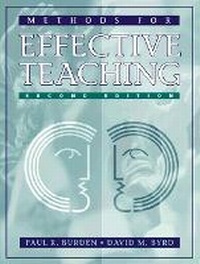
Methods for Effective Teaching
2nd Edition
Published on 26. May 1999
Book
Paperback/Softback
418 pages
978-0-205-29193-9 (ISBN)
Description
This text is designed to provide readers with comprehensive, up-to-date, research-based coverage of general teaching methods. It is a scholarly synthesis of the research base on effective K-12 teaching, yet is written and formatted in a way that is easy to read, understand, and apply.
A unique combination of content setting this book apart from others includes working with parents, establishing a cooperative classroom, motivating students, guiding student study, providing for individual differences, and grading and reporting. Its pedagogical features ensure that the text is reader-friendly and practically oriented.
A unique combination of content setting this book apart from others includes working with parents, establishing a cooperative classroom, motivating students, guiding student study, providing for individual differences, and grading and reporting. Its pedagogical features ensure that the text is reader-friendly and practically oriented.
More details
Edition
2nd edition
Language
English
Place of publication
United States
Publishing group
Pearson Education (US)
Target group
Professional and scholarly
Dimensions
Height: 234 mm
Width: 178 mm
Thickness: 19 mm
Weight
620 gr
ISBN-13
978-0-205-29193-9 (9780205291939)
Copyright in bibliographic data and cover images is held by Nielsen Book Services Limited or by the publishers or by their respective licensors: all rights reserved.
Schweitzer Classification
Other editions
New editions
Paul R. Burden | David M. Byrd
Methods for Effective Teaching
Book
10/2002
3rd Edition
Pearson
€70.75
Article exhausted; check for reprint
Content
Each chapter concludes with "Major Concepts," "Discussion Questions," "Supplemental Activities," "Key Terms," "Recommended Readings," and "References." I.FOUNDATIONS OF TEACHING METHODS.
1.Introduction to Teacher Decision Making.
How Is This Book Organized?
What Is Decision Making?
What Decisions Do Teachers Make?
How Might Teachers Improve Their Decision Making?
Summary.
II.PREPARING FOR INSTRUCTION.
2.The Fundamentals of Planning.
What Is Planning?
Approaches to Planning.
Additional Planning Considerations.
How Do Teachers Really Plan?
3.Types of Teacher Planning.
Types of Teacher Plans.
Components of a Daily Lesson Plan.
Alternative Lesson Plan Formats.
III.PRESENTING INSTRUCTION.
4.Instructional Strategies.
A Range of Instructional Strategies.
Grouping for Instruction.
5.Managing Lesson Delivery.
The Beginning of a Lesson.
The Middle of a Lesson.
The Ending of a Lesson.
6.Instructional Materials and Resources.
Media and Instruction.
Planning, Selecting, and Using Instructional Media.
Types of Media and Resources.
Physical Facilities for Media Use.
Looking Ahead in Media and Resource Use.
IV.ORGANIZING AND MANAGING INSTRUCTION.
7.Classroom Management.
Dimensions of Classroom Management.
Preparing for the School Year.
Organizing Your Classroom and Materials.
Selecting and Teaching Rules and Procedures.
Holding Students Academically Accountable.
8.Classroom Discipline.
Misbehavior.
Interventions.
A Four-Step Response Plan.
9.Establishing a Cooperative, Responsible Classroom.
Promoting Students' Self-Esteem.
Building Positive Teacher-Student Relationships.
Building Group Cohesiveness.
Helping Students Assume Responsibility for Their Behavior.
Teaching Cooperative Skills.
Maintaining Student Attention and Involvement.
Reinforcing Desired Behaviors.
V.CONSIDERING LEARNERS' INSTRUCTIONAL NEEDS.
10.Addressing the Diversity of Students.
Student Characteristics That Demonstrate Differences.
Methods for Accommodating Student Differences.
11.Motivating Students.
The Complex Nature of Motivation.
Considering Students' Academic Needs.
Motivational Strategies in the Classroom.
Motivational Planning.
12.Guiding Student Study.
Issues in Study Skills.
Types of Study Skills.
Related Study Issues.
VI.EVALUATING STUDENT PERFORMANCE.
13.Student Evaluation.
What Is Evaluation?
Establishing a Framework for Evaluation.
Characteristics of Good Assessment Instruments.
Gathering Evaluation Information.
Preparing and Administering Teacher-Made Tests.
14.Grading Systems, Marking, and Reporting.
Purposes of Grading.
Grading Systems.
Assigning Letter Grades.
Nonachievement Outcomes.
Designing a Gradebook.
Reporting Grades and Communicating to Parents.
General Principles in Grading and Reporting.
VII.WORKING WITH PARENTS.
15.Planning to Work with Parents.
Reasons for Working with Parents.
Understanding Parents.
Contacting and Communicating with Parents.
1.Introduction to Teacher Decision Making.
How Is This Book Organized?
What Is Decision Making?
What Decisions Do Teachers Make?
How Might Teachers Improve Their Decision Making?
Summary.
II.PREPARING FOR INSTRUCTION.
2.The Fundamentals of Planning.
What Is Planning?
Approaches to Planning.
Additional Planning Considerations.
How Do Teachers Really Plan?
3.Types of Teacher Planning.
Types of Teacher Plans.
Components of a Daily Lesson Plan.
Alternative Lesson Plan Formats.
III.PRESENTING INSTRUCTION.
4.Instructional Strategies.
A Range of Instructional Strategies.
Grouping for Instruction.
5.Managing Lesson Delivery.
The Beginning of a Lesson.
The Middle of a Lesson.
The Ending of a Lesson.
6.Instructional Materials and Resources.
Media and Instruction.
Planning, Selecting, and Using Instructional Media.
Types of Media and Resources.
Physical Facilities for Media Use.
Looking Ahead in Media and Resource Use.
IV.ORGANIZING AND MANAGING INSTRUCTION.
7.Classroom Management.
Dimensions of Classroom Management.
Preparing for the School Year.
Organizing Your Classroom and Materials.
Selecting and Teaching Rules and Procedures.
Holding Students Academically Accountable.
8.Classroom Discipline.
Misbehavior.
Interventions.
A Four-Step Response Plan.
9.Establishing a Cooperative, Responsible Classroom.
Promoting Students' Self-Esteem.
Building Positive Teacher-Student Relationships.
Building Group Cohesiveness.
Helping Students Assume Responsibility for Their Behavior.
Teaching Cooperative Skills.
Maintaining Student Attention and Involvement.
Reinforcing Desired Behaviors.
V.CONSIDERING LEARNERS' INSTRUCTIONAL NEEDS.
10.Addressing the Diversity of Students.
Student Characteristics That Demonstrate Differences.
Methods for Accommodating Student Differences.
11.Motivating Students.
The Complex Nature of Motivation.
Considering Students' Academic Needs.
Motivational Strategies in the Classroom.
Motivational Planning.
12.Guiding Student Study.
Issues in Study Skills.
Types of Study Skills.
Related Study Issues.
VI.EVALUATING STUDENT PERFORMANCE.
13.Student Evaluation.
What Is Evaluation?
Establishing a Framework for Evaluation.
Characteristics of Good Assessment Instruments.
Gathering Evaluation Information.
Preparing and Administering Teacher-Made Tests.
14.Grading Systems, Marking, and Reporting.
Purposes of Grading.
Grading Systems.
Assigning Letter Grades.
Nonachievement Outcomes.
Designing a Gradebook.
Reporting Grades and Communicating to Parents.
General Principles in Grading and Reporting.
VII.WORKING WITH PARENTS.
15.Planning to Work with Parents.
Reasons for Working with Parents.
Understanding Parents.
Contacting and Communicating with Parents.