

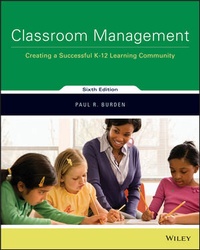
Classroom Management
Creating a Successful K-12 Learning Community 6e
Published on 10. November 2016
Book
Paperback/Softback
272 pages
978-1-119-35289-1 (ISBN)
Description
Did You Know?
This book is also available as a Wiley eText.
The Wiley eText is a complete digital version of the text that makes time spent studying more efficient. Course materials can be accessed on a desktop, laptop, or mobile device so that learning can take place anytime, anywhere. A more affordable alternative to traditional print, the Wiley eText creates a flexible user experience:
Access on-the-go
Search across content
Highlight and take notes
Save money!
Purchase the Wiley eText from
www.WileyStudentChoice.com
This book is also available as a Wiley eText.
The Wiley eText is a complete digital version of the text that makes time spent studying more efficient. Course materials can be accessed on a desktop, laptop, or mobile device so that learning can take place anytime, anywhere. A more affordable alternative to traditional print, the Wiley eText creates a flexible user experience:
Access on-the-go
Search across content
Highlight and take notes
Save money!
Purchase the Wiley eText from
www.WileyStudentChoice.com
More details
Other editions
New editions
Book
07/2020
7th Edition
Wiley
€217.83
Shipment within 15-20 days
Person
Paul Burden is the author of Classroom Management: Creating a Successful K-12 Learning Community, 6th Edition, published by Wiley.
Content
Preface
1 Understanding Management and Discipline in the Classroom
What Is Classroom Management?
Management and Instructional Variables
Student and Teacher Perceptions of Classroom Management
Building Caring Relationships
Areas of Responsibility
A Community of Learners
Understanding Misbehavior
Order in the Classroom
Misbehavior in Context
Types of Misbehavior
Causes of Misbehavior
Degrees of Severity
Principles for Working with Students and Preventing Misbehavior
Major Concepts
Discussion/Reflective Questions
Suggested Activities
Further Reading
2 Models of Discipline 17
The Degree of Control
Low Teacher Control Approaches
Congruent Communication: Haim Ginott
Discipline as Self-Control: Thomas Gordon
Teaching with Love and Logic: Jim Fay and David Funk
Inner Discipline: Barbara Coloroso
From Discipline to Community: Alfie Kohn
Medium Teacher Control Approaches
Logical Consequences: Rudolf Dreikurs
Cooperative Discipline: Linda Albert
Positive Discipline: Jane Nelsen, Lynn Lott, and Stephen Glenn
Noncoercive Discipline: William Glasser
Discipline with Dignity: Richard Curwin, Allen Mendler, and Brian Mendler
Win-Win Discipline: Spencer Kagan
High Teacher Control Approaches
Behavior Modification: B. F. Skinner
Assertive Discipline: Lee and Marlene Canter
Positive Discipline: Fredric Jones
Discipline Without Stress: Marvin Marshall
Determining Your Management Plan
Your Management Philosophy
Your Management Plan
Major Concepts
Discussion/Reflective Questions
Suggested Activities
Further Reading
3 Preparing for the School Year
Preparing for the School Year
Making Management Preparations
Making Instructional Preparations
Managing Assessment, Record Keeping, and Reporting
Establishing a Plan to Deal with Misbehavior
Planning for the First Day
Conducting the First Day
Organizing Your Classroom and Materials
Storage Space
Bulletin Boards and Wall Space
Major Concepts
Discussion/Reflective Questions
Suggested Activities
Further Reading
4 Choosing Rules and Procedures
Rules in the Classroom
Examine the Need for Rules
Select the Rules
Teach and Review the Rules
Obtain Commitments
Procedures in the Classroom
Examine the Need for Procedures
Select the Procedures
Teach and Review the Procedures
Helping Students Assume Responsibility for Their Behavior
Major Concepts
Discussion/Reflective Questions
Suggested Activities
Further Reading
5 Maintaining Appropriate Student Behavior
Building Positive Teacher-Student Relationships
Communicating Caring and Support
Level of Dominance
Level of Cooperation
Having a Mental Set for Management
Withitness
Emotional Objectivity
Managing Whole-Group Instruction
Preventing Misbehavior
Managing Movement Through the Lesson
Maintaining a Group Focus
Maintaining Student Attention and Involvement
Improving Classroom Climate with Reinforcers
Types of Reinforcers
Using Reinforcers Effectively
Major Concepts
Discussion/Reflective Questions
Suggested Activities
Further Reading
6 Communication Skills for Teaching
The Power of Language
General Guidelines for Teacher Language
Communicating Firm Limits for Behavior
Soft Limits
Firm Limits
Opinions, Questions, Directives
Using Supportive Language
Being Intentionally Inviting
Reinforcing Language
Reminding Language
Redirecting Language
Listening
What Is Listening?
Why Listen?
Listening Strategies
Using Nonverbal Communication
Types of Nonverbal Communication
Teachers' Use of Nonverbal Communication
Major Concepts
Discussion/Reflection Questions
Suggested Activities
Further Reading
7 Knowing Your Diverse Students
Classroom Management Implications for Diverse Classrooms
Sources of Student Diversity
Developmental Differences by Age
Cognitive Area
Affective Area
Physical Area
Learning Styles
Creative Potential
Gender
Sexual Orientation
Language
Cultural Diversity
Exceptionalities
Students at Risk
Socioeconomic Status
Students Who Are Troubled
Creating an Inclusive, Multicultural Classroom
Create a Supportive, Caring Environment
Vary Your Instruction
Provide Assistance with the Response to Intervention
Getting to Know Your Students
Types of Information
Sources of Information
Using the Information
Major Concepts
Discussion/Reflective Questions
Suggested Activities
Further Reading
8 Planning and Conducting Instruction
Planning Decisions Affect Behavior Management
The Degree of Structure in Lessons
Grouping Students for Instruction
Holding Students Academically Accountable
Planning for Motivation
Managing Lesson Delivery
The Beginning of a Lesson
The Middle of the Lesson
The Ending of a Lesson
Managing Student Work
Managing Seatwork Effectively
Collecting Assignments and Monitoring Their Completion
Maintaining Records of Student Work
Managing the Paperwork
Giving Students Feedback
Major Concepts
Discussion/Reflective Questions
Suggested Activities
Further Reading
9 Responding to Inappropriate Behavior
A Three-Step Response Plan
Situational Assistance
Mild Responses
Moderate Responses
Cautions and Guidelines
Some Practices to Avoid
Guidelines for Punishment
Dealing with Chronic Misbehaviors
Bullying
Characteristics of Bullying
Effects of Bullying
Types of Bullying
Confronting Bullying
Major Concepts
Discussion/Reflective Questions
Suggested Activities
Further Reading
10 Dealing with Challenging or Violent Students
Understanding Challenging and Violent Students
Behaviors
Influences
Early Signs of Serious Problems
Planning to Work with Challenging and Violent Students
Teaching Students Alternatives to Disruption and Violence
Dealing with Anger
Techniques for Solving Problems
Developing New Behavioral Skills
Responding to Disruptive or Violent Behavior
Approaches to Use in the Classroom
Seeking Outside Help
Major Concepts
Discussion/Reflective Questions
Suggested Activities
Further Reading
11 Collaborating with Colleagues and Families
Working with Colleagues
What Is Collaboration?
Why Collaborate?
Collaborate with Whom?
Collaboration Skills and Dispositions
Working with Families
Reasons for Working with Families
Why Some Families Resist Involvement
Working through Cultural and Language Differences
Contacting and Communicating with Families
Ways to Communicate with Families
Parent-Teacher Conferences
Major Concepts
Discussion/Reflective Questions
Suggested Activities
Further Reading
References and Further Readings
Name Index
Subject Index
1 Understanding Management and Discipline in the Classroom
What Is Classroom Management?
Management and Instructional Variables
Student and Teacher Perceptions of Classroom Management
Building Caring Relationships
Areas of Responsibility
A Community of Learners
Understanding Misbehavior
Order in the Classroom
Misbehavior in Context
Types of Misbehavior
Causes of Misbehavior
Degrees of Severity
Principles for Working with Students and Preventing Misbehavior
Major Concepts
Discussion/Reflective Questions
Suggested Activities
Further Reading
2 Models of Discipline 17
The Degree of Control
Low Teacher Control Approaches
Congruent Communication: Haim Ginott
Discipline as Self-Control: Thomas Gordon
Teaching with Love and Logic: Jim Fay and David Funk
Inner Discipline: Barbara Coloroso
From Discipline to Community: Alfie Kohn
Medium Teacher Control Approaches
Logical Consequences: Rudolf Dreikurs
Cooperative Discipline: Linda Albert
Positive Discipline: Jane Nelsen, Lynn Lott, and Stephen Glenn
Noncoercive Discipline: William Glasser
Discipline with Dignity: Richard Curwin, Allen Mendler, and Brian Mendler
Win-Win Discipline: Spencer Kagan
High Teacher Control Approaches
Behavior Modification: B. F. Skinner
Assertive Discipline: Lee and Marlene Canter
Positive Discipline: Fredric Jones
Discipline Without Stress: Marvin Marshall
Determining Your Management Plan
Your Management Philosophy
Your Management Plan
Major Concepts
Discussion/Reflective Questions
Suggested Activities
Further Reading
3 Preparing for the School Year
Preparing for the School Year
Making Management Preparations
Making Instructional Preparations
Managing Assessment, Record Keeping, and Reporting
Establishing a Plan to Deal with Misbehavior
Planning for the First Day
Conducting the First Day
Organizing Your Classroom and Materials
Storage Space
Bulletin Boards and Wall Space
Major Concepts
Discussion/Reflective Questions
Suggested Activities
Further Reading
4 Choosing Rules and Procedures
Rules in the Classroom
Examine the Need for Rules
Select the Rules
Teach and Review the Rules
Obtain Commitments
Procedures in the Classroom
Examine the Need for Procedures
Select the Procedures
Teach and Review the Procedures
Helping Students Assume Responsibility for Their Behavior
Major Concepts
Discussion/Reflective Questions
Suggested Activities
Further Reading
5 Maintaining Appropriate Student Behavior
Building Positive Teacher-Student Relationships
Communicating Caring and Support
Level of Dominance
Level of Cooperation
Having a Mental Set for Management
Withitness
Emotional Objectivity
Managing Whole-Group Instruction
Preventing Misbehavior
Managing Movement Through the Lesson
Maintaining a Group Focus
Maintaining Student Attention and Involvement
Improving Classroom Climate with Reinforcers
Types of Reinforcers
Using Reinforcers Effectively
Major Concepts
Discussion/Reflective Questions
Suggested Activities
Further Reading
6 Communication Skills for Teaching
The Power of Language
General Guidelines for Teacher Language
Communicating Firm Limits for Behavior
Soft Limits
Firm Limits
Opinions, Questions, Directives
Using Supportive Language
Being Intentionally Inviting
Reinforcing Language
Reminding Language
Redirecting Language
Listening
What Is Listening?
Why Listen?
Listening Strategies
Using Nonverbal Communication
Types of Nonverbal Communication
Teachers' Use of Nonverbal Communication
Major Concepts
Discussion/Reflection Questions
Suggested Activities
Further Reading
7 Knowing Your Diverse Students
Classroom Management Implications for Diverse Classrooms
Sources of Student Diversity
Developmental Differences by Age
Cognitive Area
Affective Area
Physical Area
Learning Styles
Creative Potential
Gender
Sexual Orientation
Language
Cultural Diversity
Exceptionalities
Students at Risk
Socioeconomic Status
Students Who Are Troubled
Creating an Inclusive, Multicultural Classroom
Create a Supportive, Caring Environment
Vary Your Instruction
Provide Assistance with the Response to Intervention
Getting to Know Your Students
Types of Information
Sources of Information
Using the Information
Major Concepts
Discussion/Reflective Questions
Suggested Activities
Further Reading
8 Planning and Conducting Instruction
Planning Decisions Affect Behavior Management
The Degree of Structure in Lessons
Grouping Students for Instruction
Holding Students Academically Accountable
Planning for Motivation
Managing Lesson Delivery
The Beginning of a Lesson
The Middle of the Lesson
The Ending of a Lesson
Managing Student Work
Managing Seatwork Effectively
Collecting Assignments and Monitoring Their Completion
Maintaining Records of Student Work
Managing the Paperwork
Giving Students Feedback
Major Concepts
Discussion/Reflective Questions
Suggested Activities
Further Reading
9 Responding to Inappropriate Behavior
A Three-Step Response Plan
Situational Assistance
Mild Responses
Moderate Responses
Cautions and Guidelines
Some Practices to Avoid
Guidelines for Punishment
Dealing with Chronic Misbehaviors
Bullying
Characteristics of Bullying
Effects of Bullying
Types of Bullying
Confronting Bullying
Major Concepts
Discussion/Reflective Questions
Suggested Activities
Further Reading
10 Dealing with Challenging or Violent Students
Understanding Challenging and Violent Students
Behaviors
Influences
Early Signs of Serious Problems
Planning to Work with Challenging and Violent Students
Teaching Students Alternatives to Disruption and Violence
Dealing with Anger
Techniques for Solving Problems
Developing New Behavioral Skills
Responding to Disruptive or Violent Behavior
Approaches to Use in the Classroom
Seeking Outside Help
Major Concepts
Discussion/Reflective Questions
Suggested Activities
Further Reading
11 Collaborating with Colleagues and Families
Working with Colleagues
What Is Collaboration?
Why Collaborate?
Collaborate with Whom?
Collaboration Skills and Dispositions
Working with Families
Reasons for Working with Families
Why Some Families Resist Involvement
Working through Cultural and Language Differences
Contacting and Communicating with Families
Ways to Communicate with Families
Parent-Teacher Conferences
Major Concepts
Discussion/Reflective Questions
Suggested Activities
Further Reading
References and Further Readings
Name Index
Subject Index