

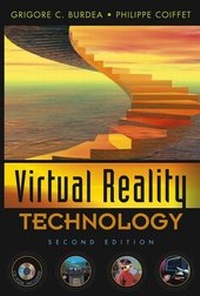
Virtual Reality Technology
2nd Edition
Published on 25. July 2003
Book
Hardback
464 pages
978-0-471-36089-6 (ISBN)
Description
A groundbreaking Virtual Reality textbook is now even better
Virtual reality is a very powerful and compelling computer application by which humans can interface and interact with computer-generated environments in a way that mimics real life and engages all the senses. Although its most widely known application is in the entertainment industry, the real promise of virtual reality lies in such fields as medicine, engineering, oil exploration and the military, to name just a few. Through virtual reality scientists can triple the rate of oil discovery, pilots can dogfight numerically-superior "bandits," and surgeons can improve their skills on virtual (rather than real) patients.
This Second Edition of the first comprehensive technical book on the subject of virtual reality provides updated and expanded coverage of the technology--where it originated, how it has evolved, and where it is going. The authors cover all of the latest innovations and applications that are making virtual reality more important than ever before, including:
* Coverage on input and output interfaces including touch and force feedback
* Computing architecture (with emphasis on the rendering pipeline and task distribution)
* Object modeling (including physical and behavioral aspects)
* Programming for virtual reality
* An in-depth look at human factors issues, user performance, and
* sensorial conflict aspects of VR
* Traditional and emerging VR applications
The new edition of Virtual Reality Technology is specifically designed for use as a textbook. Thus it includes definitions, review questions, and a Laboratory Manual with homework and programming assignments. The accompanying CD-ROM also contains video clips that reinforce the topics covered in the textbook. The Second Edition will serve as a state-of-the-art resource for both graduate and undergraduate students in engineering, computer science, and other disciplines.
GRIGORE C. BURDEA is a professor at Rutgers-the State University of New Jersey, and author of the book Force and Touch Feedback for Virtual Reality, also published by Wiley.
PHILIPPE COIFFET is a Director of Research at CNRS (French National Scientific Research Center) and Member of the National Academy of Technologies of France. He authored 20 books on Robotics and VR translated into several languages.
Virtual reality is a very powerful and compelling computer application by which humans can interface and interact with computer-generated environments in a way that mimics real life and engages all the senses. Although its most widely known application is in the entertainment industry, the real promise of virtual reality lies in such fields as medicine, engineering, oil exploration and the military, to name just a few. Through virtual reality scientists can triple the rate of oil discovery, pilots can dogfight numerically-superior "bandits," and surgeons can improve their skills on virtual (rather than real) patients.
This Second Edition of the first comprehensive technical book on the subject of virtual reality provides updated and expanded coverage of the technology--where it originated, how it has evolved, and where it is going. The authors cover all of the latest innovations and applications that are making virtual reality more important than ever before, including:
* Coverage on input and output interfaces including touch and force feedback
* Computing architecture (with emphasis on the rendering pipeline and task distribution)
* Object modeling (including physical and behavioral aspects)
* Programming for virtual reality
* An in-depth look at human factors issues, user performance, and
* sensorial conflict aspects of VR
* Traditional and emerging VR applications
The new edition of Virtual Reality Technology is specifically designed for use as a textbook. Thus it includes definitions, review questions, and a Laboratory Manual with homework and programming assignments. The accompanying CD-ROM also contains video clips that reinforce the topics covered in the textbook. The Second Edition will serve as a state-of-the-art resource for both graduate and undergraduate students in engineering, computer science, and other disciplines.
GRIGORE C. BURDEA is a professor at Rutgers-the State University of New Jersey, and author of the book Force and Touch Feedback for Virtual Reality, also published by Wiley.
PHILIPPE COIFFET is a Director of Research at CNRS (French National Scientific Research Center) and Member of the National Academy of Technologies of France. He authored 20 books on Robotics and VR translated into several languages.
Reviews / Votes
"...provides an excellent overview of the field...a fine textbook.... I would recommend highly." (Real Time Graphics, August 2003)"...this second edition was well overdue, but it has to be said that it has been worth the wait...a must-have book." (Assembly Automation, Vol 24(1), 2004)
More details
Product info
Book with CD-ROM
Series
Edition
2. Auflage
Language
English
Place of publication
United States
Publishing group
John Wiley & Sons Inc
Target group
Professional and scholarly
Edition type
New edition
Dimensions
Height: 26.1 cm
Width: 18.3 cm
Thickness: 2.7 cm
Weight
1021 gr
ISBN-13
978-0-471-36089-6 (9780471360896)
Schweitzer Classification
Other editions
New editions
Grigore C. Burdea | Philippe Coiffet
Virtual Reality Technology
Book
08/2024
3rd Edition
Wiley-IEEE Press
€93.00
Shipment within 15-20 days
Previous edition

Grigore Burdea | Philippe Coiffet
Virtual Reality Technology
Book
07/1994
Wiley
€84.12
Article exhausted; check for reprint
Persons
GRIGORE C. BURDEA is a professor at Rutgers, the State University of New Jersey, and author of the book Force and Touch Feedback for Virtual Reality, also published by Wiley.
PHILIPPE COIFFET is a Director of Research at CNRS (French National Scientific Research Center) and Member of the National Academy of Technologies of France. He has authored twenty books on robotics and virtual reality, which have been translated into several languages.
PHILIPPE COIFFET is a Director of Research at CNRS (French National Scientific Research Center) and Member of the National Academy of Technologies of France. He has authored twenty books on robotics and virtual reality, which have been translated into several languages.
Content
FOREWORD.
PREFACE.
1 INTRODUCTION.
1.1 The Three I's of Virtual Reality.
1.2 A Short History of Early Virtual Reality.
1.3 Early Commercial VR Technology .
1.4 VR Becomes an Industry.
1.5 The Five Classic Components of a VR System.
1.6 Review Questions.
References.
2 INPUT DEVICES: TRACKERS, NAVIGATION, AND GESTURE INTERFACES.
2.1 Three-Dimensional Position Trackers.
2.2 Navigation and Manipulation Interfaces.
2.3 Gesture Interfaces.
2.4 Conclusion.
2.5 Review Questions.
References.
3 OUTPUT DEVICES: GRAPHICS, THREE-DIMENSIONAL SOUND, AND HAPTIC DISPLAYS.
3.1 Graphics Displays.
3.2 Sound Displays.
3.3 Haptic Feedback.
3.4 Conclusion.
3.5 Review Questions.
References.
4 COMPUTING ARCHITECTURES FOR VR.
4.1 The Rendering Pipeline.
4.2 PC Graphics Architecture.
4.3 Workstation-Based Architectures.
4.4 Distributed VR Architectures.
4.5 Conclusion.
4.6 Review Questions.
References.
5 MODELING.
5.1 Geometric Modeling.
5.2 Kinematics Modeling.
5.3 Physical Modeling.
5.4 Behavior Modeling.
5.5 Model Management.
5.6 Conclusion.
5.7 Review Questions.
References.
6 VR PROGRAMMING.
6.1 Toolkits and Scene Graphs.
6.2 WorldToolKit.
6.3 Java 3D.
6.4 General Haptics Open Software Toolkit.
6.5 PeopleShop.
6.6 Conclusion.
6.7 Review Questions.
References.
7 HUMAN FACTORS IN VR.
7.1 Methodology and Terminology.
7.2 User Performance Studies.
7.3 VR Health and Safety Issues.
7.4 VR and Society.
7.5 Conclusion.
7.6 Review Questions.
References.
8 TRADITIONAL VR APPLICATIONS.
8.1 Medical Applications of VR.
8.2 Education, Arts, and Entertainment.
8.3 Military VR Applications.
8.4 Conclusion.
8.5 Review Questions.
References.
9 EMERGING APPLICATIONS OF VR.
9.1 VR Applications in Manufacturing.
9.2 Applications of VR in Robotics.
9.3 Information Visualization.
9.4 Conclusion.
9.5 Review Questions.
References.
INDEX.
PREFACE.
1 INTRODUCTION.
1.1 The Three I's of Virtual Reality.
1.2 A Short History of Early Virtual Reality.
1.3 Early Commercial VR Technology .
1.4 VR Becomes an Industry.
1.5 The Five Classic Components of a VR System.
1.6 Review Questions.
References.
2 INPUT DEVICES: TRACKERS, NAVIGATION, AND GESTURE INTERFACES.
2.1 Three-Dimensional Position Trackers.
2.2 Navigation and Manipulation Interfaces.
2.3 Gesture Interfaces.
2.4 Conclusion.
2.5 Review Questions.
References.
3 OUTPUT DEVICES: GRAPHICS, THREE-DIMENSIONAL SOUND, AND HAPTIC DISPLAYS.
3.1 Graphics Displays.
3.2 Sound Displays.
3.3 Haptic Feedback.
3.4 Conclusion.
3.5 Review Questions.
References.
4 COMPUTING ARCHITECTURES FOR VR.
4.1 The Rendering Pipeline.
4.2 PC Graphics Architecture.
4.3 Workstation-Based Architectures.
4.4 Distributed VR Architectures.
4.5 Conclusion.
4.6 Review Questions.
References.
5 MODELING.
5.1 Geometric Modeling.
5.2 Kinematics Modeling.
5.3 Physical Modeling.
5.4 Behavior Modeling.
5.5 Model Management.
5.6 Conclusion.
5.7 Review Questions.
References.
6 VR PROGRAMMING.
6.1 Toolkits and Scene Graphs.
6.2 WorldToolKit.
6.3 Java 3D.
6.4 General Haptics Open Software Toolkit.
6.5 PeopleShop.
6.6 Conclusion.
6.7 Review Questions.
References.
7 HUMAN FACTORS IN VR.
7.1 Methodology and Terminology.
7.2 User Performance Studies.
7.3 VR Health and Safety Issues.
7.4 VR and Society.
7.5 Conclusion.
7.6 Review Questions.
References.
8 TRADITIONAL VR APPLICATIONS.
8.1 Medical Applications of VR.
8.2 Education, Arts, and Entertainment.
8.3 Military VR Applications.
8.4 Conclusion.
8.5 Review Questions.
References.
9 EMERGING APPLICATIONS OF VR.
9.1 VR Applications in Manufacturing.
9.2 Applications of VR in Robotics.
9.3 Information Visualization.
9.4 Conclusion.
9.5 Review Questions.
References.
INDEX.