

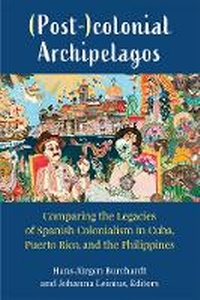
(Post-)colonial Archipelagos
Comparing the Legacies of Spanish Colonialism in Cuba, Puerto Rico, and the Philippines
Published on 22. February 2022
Book
Paperback/Softback
382 pages
978-0-472-03884-8 (ISBN)
Description
The Puerto Rican debt crisis, the challenges of social, political, and economic transition in Cuba, and the populist politics of Duterte in the Philippines-these topics are typically seen as disparate experiences of social reality. Though these island territories were colonized by the same two colonial powers-by the Spanish Empire and, after 1898, by the United States-research in the fields of history and the social sciences rarely draws links between these three contexts.
Located at the intersection of Postcolonial Studies, Latin American Studies, Caribbean Studies, and History, this interdisciplinary volume brings together scholars from the US, Europe, Latin America, the Caribbean, and the Philippines to examine the colonial legacies of the three island nations of Cuba, Puerto Rico, and the Philippines. Instead of focusing on the legacies of US colonialism, the continuing legacies of Spanish colonialism are put center-stage. The analyses offered in the volume yield new and surprising insights into the study of colonial and postcolonial constellations that are of interest not only for experts, but also for readers interested in the social, political, economic, and cultural dynamics of Cuba, Puerto Rico, and the Philippines during Spanish colonization and in the present. The empirical material profits from a rigorous and systematic analytical framework and is thus easily accessible for students, researchers, and the interested public alike.
Located at the intersection of Postcolonial Studies, Latin American Studies, Caribbean Studies, and History, this interdisciplinary volume brings together scholars from the US, Europe, Latin America, the Caribbean, and the Philippines to examine the colonial legacies of the three island nations of Cuba, Puerto Rico, and the Philippines. Instead of focusing on the legacies of US colonialism, the continuing legacies of Spanish colonialism are put center-stage. The analyses offered in the volume yield new and surprising insights into the study of colonial and postcolonial constellations that are of interest not only for experts, but also for readers interested in the social, political, economic, and cultural dynamics of Cuba, Puerto Rico, and the Philippines during Spanish colonization and in the present. The empirical material profits from a rigorous and systematic analytical framework and is thus easily accessible for students, researchers, and the interested public alike.
Reviews / Votes
"(Post-) Colonial Archipelagos: Comparing the Legacies of Spanish Colonialism in Cuba, Puerto Rico, and the Philippines is an important contribution to postcolonial studies in general and to the colonial legacies of Cuba, Puerto Rico, and the Philippines in particular. . . Far from establishing a discouraging panorama, the pluridiversity of voices contained in this collective volume make it clear that the reversal of these perennial injustices and the establishment of a world that contains a heterogeneity of worlds is only possible through a collective, solidaritybased, transatlantic, and intersectional project."-Forum for Inter-American Research (FIAR) -- Diego Ballestero * Forum for Inter-American Research (FIAR) *
More details
Language
English
Place of publication
Ann Arbor
United States
Target group
Professional and scholarly
Illustrations
10 figures, 9 tables
Dimensions
Height: 229 mm
Width: 152 mm
ISBN-13
978-0-472-03884-8 (9780472038848)
Copyright in bibliographic data and cover images is held by Nielsen Book Services Limited or by the publishers or by their respective licensors: all rights reserved.
Schweitzer Classification
Persons
Hans-Juergen Burchardt is Full Professor of International and Intersocietal Relations at the University of Kassel.
Johanna Leinius is Postdoctoral Researcher in the program "Ecologies of Social Cohesion" at the University of Kassel.
Johanna Leinius is Postdoctoral Researcher in the program "Ecologies of Social Cohesion" at the University of Kassel.
Content
Figures and Tables
Acknowledgments
Part 1: An archipelagic view on (post-)colonial legacies
Chapter 1: Hans-Juergen Burchardt and Johanna Leinius: Of archipelagic connections and postcolonial divides
Chapter 2: Johanna Leinius: The paradoxes of (post-)colonial archipelagos - a proposal for postcolonizing comparative research
Chapter 3: Josep M. Fradera: Cuba, Puerto Rico, the Philippines, and the crisis of the great Empire: global dynamics and indigenous development
Part 2: The past and present of the political economy and authority in Cuba, Puerto Rico, and the Philippines
Chapter 4: Antonio Santamaria Garcia: Spain in Cuba. Policies, structures, economic practices and colonial relations
Chapter 5: Jacqueline Laguardia Martinez: The political economy of contemporary Cuba
Chapter 6: Emilio Pantojas-Garcia: Puerto Rico's colonial legacies and post-colonial constellations: Economy, society and polity
Chapter 7: Ian Seda Irizarry and Argeo Quinones: The political economy of contemporary Puerto Rico
Chapter 8: Alvin A. Camba and Maria Isabel Aguilar: Sui generis: The political economy of the Philippines during the Spanish colonial regime
Chapter 9: Teresa R. Melgar: The political economy of power in contemporary Philippines: Patterns of continuity and change
Part 3: The past and present of the hierarchization of difference and power in Cuba, Puerto Rico, and the Philippines
Chapter 10: Javiher Gutierrez Forte and Janet Iglesias Cruz: Spanish colonization's mark on Cuba
Chapter 11: Jenny Morin Nenoff: Race, gender and social structure in contemporary Cuba: between colonial legacy and current structural transformations
Chapter 12: Milagros Denis-Rosario: The perpetual colony: historical memory and inequalities in Puerto Rican society
Chapter 13: Miguel A. Rivera-Quinones: Post-colonial colonialism in Puerto Rico: Inequality, capital and social transfers
Chapter 14: Maria Dolores Elizalde: Colonial government and social organization in the Spanish Philippines: Interactions and ruptures
Chapter 15: Cristina Cielo: Social inequalities and political organization in the Philippines
Part 4: The (post-)colonial legacies of Puerto Rico, Cuba, and the Philippines: A comparative view
Chapter 16: Michael Zeuske: Legacies of slavery and people of African descent in Cuba, Puerto Rico, and the Caribbean
Chapter 17: Jochen Kemner: Patterns of work, stratification and social prestige in the late Spanish colonial Empire
Chapter 18: Hans-Juergen Burchardt: Lessons learned: The legacies of Spanish colonialism
Notes
Contributor Bios
Index
Acknowledgments
Part 1: An archipelagic view on (post-)colonial legacies
Chapter 1: Hans-Juergen Burchardt and Johanna Leinius: Of archipelagic connections and postcolonial divides
Chapter 2: Johanna Leinius: The paradoxes of (post-)colonial archipelagos - a proposal for postcolonizing comparative research
Chapter 3: Josep M. Fradera: Cuba, Puerto Rico, the Philippines, and the crisis of the great Empire: global dynamics and indigenous development
Part 2: The past and present of the political economy and authority in Cuba, Puerto Rico, and the Philippines
Chapter 4: Antonio Santamaria Garcia: Spain in Cuba. Policies, structures, economic practices and colonial relations
Chapter 5: Jacqueline Laguardia Martinez: The political economy of contemporary Cuba
Chapter 6: Emilio Pantojas-Garcia: Puerto Rico's colonial legacies and post-colonial constellations: Economy, society and polity
Chapter 7: Ian Seda Irizarry and Argeo Quinones: The political economy of contemporary Puerto Rico
Chapter 8: Alvin A. Camba and Maria Isabel Aguilar: Sui generis: The political economy of the Philippines during the Spanish colonial regime
Chapter 9: Teresa R. Melgar: The political economy of power in contemporary Philippines: Patterns of continuity and change
Part 3: The past and present of the hierarchization of difference and power in Cuba, Puerto Rico, and the Philippines
Chapter 10: Javiher Gutierrez Forte and Janet Iglesias Cruz: Spanish colonization's mark on Cuba
Chapter 11: Jenny Morin Nenoff: Race, gender and social structure in contemporary Cuba: between colonial legacy and current structural transformations
Chapter 12: Milagros Denis-Rosario: The perpetual colony: historical memory and inequalities in Puerto Rican society
Chapter 13: Miguel A. Rivera-Quinones: Post-colonial colonialism in Puerto Rico: Inequality, capital and social transfers
Chapter 14: Maria Dolores Elizalde: Colonial government and social organization in the Spanish Philippines: Interactions and ruptures
Chapter 15: Cristina Cielo: Social inequalities and political organization in the Philippines
Part 4: The (post-)colonial legacies of Puerto Rico, Cuba, and the Philippines: A comparative view
Chapter 16: Michael Zeuske: Legacies of slavery and people of African descent in Cuba, Puerto Rico, and the Caribbean
Chapter 17: Jochen Kemner: Patterns of work, stratification and social prestige in the late Spanish colonial Empire
Chapter 18: Hans-Juergen Burchardt: Lessons learned: The legacies of Spanish colonialism
Notes
Contributor Bios
Index