

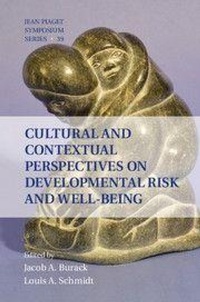
Cultural and Contextual Perspectives on Developmental Risk and Well-Being
Published on 17. December 2015
Book
Paperback/Softback
318 pages
978-1-316-50094-1 (ISBN)
Description
Developmental risk refers to conditions, characteristics, experiences, or situations with potentially deleterious effects that lead to outcomes later in life that do not meet societal expectations. While risk is typically framed as the statistical probability of a problematic outcome in relation to the general population, the converse notion of well-being is considered in relation to the level of functioning at a given developmental stage. The contributors to this volume provide insight into developmental well-being by examining the ways that culture and context affect outcomes associated with various types of risk, such as those related to oppression, academic performance, family background, life history, physical health, and psychiatric conditions. Even though certain outcomes may seem inevitable in cases involving harmful environments, diseases, and disorders, they are virtually all influenced by complex interactions among individuals, their families, communities, and societies.
More details
Series
Language
English
Place of publication
Cambridge
United Kingdom
Target group
Professional and scholarly
Product notice
Paperback (trade)
Illustrations
5 Tables, unspecified; 17 Line drawings, unspecified
Dimensions
Height: 229 mm
Width: 152 mm
Thickness: 19 mm
Weight
518 gr
ISBN-13
978-1-316-50094-1 (9781316500941)
Copyright in bibliographic data and cover images is held by Nielsen Book Services Limited or by the publishers or by their respective licensors: all rights reserved.
Schweitzer Classification
Other editions
Additional editions
Jacob A. Burack | Louis A. Schmidt
Cultural and Contextual Perspectives on Developmental Risk and Well-Being
Book
05/2014
Cambridge University Press
€120.50
Shipment within 15-20 days
Persons
Jacob A. Burack is a Professor of School Psychology and Human Development in the Department of Educational and Counselling Psychology at McGill University, Montreal and a researcher at Hopital Rivieres-des-Prairies in Montreal, Canada. He is also the founder and director of the McGill Youth Study Team. Along with his colleagues and students, he studies and works with a variety of populations, including First Nations adolescents, persons with autism spectrum disorders, and persons with Down syndrome. Louis A. Schmidt is a Professor of Psychology and Director of the Child Emotion Laboratory at McMaster University in Hamilton, Canada. He is also a core member of the Offord Center for Child Studies at McMaster Children's Hospital and a fellow of the Association for Psychological Science. Schmidt's research interests include the origins and development of individual differences in temperament and the impact of early life events on the human brain.
Content
Series editor's preface; 1. Introductory remarks: cultural and contextual perspectives on developmental risk and well-being Jacob A. Burack and Louis A. Schmidt; Part I. Cultural Perspectives on Developmental Risk and Well-Being: 2. Using multicultural research to expand the scope of developmental psychopathology Thomas M. Achenbach; 3. Cultural perspectives on shyness-inhibition Xinyin Chen, Siman Zhao and Fan Yang; 4. A sociocultural analysis of high-risk Native American children in schools Stephanie A. Fryberg and Peter A. Leavitt; 5. Developmental perspectives on the role of cultural identity in well-being: evidence from aboriginal communities in Canada Jacob A. Burack, Amy Bombay, Heidi Flores, Jillian Stewart and Vladimir Ponizovsky; Part II. Contextual Perspectives on Developmental Risk and Well-Being: 6. Peer victimization: understanding the developmental correlates of at-risk children and youth Jennifer M. Knack, Tracy Vaillancourt, Amanda Krygsman, Steven Arnocky, Irene Vitoroulis, Jennifer Hepditch and Christine Blain-Arcaro; 7. The potential risks and adaptive contributions of elite social status to youth development Wendy Troop-Gordon; 8. Culture and context modify neural correlates of adolescent risk-taking behavior Christine L. Lackner and Sidney J. Segalowitz; Part III. Contextual Perspectives on Atypicality: 9. Prematurity as a context of development at risk Lauren Drvaric, Jordana Waxman, Ryan J. Van Lieshout and Louis A. Schmidt; 10. Maternal depression and children's behavioral and emotional outcomes: a review of contextual and individual level moderators and mediators Matilda Nowakowski, Louis A. Schmidt and Tracy Vaillancourt; 11. Fragile X-associated disorders: how the family environment and genotype interact Marsha Mailick, Jan S. Greenberg, Leann E. Smith, Audra Sterling, Nancy Brady, Steven F. Warren and Jinkuk Hong; 12. Developmental approaches to understanding and treating autism Tony Charman.