

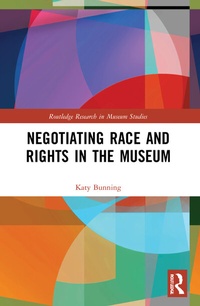
Negotiating Race and Rights in the Museum
1st Edition
Published on 30. May 2022
Book
Paperback/Softback
168 pages
978-0-367-62801-7 (ISBN)
Description
Negotiating Race and Rights in the Museum traces the evolution of pervasive racial ideas, and 'post-race' allusions, over more than a century of museum thinking and practice.
Drawing on the illuminating history of the Smithsonian Institution, this book offers an account of how museums have addressed and renegotiated wider calls for inclusion, 'self-definition', and racial justice, in ways that continually re-centre and legitimise the White frame. Charting the emergence of 'post-race' ideas in museums, Bunning demonstrates how and why 'culturally specific' approaches have been met with suspicion and derision by powerful museum stakeholders against the backdrop of a changing United States of America, just as they have offered crucial vehicles for sectoral change. This study of the evolution of racial ideas in response to Black empowerment highlights deeply entrenched forms of White supremacy that remain operative within the international museum sector today, and serves to reinforce the urgent calls for the active disruption of racist ideas and the redesign of institutions.
Negotiating Race and Rights in the Museum will appeal to those working in the international fields of museum and heritage studies, cultural studies, and American studies, and all who are interested in the production of racial ideas and White supremacy in the museum.
Drawing on the illuminating history of the Smithsonian Institution, this book offers an account of how museums have addressed and renegotiated wider calls for inclusion, 'self-definition', and racial justice, in ways that continually re-centre and legitimise the White frame. Charting the emergence of 'post-race' ideas in museums, Bunning demonstrates how and why 'culturally specific' approaches have been met with suspicion and derision by powerful museum stakeholders against the backdrop of a changing United States of America, just as they have offered crucial vehicles for sectoral change. This study of the evolution of racial ideas in response to Black empowerment highlights deeply entrenched forms of White supremacy that remain operative within the international museum sector today, and serves to reinforce the urgent calls for the active disruption of racist ideas and the redesign of institutions.
Negotiating Race and Rights in the Museum will appeal to those working in the international fields of museum and heritage studies, cultural studies, and American studies, and all who are interested in the production of racial ideas and White supremacy in the museum.
More details
Series
Language
English
Place of publication
London
United Kingdom
Publishing group
Taylor & Francis Ltd
Target group
College/higher education
Postgraduate
Illustrations
12 s/w Abbildungen, 12 s/w Photographien bzw. Rasterbilder
12 Halftones, black and white; 12 Illustrations, black and white
Dimensions
Height: 234 mm
Width: 156 mm
Weight
400 gr
ISBN-13
978-0-367-62801-7 (9780367628017)
Copyright in bibliographic data and cover images is held by Nielsen Book Services Limited or by the publishers or by their respective licensors: all rights reserved.
Schweitzer Classification
Other editions
Additional editions
Katy Bunning
Negotiating Race and Rights in the Museum
Book
11/2020
1st Edition
Routledge
€193.50
Shipment within 15-20 days
Katy Bunning
Negotiating Race and Rights in the Museum
E-Book
11/2020
1st Edition
Routledge
€60.49
Available for download
Katy Bunning
Negotiating Race and Rights in the Museum
E-Book
11/2020
1st Edition
Routledge
€60.49
Available for download
Person
Katy Bunning is Lecturer in Museum Studies at the University of Leicester, UK, and has a background in American Studies. Her previous publications include A Museum Studies Approach to Heritage (co-edited with Sheila Watson and Amy Jane Barnes).
Content
Introduction: museums, race, and rights movements; 1. White supremacy and the problem of race; 2. Cultural diversity: racism reframed; 3. The problem of identity politics; 4. Negotiating racial histories; 5. Undesirable museums in a 'post-race' America; Conclusion: race, rights, and identity in a new era