

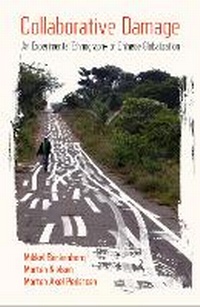
Collaborative Damage
An Experimental Ethnography of Chinese Globalization
Published on 15. February 2022
Book
Hardback
294 pages
978-1-5017-5980-2 (ISBN)
Description
Collaborative Damage is an experimental ethnography of Chinese globalization that compares data from two frontlines of China's global intervention-sub-Saharan Africa and Inner/Central Asia. Based on their fieldwork on Chinese infrastructure and resource-extraction projects in Mozambique and Mongolia, Mikkel Bunkenborg, Morten Nielsen, and Morten Axel Pedersen provide new empirical insights into neocolonialism and Sinophobia in the Global South.
The core argument in Collaborative Damage is that the different participants studied in the globalization processes-local workers and cadres; Chinese managers and entrepreneurs; and the authors themselves, three Danish anthropologists-are intimately linked in paradoxical partnerships of mutual incomprehension. The authors call this "collaborative damage," which crucially refers not only to the misunderstandings and conflicts they observed in the field, but also to their own failure to agree about how to interpret the data. Via in-depth case studies and tragicomical tales of friendship, antagonism, irresolvable differences, and carefully maintained indifferences across disparate Sino-local worlds in Africa and Asia, Collaborative Damage tells a wide-ranging story of Chinese globalization in the twenty-first century.
The core argument in Collaborative Damage is that the different participants studied in the globalization processes-local workers and cadres; Chinese managers and entrepreneurs; and the authors themselves, three Danish anthropologists-are intimately linked in paradoxical partnerships of mutual incomprehension. The authors call this "collaborative damage," which crucially refers not only to the misunderstandings and conflicts they observed in the field, but also to their own failure to agree about how to interpret the data. Via in-depth case studies and tragicomical tales of friendship, antagonism, irresolvable differences, and carefully maintained indifferences across disparate Sino-local worlds in Africa and Asia, Collaborative Damage tells a wide-ranging story of Chinese globalization in the twenty-first century.
Reviews / Votes
Engaging, candid, and at times amusing, Collaborative Damage makes an insightful as well as a delightful read.- Miriam Driessen (CHINA QUARTERLY) The book aptly captures the social dynamics characteristic of Chinese investment and the inherent contradictions of transnational capitalism.In short, this book contributes a reflexive, insightful and gripping account of the practices and effects of Chinese extraversion.
(Inner Asia) Collaborative Damage provides a distinctive approach both to the study of a controversial global phenome- non and to the practice of ethnographic writing.
(The Developing Economies) Collaborative damage is a cracking book. In all its confusion and contrast, it may be much closer to the truth about the twenty-first-century Chinese empire than more disciplined mono-chromatic narratives.
(Journal of the Royal Anthropological Institute)
More details
Language
English
Place of publication
Ithaca
United States
Product notice
Paper over boards
Illustrations
19 b&w halftones, 1 chart - 1 Charts - 19 Halftones, black and white
Dimensions
Height: 229 mm
Width: 152 mm
Thickness: 27 mm
Weight
907 gr
ISBN-13
978-1-5017-5980-2 (9781501759802)
Copyright in bibliographic data and cover images is held by Nielsen Book Services Limited or by the publishers or by their respective licensors: all rights reserved.
Schweitzer Classification
Other editions
Additional editions
Mikkel Bunkenborg | Morten Nielsen | Morten Axel Pedersen
Collaborative Damage
An Experimental Ethnography of Chinese Globalization
E-Book
02/2022
Cornell University Press
€32.99
Available for download
Persons
Mikkel Bunkenborg is Associate Professor of China Studies at the University of Copenhagen.
Morten Nielsen is Research Professor at the National Museum of Denmark and Director of the Research Center for Social Urban Modeling. He is coeditor of The Composition of Anthropology.
Morten Axel Pedersen is Professor of Social Anthropology and Director of the Copenhagen Center for Social Data Science at the University of Copenhagen. He is the author of Not Quite Shamans.
Morten Nielsen is Research Professor at the National Museum of Denmark and Director of the Research Center for Social Urban Modeling. He is coeditor of The Composition of Anthropology.
Morten Axel Pedersen is Professor of Social Anthropology and Director of the Copenhagen Center for Social Data Science at the University of Copenhagen. He is the author of Not Quite Shamans.
Content
Introduction
1. Friendship Empire: How a Chinese Entrepreneur Failed to Make Friends in Mongolia
2. Whose Walls? A Chinese Mining Enclave in the Gobi Desert
3. Roads That Separate: How a Chinese Oil Company Failed to Detach Itself from Its Mongolian Surroundings
4. Strategies of Unseeing: The Possible Superimposition of a "Chinatown" on the Catembe Peninsula
5. Enclaves and Envelopes: Cutting and Connecting Relations in Sino-Mozambican Workplaces
6. Alterity in the Interior: Tree Scouts, Spirits, and Chinese Loggers in the Forests of Northern Mozambique
Conclusion
1. Friendship Empire: How a Chinese Entrepreneur Failed to Make Friends in Mongolia
2. Whose Walls? A Chinese Mining Enclave in the Gobi Desert
3. Roads That Separate: How a Chinese Oil Company Failed to Detach Itself from Its Mongolian Surroundings
4. Strategies of Unseeing: The Possible Superimposition of a "Chinatown" on the Catembe Peninsula
5. Enclaves and Envelopes: Cutting and Connecting Relations in Sino-Mozambican Workplaces
6. Alterity in the Interior: Tree Scouts, Spirits, and Chinese Loggers in the Forests of Northern Mozambique
Conclusion