

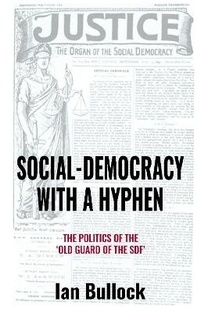
Social-Democracy with a Hyphen
The politics the 'Old Guard of the SDF'
Published on 24. March 2022
Book
Paperback/Softback
282 pages
978-1-83975-907-9 (ISBN)
Description
The Social-Democratic Federation (SDF) was the first organisation in Britain to promote Karl Marx's socialism. Yet it was as much latter-day Chartist as Marxist. Its predecessor, the Democratic Federation, began its programme with a demand for 'Adult Suffrage' and the SDF programme soon featured proportional representation and direct democracy; a total transformation of the political system.
In 1911, as many of the 'Old Guard' very much regretted later, it merged with others on the Left to form the British Socialist Party (BSP). The SDF was already divided over Hyndman's 'German menace' warnings and after the outbreak of war, the irreconcilable 'pro-Ally' and 'internationalist' BSP factions became irreconcilable. When the latter achieved control in 1916 the former - largely made up of the self-described 'Old Guard of the SDF - left. But they kept control of the weekly paper Justice.
In the 20th century, interest inevitably focussed almost exclusively on the continuing BSP which went on to form the largest segment of the Communist Party. This book explores the politics of their uncompromising rivals - largely the 'Old Guard' - who adamantly rejected the notion that the Bolsheviks had accomplished any sort of socialist revolution. They insisted that socialism could only be achieved via democracy. Nothing worthy of being called socialism was possible without it.
While relatively few on the Left were prepared to throw their lot in with Communism, even those most critical of Communist autocracy and oppression tended to acknowledge that at least 'private capitalism' had been abolished. But the revived SDF became the most ardent rejecters of everything Lenin and Co stood for from the forcible crushing of the Constituent Assembly onwards. But it failed to recruit many younger people as the 'Old Guard' began to die out. They had many shortcomings, made many serious mistakes and missed many opportunities. It is time now to re-examine its politics, critically but not totally dismissively.
In 1911, as many of the 'Old Guard' very much regretted later, it merged with others on the Left to form the British Socialist Party (BSP). The SDF was already divided over Hyndman's 'German menace' warnings and after the outbreak of war, the irreconcilable 'pro-Ally' and 'internationalist' BSP factions became irreconcilable. When the latter achieved control in 1916 the former - largely made up of the self-described 'Old Guard of the SDF - left. But they kept control of the weekly paper Justice.
In the 20th century, interest inevitably focussed almost exclusively on the continuing BSP which went on to form the largest segment of the Communist Party. This book explores the politics of their uncompromising rivals - largely the 'Old Guard' - who adamantly rejected the notion that the Bolsheviks had accomplished any sort of socialist revolution. They insisted that socialism could only be achieved via democracy. Nothing worthy of being called socialism was possible without it.
While relatively few on the Left were prepared to throw their lot in with Communism, even those most critical of Communist autocracy and oppression tended to acknowledge that at least 'private capitalism' had been abolished. But the revived SDF became the most ardent rejecters of everything Lenin and Co stood for from the forcible crushing of the Constituent Assembly onwards. But it failed to recruit many younger people as the 'Old Guard' began to die out. They had many shortcomings, made many serious mistakes and missed many opportunities. It is time now to re-examine its politics, critically but not totally dismissively.
More details
Language
English
Place of publication
Claygate
United Kingdom
Dimensions
Height: 229 mm
Width: 152 mm
Thickness: 17 mm
Weight
419 gr
ISBN-13
978-1-83975-907-9 (9781839759079)
Copyright in bibliographic data and cover images is held by Nielsen Book Services Limited or by the publishers or by their respective licensors: all rights reserved.
Schweitzer Classification
Person
Ian Bullock spent most of his career in Further Education, where he initiated and managed a large and varied Access to Higher Education programme preparing mature students for university. In 1982, he received a DPhil from the University of Sussex. His thesis explored the relationship between socialism and democracy in the British context, which he has followed up since. Retiring in 2003, he subsequently worked as an Associate Tutor in history at the University of Sussex where he was later a Visiting Research Fellow. For details of his books and other writings see his website at https://www.socialist-history.com
Content
INTRODUCTION
CHAPTER 1 Hyndman
CHAPTER 2 Marx, Marxism and the SDF
CHAPTER 3 From the Democratic Federation to the SDF
CHAPTER 4 From the Socialist League 'Split' to Municipal Socialism
CHAPTER 5 The New Union Upsurge, the advent of the Independent Labour Party, and the SDF
CHAPTER 6 Political Co-operation and the SDF. 'Fusion' with the ILP and support for the National Democratic League
CHAPTER 7 The SDF, the LRC and the Labour Party
CHAPTER 8 Fabian bureaucracy? The 1902 Education Act and the Minority Report. At odds about democracy
CHAPTER 9 The Struggle for Women's Suffrage and the Social-Democrats. The SDF Dilemma
CHAPTER 10 The International Dimension
CHAPTER 11 Challenges on the Left. The 'Impossibilist' breakaways, the 1911 Unity Conference and a belated Labour Party affiliation
CHAPTER 12 More Challenges for the Social-Democrats. Syndicalism, Guild Socialism and Social-Democracy
CHAPTER 13 The BSP at the outbreak of War
CHAPTER 14 'Pro-Ally' v 'Internationalist.' Mounting tension and division leads to the 1916 'Split'
CHAPTER 15 'Justice' on the war, the UDC and peace proposals
CHAPTER 16 Changing views on German Socialists and the Peace Settlement
CHAPTER 17 Revolution in Russia. The NSP v the Bolsheviks 1917-18
CHAPTER 18 'Old Guard' Social-Democrats. 'Out to Kill' Bolshevism
CHAPTER 19 Social-Democracy after the war
CHAPTER 20 Evolution of Revolution. Hyndman's last writings
CHAPTER 21 The Passing of the 'Old Guard' and 'Justice'. A 'last hurrah' under the first Labour government
CONCLUSIONS
SELECTED BIBLIOGRAPHY
INDEX
CHAPTER 1 Hyndman
CHAPTER 2 Marx, Marxism and the SDF
CHAPTER 3 From the Democratic Federation to the SDF
CHAPTER 4 From the Socialist League 'Split' to Municipal Socialism
CHAPTER 5 The New Union Upsurge, the advent of the Independent Labour Party, and the SDF
CHAPTER 6 Political Co-operation and the SDF. 'Fusion' with the ILP and support for the National Democratic League
CHAPTER 7 The SDF, the LRC and the Labour Party
CHAPTER 8 Fabian bureaucracy? The 1902 Education Act and the Minority Report. At odds about democracy
CHAPTER 9 The Struggle for Women's Suffrage and the Social-Democrats. The SDF Dilemma
CHAPTER 10 The International Dimension
CHAPTER 11 Challenges on the Left. The 'Impossibilist' breakaways, the 1911 Unity Conference and a belated Labour Party affiliation
CHAPTER 12 More Challenges for the Social-Democrats. Syndicalism, Guild Socialism and Social-Democracy
CHAPTER 13 The BSP at the outbreak of War
CHAPTER 14 'Pro-Ally' v 'Internationalist.' Mounting tension and division leads to the 1916 'Split'
CHAPTER 15 'Justice' on the war, the UDC and peace proposals
CHAPTER 16 Changing views on German Socialists and the Peace Settlement
CHAPTER 17 Revolution in Russia. The NSP v the Bolsheviks 1917-18
CHAPTER 18 'Old Guard' Social-Democrats. 'Out to Kill' Bolshevism
CHAPTER 19 Social-Democracy after the war
CHAPTER 20 Evolution of Revolution. Hyndman's last writings
CHAPTER 21 The Passing of the 'Old Guard' and 'Justice'. A 'last hurrah' under the first Labour government
CONCLUSIONS
SELECTED BIBLIOGRAPHY
INDEX