

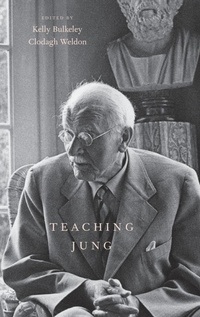
Teaching Jung
1st Edition
Published on 13. October 2011
Book
Hardback
304 pages
978-0-19-973542-6 (ISBN)
Description
Swiss psychologist Carl Jung (1875-1961) has made a major, though still contested, impact on the field of religious studies. Alternately revered and reviled, the subject of adoring memoirs and scathing exposes, Jung and his ideas have had at least as much influence on religious studies as have the psychoanalytic theories of his mentor, Sigmund Freud. Many of Jung's key psychological terms (archetypes, collective unconscious, individuation, projection, synchronicity, extroversion and introversion) have become standard features of religious studies discourse, and his extensive commentaries on various religious traditions make it clear that Jung's psychology is, at one level, a significant contribution to the study of human religiosity. His characterization of depth psychology as a fundamentally religious response to the secularizing power of modernity has left a lasting imprint on the relationship between religious studies and the psychological sciences. This book offers a collection of original articles presenting several different approaches to Jung's psychology in relation to religion, theology, and contemporary culture. The contributors describe their teaching of Jung in different academic contexts, with special attention to the pedagogical and theoretical challenges that arise in the classroom.
Reviews / Votes
Jung remains an important figure in the humanistic study of religion because he stood for a number of key insights-about the limits of rationalism, about the universality of the human psyche, about the reality of the paranormal, and about the necessity and dangers of religion-that remain as potent now as when he first articulated them. Teaching Jung admirably explores this promise and this scandal through the prisms of pedagogy and classroom practice. * Jeffrey J. Kripal, author of Authors of the Impossible: The Paranormal and the Sacred *More details
Series
Language
English
Place of publication
New York
United States
Target group
Professional and scholarly
Religious studies educators including professors, theologians, social scientists, area specialists, and pastoral caregivers. - Faculty and students in psychotherapy institutes and psychology departments. -Scholars of anthropology, history, and literary criticism
Dimensions
Height: 240 mm
Width: 161 mm
Thickness: 22 mm
Weight
668 gr
ISBN-13
978-0-19-973542-6 (9780199735426)
Copyright in bibliographic data and cover images is held by Nielsen Book Services Limited or by the publishers or by their respective licensors: all rights reserved.
Schweitzer Classification
Other editions
Additional editions
Kelly Bulkeley | Clodagh Weldon
Teaching Jung
E-Book
08/2011
1st Edition
OUP eBook
€53.49
Available for download
Persons
Kelly Bulkeley is Visiting Scholar at the Graduate Theological Union. Clodagh Weldon is Associate Professor of Theology and Chair of Theology and Pastoral Ministry at Dominican University, Chicago.
Content
Introduction: Teaching With and Against Jung ; Kelly Bulkeley and Clodagh Weldon ; Part I. Different Educational Settings ; Chapter One: The Challenge of Teaching Jung in the University ; David Tacey ; Chapter Two: Misprision: ; Pitfalls in Teaching Jung in a University Religious Studies Department ; David L. Miller ; Chapter Three: Teaching Jung in a Theological Seminary and a Graduate School of Religion ; Ann Belford Ulanov ; Chapter Four: Teaching Jung in an Analytic Psychology Institute ; Murray Stein ; Part II. The Interpretation of Religious Texts and Experiences ; Chapter Five: Jung's Approach to Myth ; Robert Alan Segal ; Chapter Six: Jung's Engagement with Christian Theology ; Charlene Burns ; Chapter Seven: God on the Couch: ; Teaching Jung's Answer to Job ; Clodagh Weldon ; Chapter Eight: Type-wise: ; Using Jung's Theory of Psychological Types in Teaching Religious Studies Undergraduate and Graduate Students ; Christopher Ross ; Part III. Jung's Life, Work, and Critics ; Chapter Nine: Personal Secrets, Ethical Questions ; John Haule ; Chapter Ten: Anima, Gender, Feminism ; Susan Rowland ; Chapter Eleven: Jung as Nature Mystic ; Meredith Sabini ; Chapter Twelve: Teaching Jung in Asia ; Jeremy Taylor ; Part IV. Jungian Practices in the Classroom and Beyond ; Chapter Thirteen: Teaching Jung and Dreams ; Kelly Bulkeley ; Chapter Fourteen: Jung and Winnicott in the Classroom: ; Holding, Mirroring, Potential Space and the Self ; Laurel McCabe ; Chapter Fifteen: Jung and the Numinous Classroom ; Bonnelle Strickling ; Chapter Sixteen: Can There Be a Science of the Symbolic? ; John Beebe