


Big Dreams
The Science of Dreaming and the Origins of Religion
Published on 14. April 2016
Book
Hardback
354 pages
978-0-19-935153-4 (ISBN)
Description
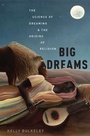
Big dreams are rare but highly memorable dream experiences that make a strong and lasting impact on the dreamer's waking awareness. Such dreams can include vivid imagery, intense emotions, fantastic characters, bizarre elements of form and content, and an uncanny sense of being connected to forces beyond one's ordinary dreaming mind. These types of dreams have played significant roles in religious and cultural history, and even today people still experience them and find them intriguing and thought-provoking. Because of their infrequent occurrence and fantastical tendencies, however, big dreams have rarely been studied in light of modern science. While we know a great deal about the religious manifestations of big dreams through history and around the world, we have not yet integrated that cross-cultural knowledge with new scientific research on their psychological roots in the brain-mind system.
In this volume, Kelly Bulkeley provides the first full-scale cognitive scientific analysis of highly memorable dreams, with an original theory about their formation, function, and meaning. He draws upon evidence from religious studies, psychology, anthropology, evolutionary biology, and neuroscience to build a very specific argument: big dreams are a primal wellspring of religious experience. They represent an innate, neurologically hard-wired capacity of our species that regularly provokes greater self-awareness, creativity, and insight into the existential challenges and spiritual potentials of human life.
In this volume, Kelly Bulkeley provides the first full-scale cognitive scientific analysis of highly memorable dreams, with an original theory about their formation, function, and meaning. He draws upon evidence from religious studies, psychology, anthropology, evolutionary biology, and neuroscience to build a very specific argument: big dreams are a primal wellspring of religious experience. They represent an innate, neurologically hard-wired capacity of our species that regularly provokes greater self-awareness, creativity, and insight into the existential challenges and spiritual potentials of human life.
Reviews / Votes
this book offers so many other insights into psychology, neurology and dream content analysis, it is well worth your money. * Drs. Susanne van Doorn, Mindfunda *More details
Language
English
Place of publication
New York
United States
Target group
College/higher education
Dimensions
Height: 240 mm
Width: 161 mm
Thickness: 24 mm
Weight
696 gr
ISBN-13
978-0-19-935153-4 (9780199351534)
Copyright in bibliographic data and cover images is held by Nielsen Book Services Limited or by the publishers or by their respective licensors: all rights reserved.
Schweitzer Classification
Other editions
Additional editions
E-Book
03/2016
1st Edition
OUP eBook
€32.49
Available for download
E-Book
03/2016
1st Edition
OUP eBook
€32.49
Available for download
Person
Kelly Bulkeley is a Visiting Scholar at the Graduate Theological Union in Berkeley, California.
Content
Introduction
Section I. Sleep
1. The evolution of sleep
2. The brain's paradoxical activities in sleep
3. The role of sleep in human health and development
4. Cultural practices of sleep through history
Section II. Ordinary Dreaming
5. Dream recall
6. Patterns in form and content
7. Continuities between dreaming and waking life
8. Discontinuities and metaphors
Section III. Big Dreams
9. Aggressive
10. Sexual
11. Gravitational
12. Mystical
Section IV. Religious Experiences
13. Demonic attack
14. Prophetic vision
15. Ritual healing
16. Contemplative practice
Conclusion
Appendix: Word search methods in the study of dreams
Index
Section I. Sleep
1. The evolution of sleep
2. The brain's paradoxical activities in sleep
3. The role of sleep in human health and development
4. Cultural practices of sleep through history
Section II. Ordinary Dreaming
5. Dream recall
6. Patterns in form and content
7. Continuities between dreaming and waking life
8. Discontinuities and metaphors
Section III. Big Dreams
9. Aggressive
10. Sexual
11. Gravitational
12. Mystical
Section IV. Religious Experiences
13. Demonic attack
14. Prophetic vision
15. Ritual healing
16. Contemplative practice
Conclusion
Appendix: Word search methods in the study of dreams
Index