

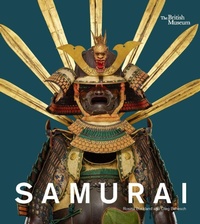
Samurai
Published on 5. February 2026
Book
Hardback
304 pages
978-0-7141-3701-8 (ISBN)
Description
The word 'samurai' stands for ideals of courage, honour, self-sacrifice and loyalty. Yet much of the common understanding is imaginative fiction. This book explores the concept from medieval reality, through early modern changes, to today's hugely varied popular culture, challenging preconceptions and exploding myths.
The figure of the samurai is unique in its global intelligibility, read both as a symbol of Japan and as a universal icon of the virtuous and fearless warrior.
Published to accompany a major exhibition at the British Museum, this is the first book to explore the centuries-long trajectory of the samurai through objects from international collections. It discusses the historical origins of the samurai warrior class in the civil wars of the medieval period and examines the stories they told of their own achievements. From the early 1600s, with the establishment of peace, the samurai became an official class fulfilling a bureaucratic role. The ideal of the medieval warrior took on legendary status, leading to endless representations in popular culture of past examples of heroic valour. As the highest social class, samurai were consumers of deluxe products and their tastes set the standard for the rest of society. Political tensions intensified during the 1850s, culminating in civil war in 1868 and the abolition of the samurai social class in 1876. With the full opening of Japan to international visitors, the concept of the samurai was packaged for foreign tourists and repurposed to provide a model for the modern soldier in a period of military conflict and colonial expansion. The image of the samurai has been interpreted and reimagined in Japan and across the world in myriad ways. Discussions of national myth and global samurai bring the story up to the present day through a broad selection of films, television shows, manga, anime, video games and much more.
The figure of the samurai is unique in its global intelligibility, read both as a symbol of Japan and as a universal icon of the virtuous and fearless warrior.
Published to accompany a major exhibition at the British Museum, this is the first book to explore the centuries-long trajectory of the samurai through objects from international collections. It discusses the historical origins of the samurai warrior class in the civil wars of the medieval period and examines the stories they told of their own achievements. From the early 1600s, with the establishment of peace, the samurai became an official class fulfilling a bureaucratic role. The ideal of the medieval warrior took on legendary status, leading to endless representations in popular culture of past examples of heroic valour. As the highest social class, samurai were consumers of deluxe products and their tastes set the standard for the rest of society. Political tensions intensified during the 1850s, culminating in civil war in 1868 and the abolition of the samurai social class in 1876. With the full opening of Japan to international visitors, the concept of the samurai was packaged for foreign tourists and repurposed to provide a model for the modern soldier in a period of military conflict and colonial expansion. The image of the samurai has been interpreted and reimagined in Japan and across the world in myriad ways. Discussions of national myth and global samurai bring the story up to the present day through a broad selection of films, television shows, manga, anime, video games and much more.
More details
Language
English
Place of publication
London
United Kingdom
Illustrations
320 Illustrations
Dimensions
Height: 275 mm
Width: 247 mm
Thickness: 33 mm
Weight
1785 gr
ISBN-13
978-0-7141-3701-8 (9780714137018)
Copyright in bibliographic data and cover images is held by Nielsen Book Services Limited or by the publishers or by their respective licensors: all rights reserved.
Schweitzer Classification
Persons
Rosina Buckland is Asahi Shimbun Curator: Japanese Collections, author of The Splendour of Modernity: Japanese Arts of the Meiji Era (Reaktion Books, 2024) and curator of the exhibition Samurai at the British Museum.
Oleg Benesch is Head of Department and Professor of Modern History at the University of York and co-author of Japan's Castles: Citadels of Modernity in War and Peace (CUP, 2019).
Oleg Benesch is Head of Department and Professor of Modern History at the University of York and co-author of Japan's Castles: Citadels of Modernity in War and Peace (CUP, 2019).
Content
Forewords
Introduction
1. Rise of the samurai, 800-1600
Samurai as warrior
Identity via culture
Columns: The Christian armour of Naito Sadahiro; Seventeen Tokugawa generals; Samurai and hunting; Oku-Korai tea-bowls; The samurai image in early modern Southeast Asia
2. The long peace, 1600-1853
Samurai duties
Samurai leisure
Samurai as ideal
3. From reality to myth, 1853-today
The last samurai
Global samurai
Columns: Samurai diplomats and their photographs; Idealised views of the siege of Kumamoto Castle; Collecting samurai armour in nineteenth-century Britain; War, modernity, and identity: Bushido and Chinese perceptions of Japan; The progressive 'Samurai' in A Modern Utopia by H.G. Wells (1905); Samurai in the Soviet Union; Medieval samurai in modern Japan: Kusunoki Masashige; Cherry blossoms and Samurai; The samurai in Nazi Germany; Echoes of bushido: samurai in the Italian nationalist imagination; Introduction to Hagakure; 'Samurai Futaba' comedy sketches on Saturday Night Live, 1975-1978; The elusive image of the Samurai: historical reality and modern representation in Shogun
Notes and Selected reading
Picture credits, and Acknowledgements
Index
Introduction
1. Rise of the samurai, 800-1600
Samurai as warrior
Identity via culture
Columns: The Christian armour of Naito Sadahiro; Seventeen Tokugawa generals; Samurai and hunting; Oku-Korai tea-bowls; The samurai image in early modern Southeast Asia
2. The long peace, 1600-1853
Samurai duties
Samurai leisure
Samurai as ideal
3. From reality to myth, 1853-today
The last samurai
Global samurai
Columns: Samurai diplomats and their photographs; Idealised views of the siege of Kumamoto Castle; Collecting samurai armour in nineteenth-century Britain; War, modernity, and identity: Bushido and Chinese perceptions of Japan; The progressive 'Samurai' in A Modern Utopia by H.G. Wells (1905); Samurai in the Soviet Union; Medieval samurai in modern Japan: Kusunoki Masashige; Cherry blossoms and Samurai; The samurai in Nazi Germany; Echoes of bushido: samurai in the Italian nationalist imagination; Introduction to Hagakure; 'Samurai Futaba' comedy sketches on Saturday Night Live, 1975-1978; The elusive image of the Samurai: historical reality and modern representation in Shogun
Notes and Selected reading
Picture credits, and Acknowledgements
Index