


Humankind and Humanity in the Philosophy of the Enlightenment
From Locke to Kant
Published on 20. March 2025
Book
Paperback/Softback
280 pages
978-1-350-38475-0 (ISBN)
Description
What makes us human beings? Is it merely some corporeal aspect, or rather some specific mental capacity, language, or some form of moral agency or social life? Is there a gendered bias within the concept of humanity? How do human beings become more human, and can we somehow cease to be human? This volume provides some answers to these fundamental questions and more by charting the increased preoccupation of the European Enlightenment with the concepts of humankind and humanity.
Chapters investigate the philosophical concerns of major figures across Western Europe, including Montesquieu, Diderot, Rousseau, Locke, Hume, Ferguson, Kant, Herder, Johann Friedrich Blumenbach and the Comte de Buffon. As these philosophers develop important descriptive and comparative approaches to the human species and moral and social ideals of humanity, they present a view of the Enlightenment project as a particular kind of humanism that is different from its Ancient and Renaissance predecessors.
With contributions from a team of internationally recognized scholars, including Stephen Gaukroger, Michael Forster, Celine Spector, Jacqueline Taylor, and Guenter Zoeller, this book offers a novel interpretation of the Enlightenment that is both clear in focus and impressive in scope.
Chapters investigate the philosophical concerns of major figures across Western Europe, including Montesquieu, Diderot, Rousseau, Locke, Hume, Ferguson, Kant, Herder, Johann Friedrich Blumenbach and the Comte de Buffon. As these philosophers develop important descriptive and comparative approaches to the human species and moral and social ideals of humanity, they present a view of the Enlightenment project as a particular kind of humanism that is different from its Ancient and Renaissance predecessors.
With contributions from a team of internationally recognized scholars, including Stephen Gaukroger, Michael Forster, Celine Spector, Jacqueline Taylor, and Guenter Zoeller, this book offers a novel interpretation of the Enlightenment that is both clear in focus and impressive in scope.
Reviews / Votes
The "human sciences" were one of the great initiatives of the European Enlightenment, and perhaps one of its foremost achievements. In this collection, an excellent group of scholars traces out through the greatest thinkers of that age the new philosophical and empirical investigation of the biological nature and cultural history of humankind. * John Zammito, Baker College Professor Emeritus for History of Science, Technology and Innovation, Rice University, USA * Kant famously stated that "out of the crooked timber of humanity nothing entirely straight can be made." But this certainly hasn't prevented Stefanie Buchenau and Ansgar Lyssy from putting together an outstanding collection of new essays on Enlightenment views about the multiple and complex dimensions of humanity and humankind. * Robert B. Louden, Distinguished Professor of Philosophy, University of Southern Maine, USA *More details
Language
English
Place of publication
London
United Kingdom
Publishing group
Bloomsbury Publishing PLC
Target group
Professional and scholarly
Dimensions
Height: 232 mm
Width: 152 mm
Thickness: 14 mm
Weight
420 gr
ISBN-13
978-1-350-38475-0 (9781350384750)
Copyright in bibliographic data and cover images is held by Nielsen Book Services Limited or by the publishers or by their respective licensors: all rights reserved.
Schweitzer Classification
Other editions
Additional editions
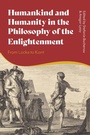
Stefanie Buchenau | Ansgar Lyssy
Humankind and Humanity in the Philosophy of the Enlightenment
From Locke to Kant
E-Book
08/2023
1st Edition
Bloomsbury Academic
€31.99
Available for download
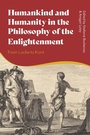
Stefanie Buchenau | Ansgar Lyssy
Humankind and Humanity in the Philosophy of the Enlightenment
From Locke to Kant
E-Book
08/2023
1st Edition
Bloomsbury Academic
€31.99
Available for download
Persons
Stefanie Buchenau is Professor of German and European History of Ideas at the University Paris 8 Saint-Denis, France.
Ansgar Lyssy currently holds a fixed-term position as a philosophy professor at the University of Leipzig, Germany.
Ansgar Lyssy currently holds a fixed-term position as a philosophy professor at the University of Leipzig, Germany.
Content
Introduction, Stefanie Buchenau (University Paris 8 Saint-Denis, France) and Ansgar Lyssy (University of Leipzig, Germany)
1. The Presumptive Unity of Humankind in Locke's Essay, Philippe Hamou (Sorbonne University, France)
2. Human Nature in Montesquieu, Celine Spector ((Sorbonne University, France)
3. The Image of the Human Being in the Comte de Buffon, Catherine Wilson (York University, UK)
4. Hume on Humanity and the Party of Humankind, Jacqueline Taylor (University of San Francisco, USA)
5. Humankind and Humanity in Diderot, Ansgar Lyssy (University of Leipzig, Germany)
6. 'How do Humans become Human(e)?' On Rousseau's Second Discourse and Emile, Gabrielle Radica (University of Lille, France)
7. 'In the human kind, the species has a progress as well as the individual': Adam Ferguson on the progress of mankind, Norbert Waszek (Universite de Paris 8 - St. Denis, France) and Eveline Hauck (State University of Campinas, Brazil)
8. The Association of Science and Civilization in the Enlightenment, Stephen Gaukroger (University of Sydney, Australia)
9. Philoctetes at the Edge of Humanity: The German Enlightenment on Social Exclusion and the Education of Feeling, Stefanie Buchenau (University Paris 8 Saint-Denis, France)
10. Enlightenment Moral Philosophy and Moral Psychology: Baumgarten, Kant, and Herder on Moral Feeling(s) and Obligation', Nigel DeSouza (University of Ottawa, Canada)
11. Herder on Humanity, Michael Forster (University of Chicago, USA)
12. Blumenbach on the Varieties of the Human Species, Francois Duchesneau (University of Montreal, Canada)
13. Can Kant's 'Man' be a Woman?, Charlotte Morel (CNRS / ENS Paris, France)
14. 'Anthroponomy'. Kant on the Natural and the Rational Human Being, Guenter Zoeller (Ludwig Maximilian University of Munich, Germany)
Index
1. The Presumptive Unity of Humankind in Locke's Essay, Philippe Hamou (Sorbonne University, France)
2. Human Nature in Montesquieu, Celine Spector ((Sorbonne University, France)
3. The Image of the Human Being in the Comte de Buffon, Catherine Wilson (York University, UK)
4. Hume on Humanity and the Party of Humankind, Jacqueline Taylor (University of San Francisco, USA)
5. Humankind and Humanity in Diderot, Ansgar Lyssy (University of Leipzig, Germany)
6. 'How do Humans become Human(e)?' On Rousseau's Second Discourse and Emile, Gabrielle Radica (University of Lille, France)
7. 'In the human kind, the species has a progress as well as the individual': Adam Ferguson on the progress of mankind, Norbert Waszek (Universite de Paris 8 - St. Denis, France) and Eveline Hauck (State University of Campinas, Brazil)
8. The Association of Science and Civilization in the Enlightenment, Stephen Gaukroger (University of Sydney, Australia)
9. Philoctetes at the Edge of Humanity: The German Enlightenment on Social Exclusion and the Education of Feeling, Stefanie Buchenau (University Paris 8 Saint-Denis, France)
10. Enlightenment Moral Philosophy and Moral Psychology: Baumgarten, Kant, and Herder on Moral Feeling(s) and Obligation', Nigel DeSouza (University of Ottawa, Canada)
11. Herder on Humanity, Michael Forster (University of Chicago, USA)
12. Blumenbach on the Varieties of the Human Species, Francois Duchesneau (University of Montreal, Canada)
13. Can Kant's 'Man' be a Woman?, Charlotte Morel (CNRS / ENS Paris, France)
14. 'Anthroponomy'. Kant on the Natural and the Rational Human Being, Guenter Zoeller (Ludwig Maximilian University of Munich, Germany)
Index