

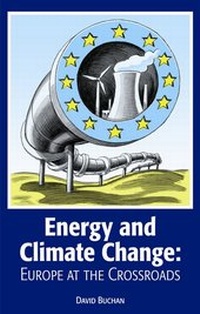
Energy and Climate Change
Europe at the Crossroads
Published in April 2009
Book
Hardback
232 pages
978-0-19-956990-8 (ISBN)
Description
This book traces the spreading out of energy policy from being a relatively narrow concern of the Brussels anti-trust division and market liberalisers, to becoming the focus of renewed worry about energy dependence on a resurgent Russia, and to developing into the Union's highest profile international policy through EU leadership on climate change. The book assesses progress towards these different goals of energy policy - competitive market structure, secure supply, a low carbon
economy - and argues that while they are not always equally achievable for all EU states, the policy trade-offs are easier for member states in a Union than as countries standing alone.
Nonetheless, it points out that the EU could use its continental scale to better effect in energy saving, research and nuclear cooperation, as well as in providing energy security. It notes how member states have valued EU energy policy enough to let its development run ahead of formal treaty provisions. But for such advances to continue, the EU has to stay useful and relevant to member states' concerns. So the EU should re-order its priorities: to consolidate and police existing liberalisation
rather than pursue new and possibly counter-productive market restructuring; to be more realistic about its energy relationship with Russia; and to be more ambitious on climate change goals, but more economically rational in achieving them.The book has recommendations for internal energy market,
energy security and climate change policies. It concludes curbing carbon emissions in a cost-effective way must be the EU's top energy priority, and therefore renewable and bio-fuel plans should be made more rational.
economy - and argues that while they are not always equally achievable for all EU states, the policy trade-offs are easier for member states in a Union than as countries standing alone.
Nonetheless, it points out that the EU could use its continental scale to better effect in energy saving, research and nuclear cooperation, as well as in providing energy security. It notes how member states have valued EU energy policy enough to let its development run ahead of formal treaty provisions. But for such advances to continue, the EU has to stay useful and relevant to member states' concerns. So the EU should re-order its priorities: to consolidate and police existing liberalisation
rather than pursue new and possibly counter-productive market restructuring; to be more realistic about its energy relationship with Russia; and to be more ambitious on climate change goals, but more economically rational in achieving them.The book has recommendations for internal energy market,
energy security and climate change policies. It concludes curbing carbon emissions in a cost-effective way must be the EU's top energy priority, and therefore renewable and bio-fuel plans should be made more rational.
More details
Language
English
Place of publication
Oxford
United Kingdom
Publishing group
Oxford Institute for Energy Studies
Target group
College/higher education
Professional and scholarly
Dimensions
Height: 234 mm
Width: 156 mm
Thickness: 18 mm
Weight
422 gr
ISBN-13
978-0-19-956990-8 (9780199569908)
Copyright in bibliographic data and cover images is held by Nielsen Book Services Limited or by the publishers or by their respective licensors: all rights reserved.
Schweitzer Classification