

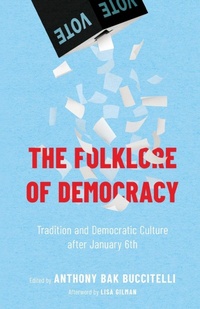
The Folklore of Democracy
Tradition and Democratic Culture After January 6th
Will be published approx. on 15. July 2026
Book
Paperback/Softback
128 pages
978-1-4968-6053-8 (ISBN)
Description
Contributions by Anthony Bak Buccitelli, Richard Bauman, Norma Cantu, Miguel Diaz-Barriga, Margaret Dorsey, Ehsan Estiri, Gary Alan Fine, Lisa Gilman, Jay Mechling, Whitney Phillips, Afsane Rezaei, Liora Sarfati, and Beverly Stoeltje
The Folklore of Democracy: Tradition and Democratic Culture after January 6th is a compelling exploration of how folklore shapes and sustains democracy, as well as how it has underwritten contemporary challenges to democratic values. This collection examines global examples-from conspiracy narratives in Iran to street protests in South Korea and Boy Scout camps in the US. It shows how folklore can help citizens understand both the threats to democracy and its enduring power. Essayists offer insightful and thought-provoking analysis that will challenge readers to reflect on the pressing issues facing democratic societies today.
What makes this volume truly stand out is its embrace of diverse perspectives and voices. Readers will find no singular political stance or ideological program in The Folklore of Democracy. Instead, contributors present a spectrum of views that show how, even in times of discord, serious and well-meaning people can come together in democratic societies, despite holding different, and sometimes conflicting, points of view.
The Folklore of Democracy invites readers to recognize the complexity of democratic discourse and the ways in which folklore-through its many forms-helps us engage with and navigate these complexities. This book is essential for anyone interested in understanding the role of culture in democracy. The contributors provide accessible and meaningful insights for scholars, students, and anyone concerned with the future of democratic societies.
The Folklore of Democracy: Tradition and Democratic Culture after January 6th is a compelling exploration of how folklore shapes and sustains democracy, as well as how it has underwritten contemporary challenges to democratic values. This collection examines global examples-from conspiracy narratives in Iran to street protests in South Korea and Boy Scout camps in the US. It shows how folklore can help citizens understand both the threats to democracy and its enduring power. Essayists offer insightful and thought-provoking analysis that will challenge readers to reflect on the pressing issues facing democratic societies today.
What makes this volume truly stand out is its embrace of diverse perspectives and voices. Readers will find no singular political stance or ideological program in The Folklore of Democracy. Instead, contributors present a spectrum of views that show how, even in times of discord, serious and well-meaning people can come together in democratic societies, despite holding different, and sometimes conflicting, points of view.
The Folklore of Democracy invites readers to recognize the complexity of democratic discourse and the ways in which folklore-through its many forms-helps us engage with and navigate these complexities. This book is essential for anyone interested in understanding the role of culture in democracy. The contributors provide accessible and meaningful insights for scholars, students, and anyone concerned with the future of democratic societies.
More details
Language
English
Place of publication
Jackson
United States
Target group
Professional and scholarly
Product notice
Paperback (trade)
Illustrations
3 b&w illustrations
Dimensions
Height: 216 mm
Width: 140 mm
ISBN-13
978-1-4968-6053-8 (9781496860538)
Copyright in bibliographic data and cover images is held by Nielsen Book Services Limited or by the publishers or by their respective licensors: all rights reserved.
Schweitzer Classification
Persons
Anthony Bak Buccitelli is interim assistant dean for graduate programs, associate professor of American studies and communications, and director of the Pennsylvania Center for Folklore at the Pennsylvania State University, Harrisburg. He is author of City of Neighborhoods: Memory, Folklore, and Ethnic Place in Boston; editor of Race and Ethnicity in Digital Culture: Our Changing Traditions, Impressions, and Expressions in a Mediated World; and coeditor of Emerging Perspectives in the Study of Folklore and Performance.