

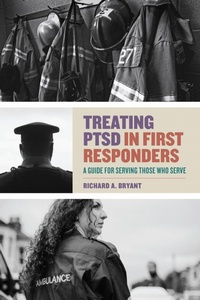
Treating PTSD in First Responders
A Guide for Serving Those Who Serve
Published on 27. July 2021
Book
Paperback/Softback
247 pages
978-1-4338-3559-9 (ISBN)
Description
By the nature of their jobs, first responders are often highly exposed to traumatic events.
Police, firefighters, and paramedics experience markedly higher rates of PTSD than others in the community. They also face distinct organizational challenges that complicate their stress reactions. Often, this results in needs that are not addressed in manuals developed for people who have survived single traumatic events.
This book provides an overview of theoretical and empirical frameworks for understanding PTSD in first responders and outlines practical and evidence-based approaches to assess and treat PTSD in these populations. Other chapters cover the particular challenges of working with first responders, including comorbidities organizational stressors that can complicate treatment and forensic issues therapists should consider through assessment and treatment.
The author amp rsquo s approach is based on cognitive behavior therapy and is supported by research done in the Traumatic Stress Clinic in Australia, which has treated hundreds of first responders. This comprehensive volume is essentially the outcome of the author amp rsquo s lessons learned about what is effective and what is not in helping police, firefighters, and paramedics deal with their stress-related conditions.
Police, firefighters, and paramedics experience markedly higher rates of PTSD than others in the community. They also face distinct organizational challenges that complicate their stress reactions. Often, this results in needs that are not addressed in manuals developed for people who have survived single traumatic events.
This book provides an overview of theoretical and empirical frameworks for understanding PTSD in first responders and outlines practical and evidence-based approaches to assess and treat PTSD in these populations. Other chapters cover the particular challenges of working with first responders, including comorbidities organizational stressors that can complicate treatment and forensic issues therapists should consider through assessment and treatment.
The author amp rsquo s approach is based on cognitive behavior therapy and is supported by research done in the Traumatic Stress Clinic in Australia, which has treated hundreds of first responders. This comprehensive volume is essentially the outcome of the author amp rsquo s lessons learned about what is effective and what is not in helping police, firefighters, and paramedics deal with their stress-related conditions.
Reviews / Votes
Dr. Bryant, a leader in the field of trauma disorders, takes us on a journey through the science and his caring, detailed, and helpful understanding and approach to treatment of PTSD in first responders. Those who work with first responders will find this the go-to text for informing and updating treatments. - Robert J. Ursano, MD, Senior Editor, Textbook of Disaster Psychiatry, and Lifetime Achievement Award Recipient, International Society for Traumatic Stress Studies Dr. Richard Bryant is a rock star of PTSD, and now he has turned his attention to treating first responders. This book could not be more timely, comprehensive, or useful. I highly recommend it. - Barbara O. Rothbaum, PhD, ABPP, Professor in Psychiatry, Director of the Veterans Program and Trauma and Anxiety Recovery Program, Paul A. Janssen Chair in Neuropsychopharmacology, and Associate Vice Chair of Clinical Research, Emory University School of Medicine, Atlanta, GA, United States It amp rsquo s all here, every fact or snippet of trauma-related information which is relevant to the emergency services. Anyone who has an interest in emergency responder mental health will be reassured having this book close to hand. - Professor Neil Greenberg, MD, FRCPsych, Professor of Defence Mental Health, King's College London, London, United KingdomMore details
Language
English
Place of publication
Washington DC
United States
Target group
Professional and scholarly
Product notice
Paperback (trade)
Dimensions
Height: 227 mm
Width: 152 mm
Thickness: 14 mm
Weight
352 gr
ISBN-13
978-1-4338-3559-9 (9781433835599)
Copyright in bibliographic data and cover images is held by Nielsen Book Services Limited or by the publishers or by their respective licensors: all rights reserved.
Schweitzer Classification
Person
Richard A. Bryant, PhD, is a Scientia Professor of Psychology at UNSW Sydney. Professor Bryant has researched posttraumatic stress disorder (PTSD) for over 3 years his work has identified key genetic, neural, and psychological factors underpinning PTSD, and he has developed the world amp rsquo s leading screening tools for early identification of PTSD as well as the most commonly used early intervention protocols. Professor Bryant has published widely and served on DSM amp ndash 5 and ICD- committees to define PTSD diagnoses. In 2 he received the Companion of the Order of Australia, Australia amp rsquo s highest honor. He consults with international agencies on management of psychological responses to trauma and adversity.
Content
Acknowledgments
Introduction: An Outline of Treating PTSD in First Responders
. A Review of Current Knowledge of PTSD
2. What Do We Know About PTSD in First Responders?
3. Models of PTSD
4. Moral Injury in First Responders
5. Assessing PTSD in First Responders
. Review of Treatments for PTSD
7. The Potential for Psychological Debriefing as a Preventative Intervention
8. Strategies for Treating PTSD in First Responders
9. Challenges in Treating First Responders
. Addressing Organizational Stressors During Therapy
. Forensic Issues
2. Concluding Comments and Future Directions: Treating PTSD in First Responders
References
Index
About the Author
Introduction: An Outline of Treating PTSD in First Responders
. A Review of Current Knowledge of PTSD
2. What Do We Know About PTSD in First Responders?
3. Models of PTSD
4. Moral Injury in First Responders
5. Assessing PTSD in First Responders
. Review of Treatments for PTSD
7. The Potential for Psychological Debriefing as a Preventative Intervention
8. Strategies for Treating PTSD in First Responders
9. Challenges in Treating First Responders
. Addressing Organizational Stressors During Therapy
. Forensic Issues
2. Concluding Comments and Future Directions: Treating PTSD in First Responders
References
Index
About the Author