

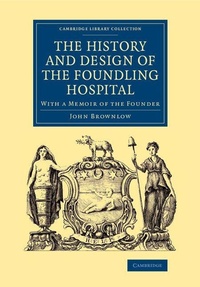
The History and Design of the Foundling Hospital
With a Memoir of the Founder
Published on 19. February 2015
Book
Paperback/Softback
160 pages
978-1-108-06943-4 (ISBN)
Description
Captain Coram's Foundling Hospital was opened in London in 1741 for 'the maintenance and education of exposed and deserted young children'. Hogarth was a governor of the hospital - he donated several pictures, including his portrait of Coram - as was Handel, whose famous performances of his oratorio Messiah were given there from 1750 to raise funds. John Brownlow (1800-73), himself a foundling, became secretary of the hospital from 1849 until his retirement. He introduced improvements to the children's education and was a staunch defender of the hospital, refuting criticisms often levelled in the nineteenth century that taking in illegitimate children simply encouraged neglect. This brief account, building on his 1847 Memoranda, or, Chronicles of the Foundling Hospital (also reissued in this series), covers Coram, early supporters, the institution's paintings - which formed the first public art gallery in London - and the care of the foundlings.
More details
Series
Language
English
Place of publication
Cambridge
United Kingdom
Target group
Professional and scholarly
Product notice
Paperback (trade)
Illustrations
3 Plates, black and white
Dimensions
Height: 244 mm
Width: 170 mm
Thickness: 9 mm
Weight
289 gr
ISBN-13
978-1-108-06943-4 (9781108069434)
Copyright in bibliographic data and cover images is held by Nielsen Book Services Limited or by the publishers or by their respective licensors: all rights reserved.
Schweitzer Classification
Content
1. History and objects of the charity; 2. Early admission of children; 3. Reasons for the existence of the charity; 4. The privileges of the governors; 5. Naming and baptizing of the children; 6. Nursing of the children; 7. The disposal of the children; 8. The revenue of the hospital; 9. The benevolent fund; 10. The hospital and the arts; 11. The chapel; 12. The catacombs; 13. Proposal for a music school; 14. Memoir of the founder; 15. Catalogue of pictures; 16. List of governors and guardians.