

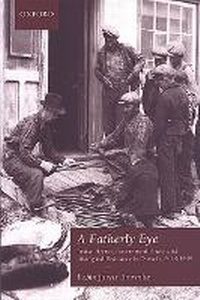
A Fatherly Eye
Indian Agents, Government Power, and Aboriginal Resistance in Ontario, 1918-1939
Will be published approx. on 1. April 2003
Book
Hardback
204 pages
978-0-19-541891-0 (ISBN)
Description
For more than a century, government policy towards Aboriginal peoples in Canada was shaped by paternalistic attitudes and an ultimate goal of assimilation. Indeed, remnants of that thinking still linger today, more than thirty years after protests against the White Paper of 1969 led to reconsideration Canada's 'Indian' policy. In A Fatherly Eye, historian Robin Brownlie examines how paternalism and assimilation during the interwar period were made manifest in the 'field', far from the bureaucrats in Ottawa, but never free of their oppressive supervision. At the same time, she reveals how the Aboriginal 'subjects' of official policy dealt with the control and coercion that lay at the heart of the Indian Act.
This groundbreaking study sheds new light on a time and a place we know little about. Brownlie focuses on two Indian agencies in southern Ontario - Parry Sound and Manitowaning (on Manitoulin Island) - and the contrasting management styles of two agents, John daly and Robert Lewis, especially during the Great Depression. In administering the lives of the Anishinabek people, the government paid inadequate attention to the protection of treaty rights and was excessively concerned with maintaining control, in part through the paternalistic provision of assistance that helped to silence critics of the system and prevent political organizing. As Brownlie concludes, the Indian Affairs system still does not work well, and 'has come to represent all that is most oppressive about the history of colonization in this country'.
Previously published by Oxford University Press
This groundbreaking study sheds new light on a time and a place we know little about. Brownlie focuses on two Indian agencies in southern Ontario - Parry Sound and Manitowaning (on Manitoulin Island) - and the contrasting management styles of two agents, John daly and Robert Lewis, especially during the Great Depression. In administering the lives of the Anishinabek people, the government paid inadequate attention to the protection of treaty rights and was excessively concerned with maintaining control, in part through the paternalistic provision of assistance that helped to silence critics of the system and prevent political organizing. As Brownlie concludes, the Indian Affairs system still does not work well, and 'has come to represent all that is most oppressive about the history of colonization in this country'.
Previously published by Oxford University Press
More details
Series
Language
English
Place of publication
Canada
Target group
College/higher education
Professional and scholarly
Product notice
Cloth over boards
Dimensions
Height: 208 mm
Width: 158 mm
Thickness: 19 mm
Weight
524 gr
ISBN-13
978-0-19-541891-0 (9780195418910)
Copyright in bibliographic data and cover images is held by Nielsen Book Services Limited or by the publishers or by their respective licensors: all rights reserved.
Schweitzer Classification
Person
Robin Brownlie has a Ph.D. in history from the UIniversity of Toronto and is a postdoctoral fellow at York University.