

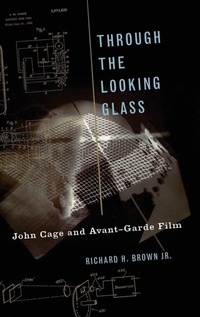
Through The Looking Glass
John Cage and Avant-Garde Film
Published on 31. January 2019
Book
Hardback
252 pages
978-0-19-062807-9 (ISBN)
Description
Through the Looking Glass examines John Cage's interactions and collaborations with avant-garde and experimental filmmakers, and in turn seeks out the implications of the audiovisual experience for the overall aesthetic surrounding Cage's career. As the commercially dominant media form in the twentieth century, cinema transformed the way listeners were introduced to and consumed music. Cage's quest to redefine music, intentionality, and expression reflect the similar transformation of music within the larger audiovisual experience of sound film. This volume examines key moments in Cage's career where cinema either informed or transformed his position on the nature of sound, music, expression, and the ontology of the musical artwork. The examples point to moments of rupture within Cage's own consideration of the musical artwork, pointing to newfound collision points that have a significant and heretofore unacknowledged role in Cage's notions of the audiovisual experience and the medium-specific ontology of a work of art.
Reviews / Votes
"This history asks us to re-engage with Cage's ideas about listening and perception through the lens of moving-image culture, while also encouraging us to re-read the history of experimental film from a sonic perspective. As a result, this is not just a book about Cage or avant-garde film. It's a book about the nature of collaborative creativity, the rise of audiovisual art and the emergence of new forms of intermedial culture in the Twentieth Century. Required reading for us all! * Holly Rogers, author of Sounding the Gallery: Video and the Rise of Art Music * Richard Brown's meticulously researched and beautifully written book reveals that Cage's collaborations with experimental filmmakers transformed his aesthetics and compositional style. It presents a brilliant new interdisciplinary perspective on Cage's music of great interest to both Cage scholars and a broader audience of readers interested in crucial cultural changes during the twentieth-century. * David Bernstein, Professor of Music, Mills College *More details
Series
Language
English
Place of publication
New York
United States
Illustrations
141 illustrations
Dimensions
Height: 240 mm
Width: 161 mm
Thickness: 18 mm
Weight
546 gr
ISBN-13
978-0-19-062807-9 (9780190628079)
Copyright in bibliographic data and cover images is held by Nielsen Book Services Limited or by the publishers or by their respective licensors: all rights reserved.
Schweitzer Classification
Other editions
Additional editions
Book
01/2019
Oxford University Press Inc
€59.00
Shipment within 15-20 days
E-Book
12/2018
OUP eBook
€17.49
Available for download
E-Book
12/2018
OUP eBook
€22.99
Available for download
Person
Richard Brown earned a PhD in musicology from the University of Southern California. He has published articles on John Cage, experimental music, sound art, film music and copyright in The Journal of the Society for American Music, Contemporary Music Review, Leonardo, and American Music Review.
Content
Introduction: Audiovisual(ity/ology)
Chapter 1: The Spirit inside Each Object: Oskar Fischinger, Sound Phonography, and the "Inner Eye"
Chapter 2: "Dreams that Money Can Buy": Trance, Myth, and Expression, 1941-1948.
Chapter 3: Losing the Ground: Chance, Transparency and Cinematic Space, 1948-1958
Chapter 4: Cinema Delimina: Post-Cagean Aesthetics, Medium-Specificity, and Expanded Cinema
Conclusion: "Through the Looking Glass": Poetics and Chance in John Cage's One
Bibliography
Index
Chapter 1: The Spirit inside Each Object: Oskar Fischinger, Sound Phonography, and the "Inner Eye"
Chapter 2: "Dreams that Money Can Buy": Trance, Myth, and Expression, 1941-1948.
Chapter 3: Losing the Ground: Chance, Transparency and Cinematic Space, 1948-1958
Chapter 4: Cinema Delimina: Post-Cagean Aesthetics, Medium-Specificity, and Expanded Cinema
Conclusion: "Through the Looking Glass": Poetics and Chance in John Cage's One
Bibliography
Index