

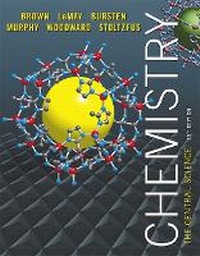
Laboratory Experiments for Chemistry
The Central Science
13th Edition
Published on 17. April 2015
Book
Paperback/Softback
760 pages
978-0-321-94991-2 (ISBN)
Description
Prepared by John H. Nelson and Kenneth C. Kemp, both of the University of Nevada. This manual contains 43 finely tuned experiments chosen to introduce students to basic lab techniques and to illustrate core chemical principles. You can also customize these labs through Catalyst, our custom database program. For more information, visit http://www.pearsoncustom.com/custom-library/catalyst
In the Thirteenth Edition, all experiments were carefully edited for accuracy and safety. Pre-labs and questions were revised and several experiments were added or changed. Two of the new experiments have been added to Chapter 11.
In the Thirteenth Edition, all experiments were carefully edited for accuracy and safety. Pre-labs and questions were revised and several experiments were added or changed. Two of the new experiments have been added to Chapter 11.
More details
Other editions
New editions

Book
07/2017
14th Edition
Pearson Education (US)
€183.98
Shipment within 15-20 days
Previous edition
Book
08/2011
12th Edition
Pearson
€121.92
Article exhausted; check for reprint
Content
1. Basic Laboratory Techniques
2. Identification of Substances by Physical Properties
3. Separation of the Components of a Mixture
4. Chemical Reactions
5. Chemical Formulas
6. Chemical Reactions of Copper and Percent Yield
7. Chemical in Everyday Life: What Are They and How Do We Know?
8. Gravimetric Analysis of a Chloride Salt
9. Solubility and the Effect of Temperature on Solubility
10. Paper Chromatography: Separation of Cations and Dyes
11. Molecular Geometries of Covalent Molecules: Lewis Structures and the VSEPR Model
12. Atomic Spectra and Atomic Structure
13. Behavior of Gases: Molar Mass of a Vapor
14. Determination of R: The Gas Law Constant
15. Activity Series
16. Electrolysis, the Faraday, and Avogadro's Number
17. Electrochemical Cells and Thermodynamics
18. The Chemistry of Oxygen: Basic and Acidic Oxides and the Periodic Table
19. Freezing Point Depression Experiment
20. Titration of Acids and Bases
21. Reactions in Aqueous Solutions: Metathesis Reactions and Net Ionic Equations
22. Colorimetric Determination of an Equilibrium Constant in Aqueous Solution
23. Chemical Equilibrium: Le Chatelier's Principles
24. Hydrolysis of Salts and pH of Buffer Solutions
25. Determination of the Dissociation Constant of a Weak Acid
26. Titration Curves of Polyprotic Acids
27. Determination of the Solubility- Product Constant for a Sparingly Soluble Salt
28. Heat of Neutralization
29. Rates of Chemical Reactions I: A Clock Reaction
30. Rates of Chemical Reactions II: Rate and Order of H2O2 Decomposition
31. Introduction to Qualitative Analysis
32. Abbreviated Qualitative Analysis Scheme
Part I: Chemistry of Group 1 Cations: Pb2+, Ag+, Hg22+
Part II: Chemistry of Group 2 Cations: Pb2+, Cu2+, Bi3+, Sn4+
Part III: Chemistry of Group 3 Cations: Fe3+, Ni2+, Mn2+, Al3+
Part IV: Chemistry of Group 4 Cations: Ba2+, Ca2+, NH4+, Na+
Part V: Chemistry of Anions: SO42-, NO3-, CO32-, Cl-, Br-, I-, CrO42-, PO43-, S2-, SO32-
Part VI: Analysis of a Simple Salt
33. Colorimetric Determination of Iron
34. Solubility and Thermodynamics
35. Analysis of Water for Dissolved Oxygen
36. Preparation and Reactions of Coordination Compounds: Oxalate Complexes
37. Oxidation-Reduction Titrations I: Determination of Oxalate
38. Enthalpy of Vaporization and Clausius-Clapeyron Equation
39. Oxidation-Reduction Titrations II: Analysis of Bleach
40. Molecular Geometry: Experience with Models
41. Preparation of Aspirin and Oil of Wintergreen
42. Analysis of Aspirin
43. Crystalline Solids
Appendices
A. The Laboratory Notebook
B. Chemical Arithmetic
C. Graphical Interpretation of Data: Calibration Curves and Least-Squares Analysis
D. Summary of Solubility Properties of Ions and Solids
E. Solubility-Product Constants for Compounds at 25 degreesC
F. Dissociation Constants for Acids at 25 degreesC
G. Dissociation Constants for Bases at 25 degreesC
H. Selected Standard Reduction Potentials at 25 degreesC
I. Spreadsheets
J. Qualitative-Analysis Techniques
K. Vapor Pressure of Water at Various Temperatures
L. Names, Formulas, and Charges of Common Ions
M. Some Molar Masses
N. Basic SI Units, Some Derived SI Units, and Conversion Factors
O. Composition of Commercial Reagent Acids and Bases
2. Identification of Substances by Physical Properties
3. Separation of the Components of a Mixture
4. Chemical Reactions
5. Chemical Formulas
6. Chemical Reactions of Copper and Percent Yield
7. Chemical in Everyday Life: What Are They and How Do We Know?
8. Gravimetric Analysis of a Chloride Salt
9. Solubility and the Effect of Temperature on Solubility
10. Paper Chromatography: Separation of Cations and Dyes
11. Molecular Geometries of Covalent Molecules: Lewis Structures and the VSEPR Model
12. Atomic Spectra and Atomic Structure
13. Behavior of Gases: Molar Mass of a Vapor
14. Determination of R: The Gas Law Constant
15. Activity Series
16. Electrolysis, the Faraday, and Avogadro's Number
17. Electrochemical Cells and Thermodynamics
18. The Chemistry of Oxygen: Basic and Acidic Oxides and the Periodic Table
19. Freezing Point Depression Experiment
20. Titration of Acids and Bases
21. Reactions in Aqueous Solutions: Metathesis Reactions and Net Ionic Equations
22. Colorimetric Determination of an Equilibrium Constant in Aqueous Solution
23. Chemical Equilibrium: Le Chatelier's Principles
24. Hydrolysis of Salts and pH of Buffer Solutions
25. Determination of the Dissociation Constant of a Weak Acid
26. Titration Curves of Polyprotic Acids
27. Determination of the Solubility- Product Constant for a Sparingly Soluble Salt
28. Heat of Neutralization
29. Rates of Chemical Reactions I: A Clock Reaction
30. Rates of Chemical Reactions II: Rate and Order of H2O2 Decomposition
31. Introduction to Qualitative Analysis
32. Abbreviated Qualitative Analysis Scheme
Part I: Chemistry of Group 1 Cations: Pb2+, Ag+, Hg22+
Part II: Chemistry of Group 2 Cations: Pb2+, Cu2+, Bi3+, Sn4+
Part III: Chemistry of Group 3 Cations: Fe3+, Ni2+, Mn2+, Al3+
Part IV: Chemistry of Group 4 Cations: Ba2+, Ca2+, NH4+, Na+
Part V: Chemistry of Anions: SO42-, NO3-, CO32-, Cl-, Br-, I-, CrO42-, PO43-, S2-, SO32-
Part VI: Analysis of a Simple Salt
33. Colorimetric Determination of Iron
34. Solubility and Thermodynamics
35. Analysis of Water for Dissolved Oxygen
36. Preparation and Reactions of Coordination Compounds: Oxalate Complexes
37. Oxidation-Reduction Titrations I: Determination of Oxalate
38. Enthalpy of Vaporization and Clausius-Clapeyron Equation
39. Oxidation-Reduction Titrations II: Analysis of Bleach
40. Molecular Geometry: Experience with Models
41. Preparation of Aspirin and Oil of Wintergreen
42. Analysis of Aspirin
43. Crystalline Solids
Appendices
A. The Laboratory Notebook
B. Chemical Arithmetic
C. Graphical Interpretation of Data: Calibration Curves and Least-Squares Analysis
D. Summary of Solubility Properties of Ions and Solids
E. Solubility-Product Constants for Compounds at 25 degreesC
F. Dissociation Constants for Acids at 25 degreesC
G. Dissociation Constants for Bases at 25 degreesC
H. Selected Standard Reduction Potentials at 25 degreesC
I. Spreadsheets
J. Qualitative-Analysis Techniques
K. Vapor Pressure of Water at Various Temperatures
L. Names, Formulas, and Charges of Common Ions
M. Some Molar Masses
N. Basic SI Units, Some Derived SI Units, and Conversion Factors
O. Composition of Commercial Reagent Acids and Bases