


Essential Classification
1st Edition
Published on 15. October 2004
Book
Paperback/Softback
272 pages
978-1-85604-514-8 (ISBN)
Unfortunately, price unknown
Article exhausted; check different version
Description
Classification is an essential skill for all information workers but a difficult concept to grasp - and it's even more difficult to put that theory into practice. This practical guide shows the reader how to go about classifying a document from scratch.
Essential Classification guides the novice cataloguer through the practice of subject cataloguing, with an emphasis on practical document analysis and classification. It deals with fundamental questions as to the purpose of classification in different situations, and the needs and expectations of end users. The reader is introduced to the ways in which document content can be assessed, and how this can best be expressed for translation into the language of specific indexing and classification systems.
The characteristics of the major general schemes of classification (LCC, DDC, UDC and BC1) are discussed and their suitability for different classification needs. Some basic issues of theory are included to support practical considerations. The emphasis in the chapters on the major classification schemes is on the practical application of those schemes. Key areas discussed are:
the purpose of classification
the rightness of classification
controlled indexing languages
concept based retrieval and word based retrieval
the structure of classification
varieties of classification 1: the enumerative scheme
varieties of classification 2: the analytico-synthetic scheme
varieties of classification 3: the faceted scheme
management aspects of classification
the need for classification
After reading this book the novice cataloguer will understand the purpose of classification, will be able to choose the best classification scheme to use for their purposes and will have practical experience of the application of those schemes using real documents, practical exercises and worked examples.
Readership: This is essential reading for library school students, novice cataloguers and all information workers who need to classify but have not formally been taught how. The book also offers practical guidance to those concerned with the design and maintenance of subject tools: computer scientists, and information and intranet managers.
Essential Classification guides the novice cataloguer through the practice of subject cataloguing, with an emphasis on practical document analysis and classification. It deals with fundamental questions as to the purpose of classification in different situations, and the needs and expectations of end users. The reader is introduced to the ways in which document content can be assessed, and how this can best be expressed for translation into the language of specific indexing and classification systems.
The characteristics of the major general schemes of classification (LCC, DDC, UDC and BC1) are discussed and their suitability for different classification needs. Some basic issues of theory are included to support practical considerations. The emphasis in the chapters on the major classification schemes is on the practical application of those schemes. Key areas discussed are:
the purpose of classification
the rightness of classification
controlled indexing languages
concept based retrieval and word based retrieval
the structure of classification
varieties of classification 1: the enumerative scheme
varieties of classification 2: the analytico-synthetic scheme
varieties of classification 3: the faceted scheme
management aspects of classification
the need for classification
After reading this book the novice cataloguer will understand the purpose of classification, will be able to choose the best classification scheme to use for their purposes and will have practical experience of the application of those schemes using real documents, practical exercises and worked examples.
Readership: This is essential reading for library school students, novice cataloguers and all information workers who need to classify but have not formally been taught how. The book also offers practical guidance to those concerned with the design and maintenance of subject tools: computer scientists, and information and intranet managers.
More details
Other editions
Additional editions
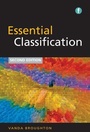
Vanda Broughton
Essential Classification
Book
07/2015
2nd Edition
Facet Publishing
€106.66
Shipment within 3-4 weeks
Person
Vanda Broughton