

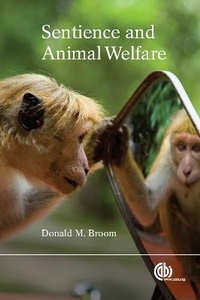
Sentience and Animal Welfare
Published on 14. August 2014
Book
Hardback
200 pages
978-1-78064-403-5 (ISBN)
Description
Sentience - the ability to feel, perceive and experience - is central to the animal welfare debate as it raises the question of whether animals experience suffering in life and death. This book explores and answers these questions in an objective way, based on the latest research and empirical evidence. Beginning with an introduction to sentience, the book investigates why we are so interested in sentience, when, as a species, humans became sentient and how it has changed over time. The book defines aspects of sentience such as consciousness, memory and emotions, and discusses brain complexity in detail. Looking at sentience from a developmental perspective, it analyses when in an individual's growth sentience can be said to appear and uses evidence from a range of studies investigating embryos, foetuses and young animals to form an enlightening overview of the subject. With a full chapter covering ethical decisions such as animal protection and experimentation, this book is not only an invaluable resource for researchers and students of animal welfare and biology, but also an engaging and informative read for veterinarians and the general public.
More details
Language
English
Place of publication
Wallingford
United Kingdom
Target group
Professional and scholarly
Dimensions
Height: 234 mm
Width: 156 mm
Thickness: 16 mm
Weight
520 gr
ISBN-13
978-1-78064-403-5 (9781780644035)
Copyright in bibliographic data and cover images is held by Nielsen Book Services Limited or by the publishers or by their respective licensors: all rights reserved.
Schweitzer Classification
Person
Donald M. Broom, Emeritus Professor of Animal Welfare, Cambridge University, Department of Veterinary Medicine, has developed concepts and methods of scientific assessment of animal welfare and studied: cognitive abilities of animals, the welfare of animals in relation to housing and transport, behaviour problems, attitudes to animals, sustainable livestock production and ethics of animal usage. He has published over 300 refereed papers and books including: Stress and Animal Welfare (2000 Springer), The Evolution of Morality and Religion (2003 CUP), Domestic Animal Behaviour and Welfare, 5th edition (2015 CABI), and Sentience and Animal Welfare (2014 CABI).
Content
I: Preface 1: The Qualities That Make Up Sentience 2: Ethics, Morality and Attitudes 3: Animal Welfare Science: History and Concepts 4: Brain Complexity and Cognitive Ability 5: Feelings and Emotions 6: Awareness and Consciousness 7: Motivation and Needs 8: Welfare Assessment 9: Sentience During Development, Brain Damage and Old Age 10: Ethical Decisions About Humans and Non-humans 11: Sustainability, Welfare Attitudes and Education