

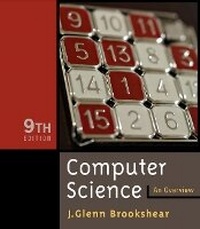
Computer Science
An Overview: United States Edition
9th Edition
Published on 7. April 2006
Book
Paperback/Softback
624 pages
978-0-321-38701-1 (ISBN)
Description
For over a decade, students and instructors alike have praised the broad coverage and clear exposition in the leading text Computer Science: An Overview. Glenn Brookshear draws on years of success in the classroom in this practical, language-independent approach to the introduction of core computing science topics.
This Ninth Edition provides a balanced, realistic picture of the dynamic nature of computer science by presenting the historical background and the most up-to-date research and trends. It engages students with timely topics like bioinformatics and artificial intelligence, and provides coverage of foundational hardware topics like data representation/storage, machine architecture, and machine language.
This Ninth Edition provides a balanced, realistic picture of the dynamic nature of computer science by presenting the historical background and the most up-to-date research and trends. It engages students with timely topics like bioinformatics and artificial intelligence, and provides coverage of foundational hardware topics like data representation/storage, machine architecture, and machine language.
More details
Edition
9th edition
Language
English
Place of publication
United States
Publishing group
Pearson Education (US)
Target group
College/higher education
Dimensions
Height: 232 mm
Width: 203 mm
Weight
970 gr
ISBN-13
978-0-321-38701-1 (9780321387011)
Copyright in bibliographic data and cover images is held by Nielsen Book Services Limited or by the publishers or by their respective licensors: all rights reserved.
Schweitzer Classification
Other editions
New editions
Book
02/2008
10th Edition
Pearson
€69.32
Article exhausted; check for reprint
Previous edition
Book
03/2004
8th Edition
Pearson
€61.89
Article exhausted; check for reprint
Content
Introduction
0.1 The Role of Algorithms
0.2 The Origins of Computing Machines
0.3 The Science of Algorithms
0.4 Abstraction
0.5 An Outline of Our Study
0.6 Social Repercussions
Chapter 1 Data Storage
1.1 Bits and Their Storage
1.2 Main Memory
1.3 Mass Storage
1.4 Representing Information as Bit Patterns
1.5 The Binary System
1.6 Storing Integers
1.7 Storing Fractions
1.8 Data Compression
1.9 Communication Errors
Chapter 2 Data Manipulation
2.1 Computer Architecture
2.2 Machine Language
2.3 Program Execution
2.4 Arithmetic/Logic Instructions
2.5 Communicating with Other Devices
2.6 Other Architectures
Chapter 3 Operating Systems
3.1 The History of Operating Systems
3.2 Operating System Architecture
3.3 Coordinating the Machine's Activities
3.4 Handling Competition Among Processes
3.5 Security
Chapter 4 Networking and the Internet
4.1 Network Fundamentals
4.2 The Internet
4.3 The World Wide Web
4.4 Internet Protocols
4.5 Security
Chapter 5 Algorithms
5.1 The Concept of an Algorithm
5.2 Algorithm Representation
5.3 Algorithm Discovery
5.4 Iterative Structures
5.5 Recursive Structures
5.6 Efficiency and Correctness
Chapter 6 Programming Languages
6.1 Historical Perspective
6.2 Traditional Programming Concepts
6.3 Procedural Units
6.4 Language Implementation
6.5 Object-Oriented Programming
6.6 Programming Concurrent Activities
6.7 Declarative Programming
Chapter 7 Software Engineering
7.1 The Software Engineering Discipline
7.2 The Software Life Cycle
7.3 Software Engineering Methodologies
7.4 Modularity
7.5 Tools of the Trade
7.6 Testing
7.7 Documentation
7.8 Software Ownership and Liability
Chapter 8 Data Abstractions
8.1 Data Structure Fundamentals
8.2 Implementing Data Structures
8.3 A Short Case Study
8.4 Customized Data Types
8.5 Classes and Objects
8.6 Pointers in Machine Language
Chapter 9 Database Systems
9.1 Database Fundamentals
9.2 The Relational Model
9.3 Object-Oriented Databases
9.4 Maintaining Database Integrity
9.5 Traditional File Structures
9.6 Data Mining
9.7 Social Impact of Database Technology
Chapter 10 Artificial Intelligence
10.1 Intelligence and Machines
10.2 Perception
10.3 Reasoning
10.4 Additional Areas of Research
10.5 Artificial Neural Networks
10.6 Robotics
10.7 Considering the Consequences
Chapter 11 Theory of Computation
11.1 Functions and Their Computation
11.2 Turing Machines
11.3 Universal Programming Languages
11.4 A Noncomputable Function
11.5 Complexity of Problems
11.6 Public-Key Cryptography
Appendixes
A ASCII
B Circuits to Manipulate Two's Complement Representations
C A Simple Machine Language
D High-Level Language Program Examples
E The Equivalence of Iterative and Recursive Structures
F Answers to Questions & Exercises
Index
0.1 The Role of Algorithms
0.2 The Origins of Computing Machines
0.3 The Science of Algorithms
0.4 Abstraction
0.5 An Outline of Our Study
0.6 Social Repercussions
Chapter 1 Data Storage
1.1 Bits and Their Storage
1.2 Main Memory
1.3 Mass Storage
1.4 Representing Information as Bit Patterns
1.5 The Binary System
1.6 Storing Integers
1.7 Storing Fractions
1.8 Data Compression
1.9 Communication Errors
Chapter 2 Data Manipulation
2.1 Computer Architecture
2.2 Machine Language
2.3 Program Execution
2.4 Arithmetic/Logic Instructions
2.5 Communicating with Other Devices
2.6 Other Architectures
Chapter 3 Operating Systems
3.1 The History of Operating Systems
3.2 Operating System Architecture
3.3 Coordinating the Machine's Activities
3.4 Handling Competition Among Processes
3.5 Security
Chapter 4 Networking and the Internet
4.1 Network Fundamentals
4.2 The Internet
4.3 The World Wide Web
4.4 Internet Protocols
4.5 Security
Chapter 5 Algorithms
5.1 The Concept of an Algorithm
5.2 Algorithm Representation
5.3 Algorithm Discovery
5.4 Iterative Structures
5.5 Recursive Structures
5.6 Efficiency and Correctness
Chapter 6 Programming Languages
6.1 Historical Perspective
6.2 Traditional Programming Concepts
6.3 Procedural Units
6.4 Language Implementation
6.5 Object-Oriented Programming
6.6 Programming Concurrent Activities
6.7 Declarative Programming
Chapter 7 Software Engineering
7.1 The Software Engineering Discipline
7.2 The Software Life Cycle
7.3 Software Engineering Methodologies
7.4 Modularity
7.5 Tools of the Trade
7.6 Testing
7.7 Documentation
7.8 Software Ownership and Liability
Chapter 8 Data Abstractions
8.1 Data Structure Fundamentals
8.2 Implementing Data Structures
8.3 A Short Case Study
8.4 Customized Data Types
8.5 Classes and Objects
8.6 Pointers in Machine Language
Chapter 9 Database Systems
9.1 Database Fundamentals
9.2 The Relational Model
9.3 Object-Oriented Databases
9.4 Maintaining Database Integrity
9.5 Traditional File Structures
9.6 Data Mining
9.7 Social Impact of Database Technology
Chapter 10 Artificial Intelligence
10.1 Intelligence and Machines
10.2 Perception
10.3 Reasoning
10.4 Additional Areas of Research
10.5 Artificial Neural Networks
10.6 Robotics
10.7 Considering the Consequences
Chapter 11 Theory of Computation
11.1 Functions and Their Computation
11.2 Turing Machines
11.3 Universal Programming Languages
11.4 A Noncomputable Function
11.5 Complexity of Problems
11.6 Public-Key Cryptography
Appendixes
A ASCII
B Circuits to Manipulate Two's Complement Representations
C A Simple Machine Language
D High-Level Language Program Examples
E The Equivalence of Iterative and Recursive Structures
F Answers to Questions & Exercises
Index